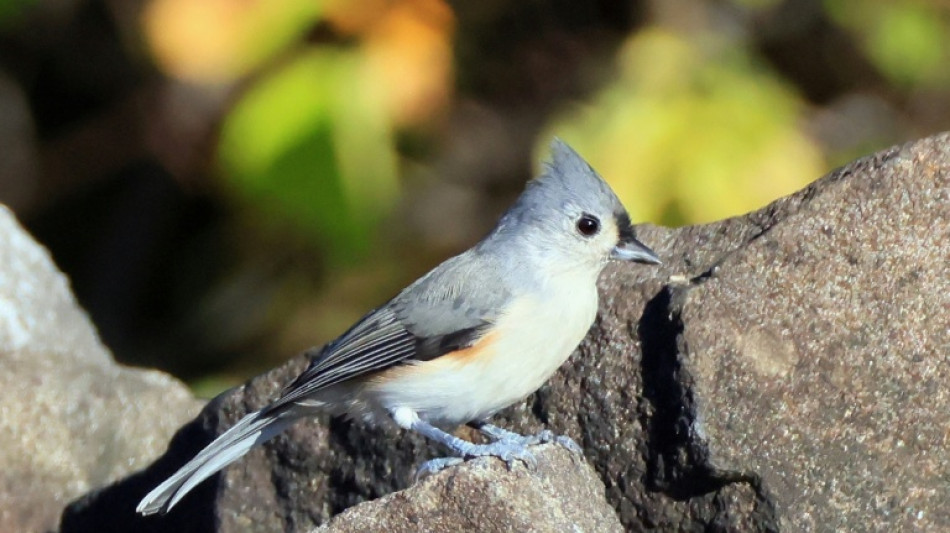
Noisy humans harm birds and affect breeding success: study / Photo: BRUCE BENNETT - GETTY IMAGES NORTH AMERICA/AFP

 Oil prices spike after Trump rejects Iran truce offer

 Taylor Swift sets new record at MTV VMAs
 Seoul seeks apology after Ukraine reveals transfer of North Korean POWs

 Messi on target again but Miami downed by Columbus

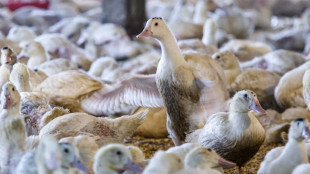 In Washington's political cauldron, a fight over foie gras
 Flavio Bolsonaro: political heir in his father's shadow

 Ravens grab last-second win in Rio as Commanders stop Seahawks

 USA rallies to capture 11th consecutive Presidents Cup

 Phillies clinch, Astros wrap up division on final day of MLB season

 Commanders hand champion Seahawks their first loss

 Dupont scores twice to send Toulouse top of Top 14

 Ireland beat Israel but no handshakes due to war in Gaza

 Tense standoff over flashpoint N.Ireland parade lasts into night

 Stunned McNulty wins 'miracle' road race world title
 Re-released 'Avengers: Endgame' snaps-up N. America box office lead

 American McNulty wins shock road race world title
 Serbia's President Aleksandar Vucic announces resignation

 Tuchel urges Bellingham to play with 'rage'

 Russian strikes on Ukraine kill 8

 Bavuma, Miller hit centuries as South Africa clinch series

 Spain bring in Le Normand for injured Garcia

 UK Labour party meets buoyed by Burnham but seeking concrete plans

 Nor'easter lashes US east with punishing rain and wind

 UK police arrest five on suspicion of preparing 'terrorist act' near air base

 Washington denounces Iran's truce proposal as 'cynical'

Noise pollution is affecting bird behaviour across the globe, disrupting everything from courtship songs to the ability to find food and avoid predators, a large-scale new analysis showed on Wednesday.
Researchers reviewed nearly four decades of scientific work and found that noises made by humans were interfering with the lives of birds on six continents and having "strong negative effects" on reproduction success.
Previous research on individual species has shown that single sources of anthropogenic noise -- such as planes, traffic and construction -- can impact birds as it does other wildlife.
But for this study, the team performed a wider analysis by pooling data published since 1990 across 160 bird species to see if any broader trends could be established.
The study, published in the journal Proceedings of the Royal Society B, found clear evidence of a "pervasive" impact of noise pollution on birds worldwide.
"We found that noise significantly impacts communication risk behaviours, foraging, aggression and physiology and had a strong effect on habitat use and a negative impact on reproduction," it said.
This is because birds rely on acoustic information to survive, making them particularly vulnerable to the modern din produced by cars, machinery and urban life.
"They use song to find mates, calls to warn of predators, and chicks make begging calls to let their parents know they're hungry," Natalie Madden, who led the research while at the University of Michigan, said in a statement.
"So if there's loud noise in the environment, can they still hear signals from their own species?"
In some cases, noise pollution interrupted mating displays, caused males to change their courtship songs, or masked messages between chicks and parents.
- Underappreciated consequence -
The response varied between species, with birds that nest close to the ground suffering greater reproductive harm, while those using open nests experienced stronger effects on growth.
Birds living in urban areas, meanwhile, tended to have higher levels of stress hormones than those outside of cities.
The authors said that noise pollution was an "underappreciated consequence" of humanity's impact on nature, especially compared to the twin drivers of biodiversity loss and climate change.
Some 61 percent of the world's bird species have declining populations, the International Union for Conservation of Nature said in October.
But many solutions to combat noise pollution already existed, said the study's senior author Neil Carter, from the University of Michigan.
For example, buildings are constructed to improve visibility and minimise bird collisions and in much the same way, could be adapted to stifle sound.
"So many of the things we're facing with biodiversity loss just feel inexorable and massive in scale, but we know how to use different materials and how to put things up in different ways to block sound," he said.
"We know what to use and how to use it, we just have to get enough awareness and interest in doing it."
L.AbuAli--SF-PST