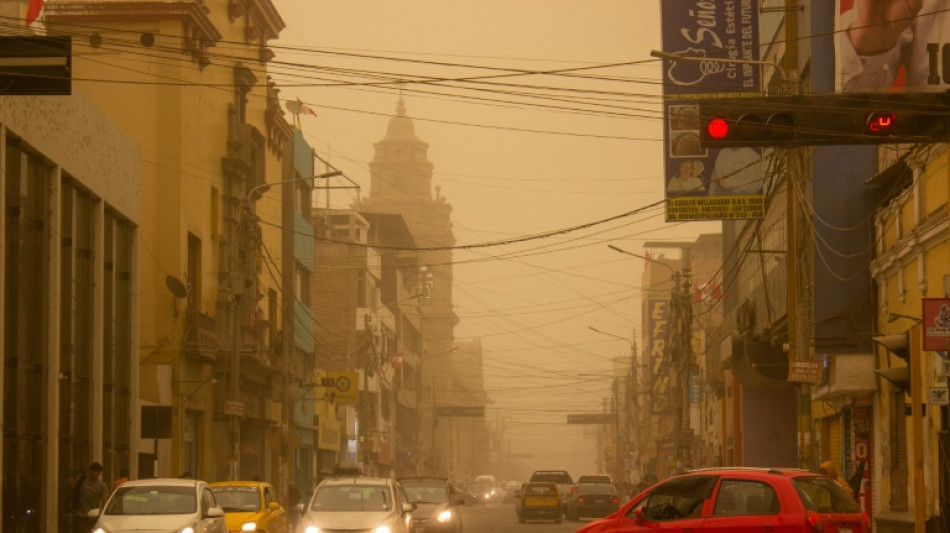
Sand and dust storm sweeps across southern Peru / Photo: Fredy Q Martinez - AFP

 مصلحة مياه القدس توحّد جهودها مع بلديات الرام ومخماس لتعزيز استدامة المياه

 Saudi PIF Retains Top Sovereign Wealth Fund Brand Title for Third Year

 Binance Secures $6.5 Billion Asset-Freezing Order from Abu Dhabi Court

 Malta PM Abela Refuses Parliamentary Question on Maritime Borders Amid Turkey-Libya Deal
Strong winds from a South Pacific anticyclone triggered a massive sand and dust storm in southern Peru on Thursday, catching residents in coastal regions by surprise, authorities said.
Peru's national weather service said wind gusts reached up to 50 kilometers (31 miles) per hour in the Ica region, about 400 kilometers south of Lima.
The storm in Ica forced traffic to a halt on highways and disrupted tourism activities for three hours.
The effects of the unusual weather event were also felt in the regions of Arequipa, Moquegua, and Tacna -- which borders Chile -- where winds reached up to 32 kilometers an hour.
Similarly strong winds were also recorded in the capital Lima, causing some trees to fall.
"This event was caused by the South Pacific anticyclone, which has intensified and is currently very close to the continent, generating high-speed downdrafts at the surface," Rosario Julca of the national weather service told Canal N television.
"An anticyclone is a clockwise circulation in the Pacific Ocean that, when it nears the continent, increases wind speeds," she added.
According to Julca, the presence of such "downdrafts, combined with the desert terrain, has generated a sudden and massive dust uprising."
The weather agency said the "increase in wind speed, ranging from moderate to strong intensity," is expected to continue along the Peruvian coast through Sunday.
The National Emergency Operations Center said that local authorities are assessing the damage.
R.Halabi--SF-PST



