World's richest 10% caused two thirds of global warming: study / Photo: Valery HACHE - AFP/File

 Trump denies offering to sell arms to China's Xi
 Wemby ready for NBA Spurs to move rivals in climb to top

 Ukraine to postpone some spending amid delays in aid: PM
 Tuchel says Czech Republic game 'not yet a must-win'
 MaXhosa puts South Africa on the Paris fashion map

 Rose, Scott among 2027 World Golf Hall of Fame finalists

 Brunson says NBA champion Knicks can't get satisfaction

 France puts out largest wildfire since 1949

 Real Madrid's Perez summoned over Barcelona referee payments comments

 Oil takes off again, Wall Street dips after Trump rejects Iran truce offer

 AlgoQuant Asset Management Selects Liquid Mercury to Enhance Digital Asset Trading Infrastructure
 UK to reopen refugee resettlement scheme to push 'safe' migration

 Pope urges Europe to help combat 'lies and deceit' in world affairs
 Iranian lawyer Nasrin Sotoudeh wins Council of Europe's rights prize
 French far-right's Bardella denies alleged 2013 antisemitic comments

 Oil up, Wall Street dips after Trump rejects Iran truce offer

 Gakpo withdraws from Netherlands squad

 SpaceX puts Starship megarocket in orbit for first time
 Iran denies link to suspected bomb plot at UK airbase used by US
 Ex-boss Mancini says City charges 'not my concern'

 Berlin Marathon winner Assefa finished race with torn Achilles

 Comedian convicted for Erdogan 'insult' but freed pending appeal

 French prosecutors seek two-year sentence for ex-minister Dati in graft case
 Eala makes fast start as weather and transport woes hit Asian Games
 Hurricane Polo approaches Mexico, threatens severe damage
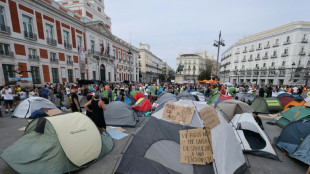
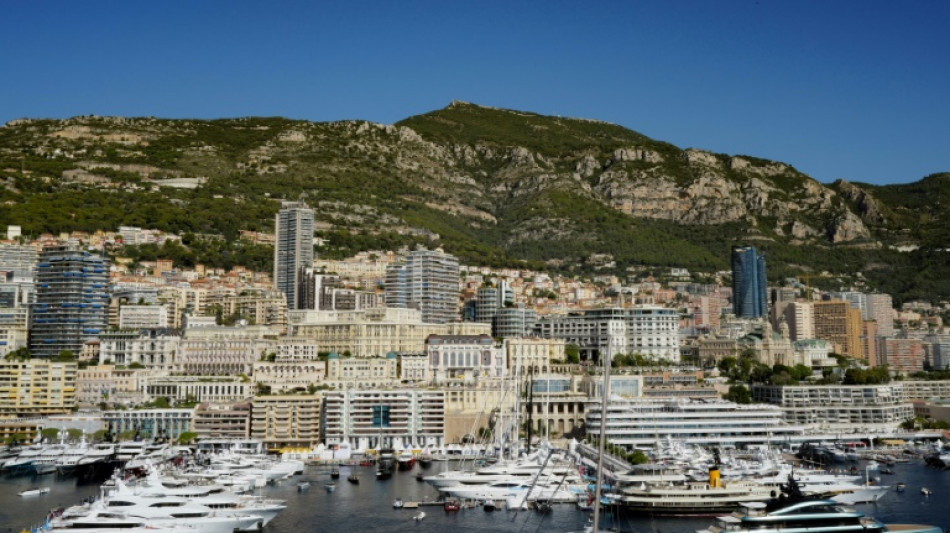
The world's wealthiest 10 percent of individuals are responsible for two thirds of global warming since 1990, researchers said Tuesday.
How the rich consume and invest has substantially increased the risk of deadly heatwaves and drought, they reported in the first study to quantify the impact of concentrated private wealth on extreme climate events.
"We link the carbon footprints of the wealthiest individuals directly to real-world climate impacts," lead author Sarah Schoengart, a scientist at ETH Zurich, told AFP.
"It's a shift from carbon accounting toward climate accountability."
Compared to the global average, for example, the richest one percent contributed 26 times more to once-a-century heatwaves, and 17 times more to droughts in the Amazon, according to the findings, published in Nature Climate Change.
Emissions from the wealthiest 10 percent in China and the United States -- which together account for nearly half of global carbon pollution -- each led to a two-to-threefold rise in heat extremes.
Burning fossil fuels and deforestation have heated Earth's average surface by 1.3 degrees Celsius, mostly during the last 30 years.
Schoengart and colleagues combined economic data and climate simulations to trace emissions from different global income groups and assess their impact on specific types of climate-enhance extreme weather.
The researchers also emphasised the role of emissions embedded in financial investment rather than just lifestyle and personal consumption.
"Climate action that doesn't address the outsized responsibilities of the wealthiest members of society risk missing one of the most powerful levers we have to reduce future harm," said senior author Carl-Friedrich Schleussner, head of the Integrated Climate Impacts Research Group at the International Institute for Applied Systems Analysis near Vienna.
- Billionaires tax -
Owners of capital, he noted, could be held accountable for climate impacts through progressive taxes on wealth and carbon-intensive investments.
Earlier research has shown that taxing asset-related emissions is more equitable than broad carbon taxes, which tend to burden those on lower incomes.
Recent initiatives to increase taxes on the super-rich and multinationals have mostly stalled, especially since Donald Trump regained the White House.
Last year, Brazil -- as host of the G20 -- pushed for a two-percent tax on the net worth of individuals with more than $1 billion in assets.
Although G20 leaders agreed to "engage cooperatively to ensure that ultra-high-net-worth individuals are effectively taxed," there has been no follow-up to date.
In 2021, nearly 140 countries agreed on work toward a global corporate tax for multinational companies, with nearly half endorsing a minimum rate of 15 percent, but those talks have stalled as well.
Almost a third of the world's billionaires are from the United States -- more than China, India and Germany combined, according to Forbes magazine.
According to anti-poverty NGO Oxfam, the richest 1 percent have accumulated $42 trillion in new wealth over the past decade.
It says the richest one percent have more wealth than the lowest 95 percent combined.
O.Salim--SF-PST