US pipeline case heads to court in high-stakes free speech fight / Photo: Robyn BECK - AFP/File

 Dodgers eye three-peat, Red Sox face Yankees as MLB playoffs begin
 Certification of Boeing 737 MAX delayed by software bug

 Celine Dion wows Paris Fashion Week with surprise gig

 AMD buys firm founded by AI 'godmother' Fei-Fei Li

 Italy rebound in Turkey as France win late in Belgium

 Pope says concerns about AI 'should be taken seriously'

 Hurricanes to hoist title banner as NHL season begins

 Justice Alito steps aside from major US climate case

 Willis happy with England exile after retains Top 14 player award

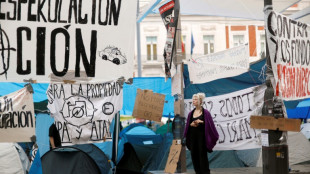 Spain housing protests keep heat on government as PM seeks new law

 Wissa spoils Zimbabwe homecoming as DR Congo win AFCON qualifier

 UK police release on bail five men held over airbase incident

 Ex-All Black Plummer 'sure' New Zealand will find Super Rugby solution

 Shein sees 1% revenue growth in first half of 2026

 Netherlands regrets Israel retaliation in settlements row

 Moscow seizes Russian assets of German food retailer Metro

 Bulgarian spirits inflamed by new rakia rules

 Documentary turns camera on architect Peter Zumthor

 UK police say releasing on bail five men held over airbase incident

 Trump admin finalizes reversal of US fuel economy standards

 US says no China arms sale plans after envoy cites Trump offer

 Dozens kidnapped in two weekend attacks in northern Nigeria

 Next stop the world: Pathirage wins Asian Games javelin gold

 Aster Launches Perpetual Grid Trading 2.0 with Up to 140,000 $ASTER Liquidity Mining Campaign

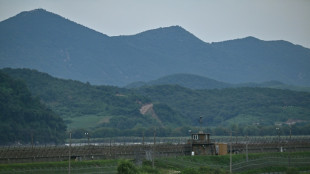 Seoul says North Korean mines 'highly suspected' as cause of DMZ blast

Nearly a decade after activists led one of the largest anti-pipeline protests in US history, the fight shifts to court as Energy Transfer sues Greenpeace for $300 million in a case with far-reaching free speech implications.
At the heart of the lawsuit is the Dakota Access Pipeline, which transports fracked crude oil from North Dakota to refineries and on to markets worldwide.
Contentious from its inception, the project faced fierce opposition from the Standing Rock Sioux tribe, which called it the "Black Snake" and warned of dire threats to ancestral lands.
Beginning in 2016, protests and legal challenges sought to halt construction. By 2017, hundreds had been arrested and injured, prompting United Nations concerns over Indigenous sovereignty violations.
Though the oil has flowed for years, pipeline operator Energy Transfer continues to pursue Greenpeace, accusing the group of leading the protests, conspiring to commit crimes, inciting violence, and defaming the company.
Critics call the lawsuit a clear example of a Strategic Lawsuit Against Public Participation (SLAPP), designed to silence dissent and drain resources.
"Big Oil is trying to send a message to us, and they're trying to silence Greenpeace as well as the wider movement," Sushma Raman, interim executive director of Greenpeace told AFP.
"But let us be clear, the limited interventions that Greenpeace entities took related to Standing Rock were peaceful, lawful, and in line with our values of non-violence and our work for a green and peaceful future."
- A legal war to 'send a message' -
Energy Transfer denies that it is aiming to stifle free speech.
"Our lawsuit against Greenpeace is about them not following the law," the company said in a statement to AFP.
"We support the rights of all Americans to express their opinions and lawfully protest. However, when it is not done in accordance with our laws, we have a legal system to deal with that. Beyond that we will let our case speak for itself."
In 2017, Energy Transfer sued Greenpeace in federal court, invoking the Racketeer Influenced and Corrupt Organizations Act (RICO) -- a law typically used to prosecute organized crime.
CEO Kelcy Warren stated in interviews that his "primary objective" was not financial compensation but to "send a message" -- going so far as to suggest that activists "should be removed from the gene pool."
That case was tossed out by a federal court, but Energy Transfer quickly refiled at the state level in North Dakota -- one of the minority of US states without anti-SLAPP protections.
Waniya Locke, a member of Standing Rock Grassroots, pushed back at the idea Greenpeace led the movement.
"I want it to be very clear that there were no NGOs that started or organized our resistance. And it was matriarch-led. It was led by women who stood strong, who stood on the riverbanks unarmed."
- Greenpeace fights back in Europe -
Greenpeace is fighting back, becoming this month the first group to test the European Union's anti-SLAPP directive by suing Energy Transfer in the Netherlands.
"We are asking the district court of Amsterdam to declare that ET acted wrongfully by engaging in an abusive process," Greenpeace International General Counsel Kristin Casper told AFP.
The case seeks damages with interest and demands that Energy Transfer publish the court's findings on its website.
Similar lawsuits from fossil fuel companies, including Shell and Total, have targeted Greenpeace in recent years. "The good news is that when we fight back, we win," said Casper, citing the dismissal of TotalEnergies v Greenpeace France last year.
More than 400 organizations, along with public figures such as Billie Eilish, Jane Fonda, and Susan Sarandon, have signed an open letter supporting Greenpeace.
"If Energy Transfer is successful in imposing a large monetary penalty on Greenpeace, that would encourage other companies to take similar actions and could significantly chill protests over a variety of issues -- not just climate change," Michael Gerrard, an environmental law professor at Columbia University told AFP.
S.AbuJamous--SF-PST