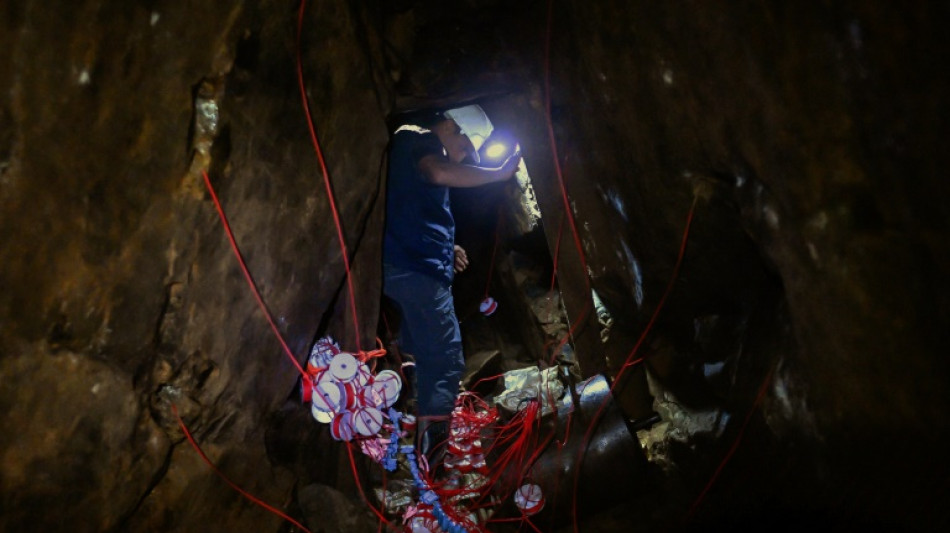
With blasts and grit, Colombia fights gold mines run by crime gangs / Photo: JOAQUIN SARMIENTO - AFP

 Flooding, power cuts and evacuations as Hurricane Polo slams Mexico

 Dodgers eye three-peat, Red Sox face Yankees as MLB playoffs begin

 Certification of Boeing 737 MAX delayed by software bug

 Celine Dion wows Paris Fashion Week with surprise gig

 AMD buys firm founded by AI 'godmother' Fei-Fei Li

 Italy rebound in Turkey as France win late in Belgium

 Pope says concerns about AI 'should be taken seriously'

 Hurricanes to hoist title banner as NHL season begins

 Justice Alito steps aside from major US climate case

 Willis happy with England exile after retains Top 14 player award

 Spain housing protests keep heat on government as PM seeks new law

 Wissa spoils Zimbabwe homecoming as DR Congo win AFCON qualifier

 UK police release on bail five men held over airbase incident

 Ex-All Black Plummer 'sure' New Zealand will find Super Rugby solution

 Shein sees 1% revenue growth in first half of 2026
 Netherlands regrets Israel retaliation in settlements row

 Moscow seizes Russian assets of German food retailer Metro

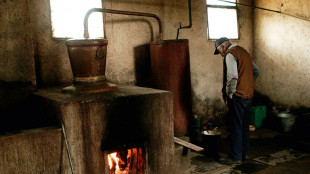 Bulgarian spirits inflamed by new rakia rules

 Documentary turns camera on architect Peter Zumthor

 UK police say releasing on bail five men held over airbase incident

 Trump admin finalizes reversal of US fuel economy standards

 US says no China arms sale plans after envoy cites Trump offer

 Dozens kidnapped in two weekend attacks in northern Nigeria

 Next stop the world: Pathirage wins Asian Games javelin gold

 Aster Launches Perpetual Grid Trading 2.0 with Up to 140,000 $ASTER Liquidity Mining Campaign

A thin detonating cord snakes its way into an illegal gold mine drilled high up on a mountain near the Colombian city of Cali, exploding with a roar and destroying a lucrative source of money for armed groups that include leftist rebels.
The blast brings down the walls of a tunnel leading into the pit in Farallones National Park, which features a stretch of the Andes that runs just outside Colombia's third largest city.
The entrance is now blocked by tons of rubble, putting that mine out of commission.
It took the engineers, police and city officials assigned to knock it out 10 hours to hike up to the mine, which was dug at an altitude of 3,400 meters (11,000 feet).
Wildcat miners operating under the control of local crime gangs and leftist rebels have been running mines like this for decades in these mist-covered mountains.
To isolate the gold, they use mercury, a toxic liquid metal that is polluting the water used in Cali, home to 2.2 million people.
"All that mercury goes into the ground" and ends up in rivers that supply its drinking water, said the chief engineer of the blasting operation, who for safety reasons did not want to give his name.
AFP accompanied the blasting team on a three-day climb in the mountains, with mules carrying the equipment.
The government estimates that 85 percent of the gold that Colombia exports comes from unlicensed mines.
The above-board mines yielded at least 248 tons of gold from 2017 to 2022, according to the United Nations.
In the Cali region, the grueling, freezing work of climbing a mountain to dig into it for gold is done by local people employed by local crime gangs.
These in turn pay a tax to rebels who have formed renegade, offshoot groups from the once powerful guerrilla army known as the FARC, which laid down its weapons under a historic 2016 peace accord after decades of fighting.
These FARC dissidents thus run a large network of illegal mines that extends beyond the Cali region.
- Working at an altitude -
While engineers prepare to set off the blast with a thick string of red cables, rifle-toting police wearing gas masks protect them.
The explosives themselves were brought to the site by helicopter.
One man sounds a siren to warn a blast is coming, then another activates a detonator that triggers the explosion and a cloud of white smoke.
As they camp at night, the team members see the lights of Cali in the distance, which hosted a UN conference on biodiversity in October and November.
Missions like this to take out unauthorizied mines have intensified in recent months.
Cali's deputy secretary for security, Alvaro Pretel, said crews have destroyed 11 fully operating mines and another 27 that were in the process of being dug.
The mine that AFP saw destroyed was no longer active, as miners had abandoned it under pressure from law enforcement.
- Water and mercury -
This particular spot high up in the mountains is the source of seven rivers that supply the city with water, said Pretel.
And just in the last year, nearly a ton of mercury was used in the mines outside Cali, he added.
The shiny, dangerous metal, he said, "sooner or later ends up in the drinking water of the people of Cali."
The government agency that oversees Colombia's national parks found around 420 digging pits in the Farallones park in 2019, Pretel said.
In 2022, the United Nations said it detected 69,000 hectares (170,500 acres) of land in Colombia where illegal gold mining was underway.
In May, officials said they found excessive levels of mercury and arsenic -- which is also used in gold mining -- near an aqueduct that routes to the city.
Experts say illegal mining can be even more lucrative than trafficking in cocaine.
At times, authorities have found mines with as many as 1,000 people working in them, who threw projectiles as police tried to move in and shut down the operation, said Gustavo Escobar, head of a police unit tasked with fighting illegal mining.
Z.AbuSaud--SF-PST