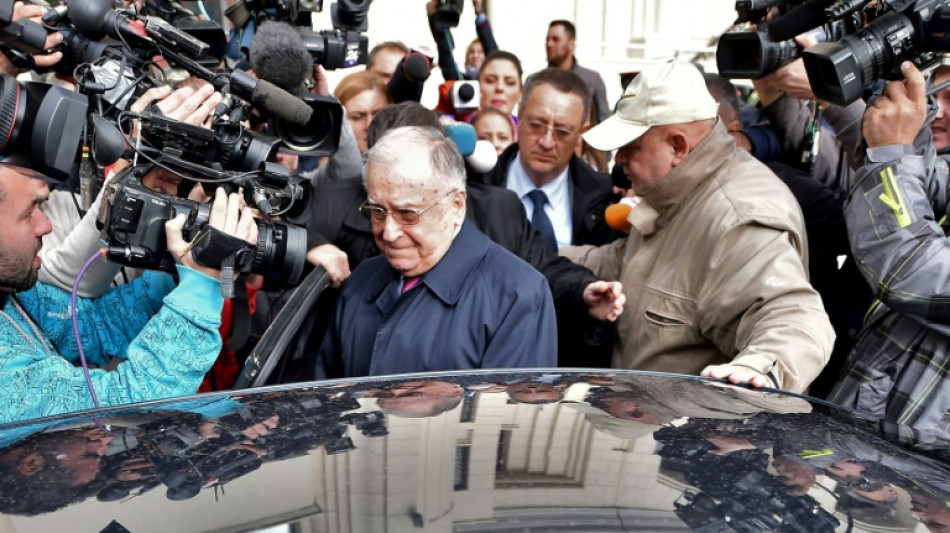
Ion Iliescu: democratic Romania's first president / Photo: GRIGORE POPESCU - AFP

 Man Utd teetering towards crisis as Man City cloud hangs over Premier League
 Trump's new press secretary defends 'lawyer' title
 Wallabies coach has 'faith' as All Blacks juggernaut awaits
 Ailing UK director Mike Leigh wishes he could make '100 more films'

 Pixagram Announces Free Account Creation for 250 New Users Daily Through 2026
 Macron warns urgent to strike EU budget deal before French vote runup
 Zelensky rallies European allies as Trump ties slump

 Guardians edge Rays to seize MLB playoff series lead
 Trump scraps plan to livestream execution after fierce backlash

 Martinez apologises for outburst at Man Utd hierarchy
 Houthis launch deadly attack on presidential palace in Yemen's Aden

 Brazil forward Antony says home burgled during Betis match
 Ravens face familiar foe in Browns coach Monken
 France, Germany reach deal on future of car industry
 Carney campaigns for Canadian unity before Alberta secession vote
 ATP proposes rankings system changes, extra player bonuses
 Russell Brand was 'monster-like', alleged victim tells UK court
 Crowded Launches Crowded MCP, Bringing Nonprofit Financial Operations Into ChatGPT and Claude
 Albanian PM condemns 'chaos' as violent unrest spreads
 Italian football suffers new blow with Champions League misery
 Trump scraps plan to livestream execution after broad backlash
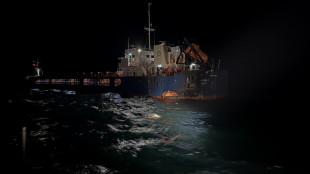 Seven missing off Romania after latest Black Sea drone attacks
 ARKBRIDGE Outlines Jonathan Morelli’s “Picks and Shovels” AI Infrastructure Investment Strategy

 Tech sell-off rolls on as hot inflation data stokes rate worries
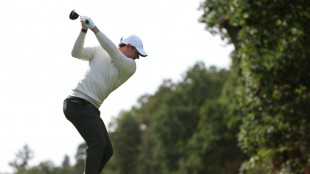 McIlroy makes 'solid' start in rain-hit Delhi as Norgaard leads

Romania's former president Ion Iliescu, who died aged 95 on Tuesday, was long hailed as Romania's "little father" but faced charges over his role in the eastern European nation's chaotic transition from communism to democracy.
The influential politician was last seen in public in 2017 when he was questioned by prosecutors.
That probe related to his role in the violence during the fall of communism which led to more than 850 deaths and saw him face charges of crimes against humanity.
- Fallout with Ceausescu regime -
A communist party apparatchik born on March 3, 1930, Iliescu served as former dictator Nicolae Ceausescu's minister for youth. But in the 1970s he fell into disgrace and was marginalised.
He rose to power during the December 1989 anti-communist uprising that toppled Ceausescu, under circumstances that remain unclear, becoming the self-appointed leader of the National Salvation Front, an interim governing body.
Iliescu then won a landslide victory in the country's first democratic elections in May 1990.
He was reelected for a four-year term in 1992, but was defeated at the polls in 1996, only to return to power in 2000 for a third term -- the most allowed by the Constitution.
During this last term Romania joined NATO in 2004 and signed the European Union accession treaty, with membership becoming effective in 2007.
The former Moscow University graduate was elected to Romania's Senate in 2004 but did not run in subsequent elections, arguing that a secondary role in politics was more appropriate for a man his age.
He nonetheless continued to be revered by many Romanians, especially in impoverished rural regions.
His advice still counted when his Social Democratic Party -- -- a successor to the National Salvation Front -- was faced with major decisions.
"Iliescu was a man of dialogue and not a bit confrontational. He would rather try to convince people than give orders," sociologist Vasile Dancu, a fellow Social Democrat who knew Iliescu well, told AFP.
He said "consensus" was one of the former president's favourite words.
- 'Canny politician' -
"He was an affable, well-read man, who knew how to flatter people but who could also be manipulative," a former French ambassador to Romania, Henri Paul, told AFP.
"A canny politician through and through."
Iliescu never disavowed his hardline leftist views and blasted the "bloodsucking" western countries and international financial institutions.
Over the past two decades, Iliescu had faced charges of crimes against humanity over the violence during the fall of communism.
In a separate case, he was also indicted over the decision to call in miners to crush student protests after his election in 1990. The crackdown brought widespread international condemnation.
But due to legal wranglings, Iliescu has not stood trial in either case.
Iliescu has denied any wrongdoing, at one point describing it as "a disgrace for Romania to indict the head of state who played a major part in its democratisation".
Though he was one of the few top-ranking Romanian politicians not to be suspected of illicit enrichment, high-level corruption flourished during his terms in office and analysts said the independence of the judiciary was often trampled on.
"I'd rather be poor but honest than rich and a thief," he used to say.
Iliescu, who spoke fluent English, French and Russian, was married with no children. His wife Nina was only seen in public when the couple went to the polls, once every four years.
The government announced his death in a statement on Tuesday, after he was hospitalised with lung cancer in early June.
It declared August 7 a day of national mourning in his memory.
mr-ani-jza-kym/rlp
R.Shaban--SF-PST