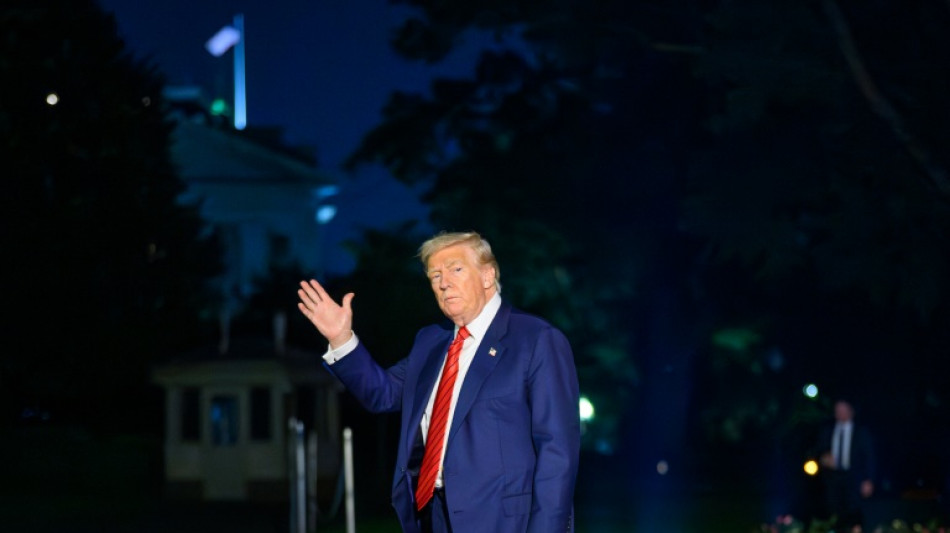
Trump says pharma, chips tariffs incoming as trade war widens / Photo: Mandel NGAN - AFP/File

 UK PM calls for 'honest discussion' about EU free movement

 Far-right leader Le Pen kicks off tilt at French presidency amid nationwide protests

 Naomi Osaka could quit tennis if daughter asks her to

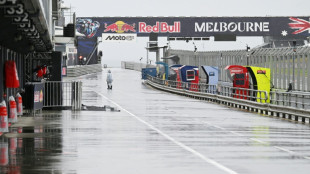 Last MotoGP race at Phillip Island cancelled due to weather in Marquez setback

 Sri Lanka seeks faster green energy shift after oil shocks
 Riyadh airport resumes flights following Houthi attacks

 'Call of Duty' North Korea invasion edition tops sales charts in South
 Musk accuses Ukraine of violating Starlink's terms of service
 Fed expected to hold rates steady days ahead of US midterms

 More Lula, or back to the Bolsonaros? Brazil votes in cliffhanger
 Jorge Martin out of Australian MotoGP with fracture: team
 Antonelli storms to US Grand Prix pole on weekend he can take title

 Apologetic Alvarez fires Atletico to win against Deportivo

 Lens beat PFC in Ligue 1 matchday impacted by social unrest

 Valkyries hit back against Dream to level WNBA Finals

 'Fighting for our rights': Paris protesters determined to march on

 Clashes break out in Paris, other French cities amid fresh protests
 Spurs seal rare win at Chelsea as Palmer sees red

 Nearly 1,000 arrested in French protests marred by 'elevated' violence: minister

 France extends detention of suspected racist shooter
 Andrade and Nemour star as Biles cheers at world gymnastics champs

 Nigeria's Tinubu defends record as economy bites ahead of election

 'Guiding star' Fuellkrug bags Bremen brace, Leipzig win

 Man City's perfect start ended by Aston Villa, Arsenal go joint-top

 Arsenal sink Everton to join Man City at Premier League summit
US President Donald Trump signaled Tuesday that fresh tariffs on imported pharmaceuticals and semiconductors could be unveiled within the coming week, in his ongoing push to reshape global trade.
Trump made his latest comments in an interview on CNBC days before a separate set of tariff hikes come into effect on dozens of economies later this week.
His sweeping plans have sparked a flurry of activity as governments seek to avert the worst of his threats -- with Switzerland's leaders heading to Washington on Tuesday in a last-minute push to avoid punitive duties.
But he appears set to further widen his trade wars.
The US president told CNBC that upcoming tariffs on imported pharmaceuticals could reach 250 percent, while adding that he plans for new duties on foreign semiconductors soon.
"We'll be putting (an) initially small tariff on pharmaceuticals, but in one year, one-and-a-half years, maximum, it's going to go to 150 percent," Trump said.
"And then it's going to go to 250 percent because we want pharmaceuticals made in our country."
Trump also said that Washington will be announcing tariffs "within the next week or so."
He added: "We're going to be announcing on semiconductors and chips."
- India threat -
Trump has set out varying tariff rates for dozens of economies after imposing a 10-percent levy on almost all trading partners in April.
But these broad duties taking effect Thursday exclude products like pharmaceuticals, steel, aluminum and lumber, which are being separately targeted by sector.
This means that although the 39-percent tariff Swiss leaders seek to avoid come Thursday excludes pharmaceuticals, Trump's plans for a steep levy on such imports will likely remain a point of contention in any talks.
Pharmaceuticals represented 60 percent of Swiss goods exports to the United States last year.
Outside of Switzerland, most products from the European Union face a 15 percent tariff starting Thursday, after Washington and Brussels struck a deal to avoid higher levies.
But Trump warned Tuesday that the EU could see its tariff level surge again if it did not fulfil obligations under their recent pact.
Besides probing pharmaceuticals and chips imports, Trump has already imposed steep duties of 50 percent on steel and aluminum, alongside lower levels on autos and parts.
In the same CNBC interview, Trump said he expects to raise the US tariff on Indian imports "very substantially over the next 24 hours" due to the country's purchases of Russian oil.
This is a key revenue source for Moscow's military offensive on Ukraine.
His pressure on India comes after signaling fresh sanctions on Moscow if it did not make progress by Friday towards a peace deal with Kyiv, more than three years since Russia's invasion.
Moscow is anticipating talks this week with the US leader's special envoy Steve Witkoff, and the Kremlin has criticized Trump's threat of raising tariffs on Indian goods.
Weak employment data last week pointed to challenges for the US economy as companies take a cautious approach in hiring and investment while grappling with Trump's radical -- and rapidly changing -- trade policy.
The tariffs are a demonstration of raw economic power that Trump sees as putting US exporters in a stronger position while encouraging domestic manufacturing by keeping out foreign imports.
But the approach has raised fears of inflation and other economic fallout in the world's biggest economy.
M.AbuKhalil--SF-PST