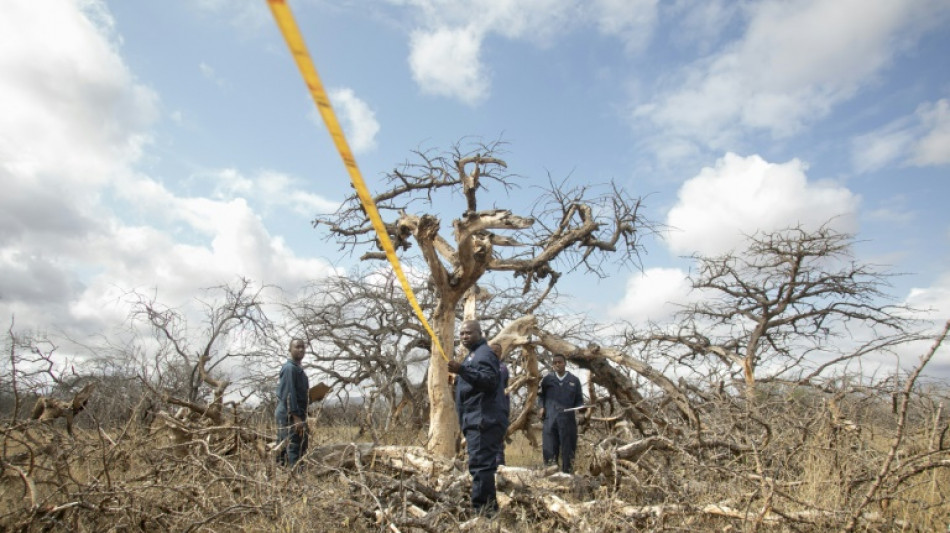
Nations approve new UN rules on carbon markets at COP29 / Photo: Tony KARUMBA - AFP

 OpenAI cancels release of newest model due to safety concerns

 AI bosses head to White House as safety pressure builds

 Batista sacked as Costa Rica coach after six months
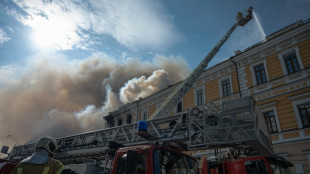
 Flooding, power cuts and evacuations as Hurricane Polo slams Mexico

 Dodgers eye three-peat, Red Sox face Yankees as MLB playoffs begin
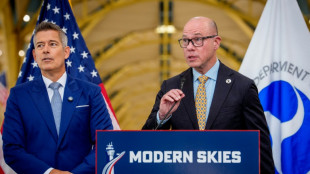 Certification of Boeing 737 MAX delayed by software bug

 Celine Dion wows Paris Fashion Week with surprise gig
 AMD buys firm founded by AI 'godmother' Fei-Fei Li
 Italy rebound in Turkey as France win late in Belgium

 Pope says concerns about AI 'should be taken seriously'
 Hurricanes to hoist title banner as NHL season begins
 Justice Alito steps aside from major US climate case

 Willis happy with England exile after retains Top 14 player award

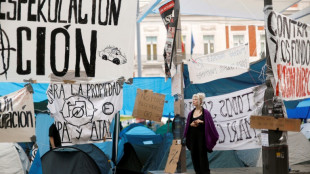
 Spain housing protests keep heat on government as PM seeks new law

 Wissa spoils Zimbabwe homecoming as DR Congo win AFCON qualifier

 UK police release on bail five men held over airbase incident

 Ex-All Black Plummer 'sure' New Zealand will find Super Rugby solution

 Shein sees 1% revenue growth in first half of 2026
 Netherlands regrets Israel retaliation in settlements row
 Moscow seizes Russian assets of German food retailer Metro
 Bulgarian spirits inflamed by new rakia rules

 Documentary turns camera on architect Peter Zumthor
 UK police say releasing on bail five men held over airbase incident
 Trump admin finalizes reversal of US fuel economy standards
 US says no China arms sale plans after envoy cites Trump offer
Governments at the COP29 talks approved Monday new UN standards for international carbon markets in a key step toward allowing countries to trade credits to meet their climate targets.
On the opening day of the UN climate talks in Azerbaijan, nearly 200 nations agreed a number of crucial ground rules for setting a market in motion after nearly a decade of complex discussions.
Other key aspects of the overall framework still need to be negotiated, experts said, but the decision brings closer a long-sought UN-backed market trading in high-quality credits.
"It's hugely significant," Erika Lennon, from the Center for International Environmental Law (CIEL), told AFP in Baku, saying it would "open the door" for a fully-fledged market.
Carbon credits are generated by activities that reduce or avoid planet-heating greenhouse gas emissions, like planting trees, protecting carbon sinks or replacing polluting coal with clean-energy alternatives.
One credit equals a tonne of prevented or removed heat-trapping carbon dioxide.
Since the Paris climate agreement in 2015, the UN has been crafting rules to allow countries and businesses to exchange credits in a transparent and credible market.
The benchmarks adopted in Baku will allow for the development of rules including calculating how many credits a given project can receive.
Once up and running, a carbon market would allow countries -- mainly wealthy polluters -- to offset emissions by purchasing credits from nations that have cut greenhouse gases above what they promised.
Purchasing countries could then put carbon credits toward achieving the climate goals promised in their national plans.
- 'Big step closer' -
"It gets the system a big step closer to actually existing in the real world," said Gilles Dufrasne from Carbon Market Watch, a think tank.
"But even with this, it doesn't mean the market actually exists," he added, saying further safeguards and questions around governance still remain unanswered.
An earlier UN attempt to regulate carbon markets under the Paris accord were rejected in Dubai in 2023 by the European Union and developing nations for being too lax.
Some observers were unhappy that the decision in Baku left unresolved other long-standing and crucial aspects of the broader crediting mechanism, known in UN terms as Article 6.
"It's not possible to declare victory," said a European diplomat, speaking on condition of anonymity.
There are hopes that a robust and credible UN carbon market could eventually indirectly raise the standards of the scandal-hit voluntary trade in credits.
Corporations wanting to offset their emissions and make claims of carbon neutrality have been major buyers of these credits, which are bought and exchanged but lack common standards.
But the voluntary market has been rocked by scandals in recent years amid accusations that some credits sold did not reduce emissions as promised, or that projects exploited local communities.
And the idea of offsetting as a whole faces deep scepticism from many.
"No matter how much integrity there is in the sort of the carbon markets, if what you are doing is offsetting ongoing fossil fuels with some sort of credit, you're not actually reducing anything," said Lennon.
Y.AlMasri--SF-PST