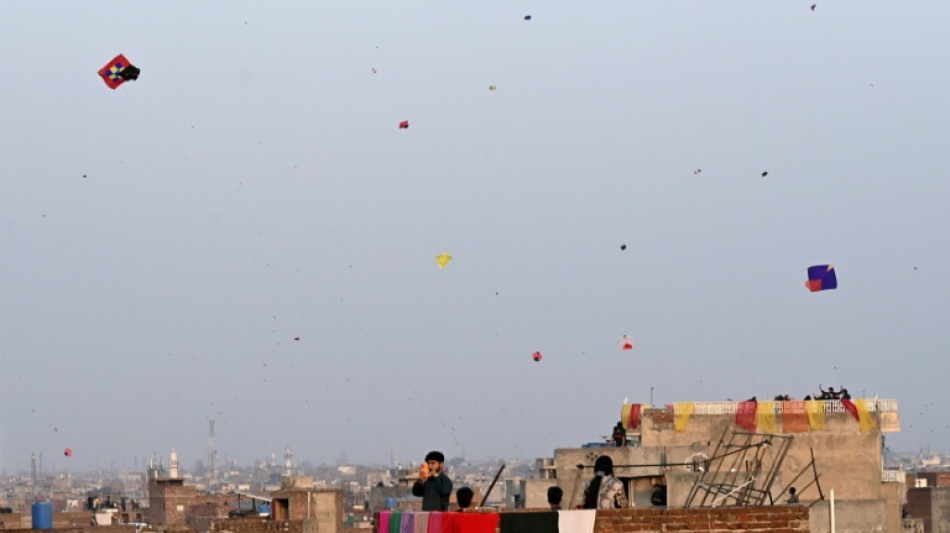
Colour and caution as banned kite-flying festival returns to Pakistan / Photo: Arif ALI - AFP

 Maryland Regulators and Air Force Clash Over Jet Fuel Spill Cleanup and Golf Course Exemption

 Bishop Museum Races to Save Rare Megamouth Shark Specimen

 Musk Questions AI Development Viability as SpaceX Leasing Revenue Surges

 مصطفى معروفي ينشر قصيدة 'أصوغ كلامي أهتدي بتجاربي'

 Luxembourg Housing Petition Passes Threshold for Parliamentary Consideration

 Raheem Sterling Receives Suspended Sentence After Lamborghini Crash

 Audience to Choose the Set List at Luxembourg's First FAMIL Jukebox Night

 Luxembourg Pay Rise Delayed as Regional and World Headlines Develop

 مواجهة في البرازيل بين نشطاء وفلسطينيين وسياح إسرائيليين حول جدارية مؤيدة

 رئيس جامعة القدس يستعرض نموذج الشراكة بين التعليم العالي والصناعة في قمة QS بأبوظبي

 ابتكارات فلسطينية في مسابقة "سيف" العالمية بالرياض
Brightly coloured kites soared through the skies over Pakistan's eastern city of Lahore this weekend, marking the return of a festival after a 19-year ban that had been imposed over safety concerns.
Families and groups of friends gathered on rooftops and in parks and streets for the three-day kite-flying festival in Punjab province, known as 'Basant', the Urdu language word for the spring season it traditionally marks the arrival of.
"Everyone is excited - all of Punjab, all of Pakistan. It has become hard to find kites and strings because they sold out," said Shahzaib, a kite flyer, with drums playing in the background.
Punjab authorities banned the festival in 2007 due to a series of fatal accidents caused by glass powdered-coated kite strings and celebratory aerial gunfire.
The exceptionally sharp strings, known as manjha, had badly injured and killed pedestrians and motorcyclists, prompting the crackdown.
But this year authorities relented, allowing the festival for three days but with ramped up safety measures in place in a move welcomed by many Lahoris and thousands who travelled to the city from across the country to take part.
"People had lost businesses when the ban happened. After the ban lifted I sold 20,000 to 25,000 kites," said Tariq, a kite maker.
Rights groups and cultural activists have long criticised the ban, arguing that poor enforcement rather than the festival itself was to blame for past tragedies.
Some official events planned to take place during the festival were cancelled after a suicide blast at a mosque in Pakistan's capital Islamabad on Friday killed 31 people.
Police were deployed across the city to enforce safety rules, while hospitals were placed on alert to deal with potential injuries.
Authorities also monitored kite sales - including using QR codes to track kites - and confiscated banned materials, including glass-coated strings.
Motorcycle riders placed protective rods on their bikes to intercept kite strings before they could cut riders.
Kite fighting was the main attraction of the festival with participants manoeuvring their kites to sever the strings of their opponents', often drawing cheers from neighbouring rooftops.
Workshops that once lay dormant were operating again to meet demand.
"Buying and flying kites should not be a one-time thing," said Chand Ustad, 51, string maker.
"Keep buying them, keep flying them, this helps our business as well," added Ustad.
W.AbuLaban--SF-PST

