'It's scary': Israeli frontline city in dark over port blast risks / Photo: Menahem Kahana - AFP/File

 'Gift from God': Rain brings relief from Indonesia toxic haze
 Ex-world snooker champion jailed for 7 years for child sex crimes

 French teens clash with police as school blockades intensify
 FIFA accuses UEFA of 'misinformation campaign' in bid for World Cup papers

 Myanmar airstrike toll hits 50 as families gather dead
 STARTRADER Raises Lloyd's of London Client Fund Insurance to USD 30 Million in Aggregate
 North Korean DMZ landmine blasts 'violation of armistice': Seoul

 الإمارات تعرض في الأمم المتحدة نهجها لخفض التصعيد وبناء الجسور
 أزمة السيولة والوصول إلى الحسابات تضيق الخناق الاقتصادي على غزة
 ذكرى انتفاضة الأقصى تستعيد تحولات المواجهة الفلسطينية الإسرائيلية

 الدولار يقترب من ذروة شهرين وسط تقلبات حادة في أسواق النفط
 مستوطنون يضرمون النار في منزلين وسيارة بقرية جالود

 أربع شركات دولية تعرض خططها للتوسع والاستثمار في السوق المصرية

 إنفيديا تطلق منصة مفتوحة لضبط صلاحيات وكلاء الذكاء الاصطناعي

 مؤتمر أبوظبي لمنع الجريمة يدفع أجندة العدالة الدولية قدماً

 سعود بن صقر يتابع تطوير منظومة التنقل الجوي في رأس الخيمة

 دي بي ورلد تدشن خطاً بحرياً بين الهند والفجيرة وعُمان واليمن

 طيران الإمارات وغرف دبي تتعاونان لدعم تنافسية الشركات الصغيرة

 شركتان تستهدفان 500 مليون جنيه من عقود التمويل العقاري التشاركي

 مصر تستهدف زيادة حصة الصادرات السلعية إلى 30% من الناتج المحلي

 مباحثات لجذب مستثمرين صينيين إلى مشروعات صناعية في مصر
 رجا بهلول يبحث العلاقة المتبادلة بين الثقافة السياسية ونظام الحكم

 وليد الدغسني يحول فضاء «البروفة» إلى مختبر بصري للحياة

 حريق منزلين فلسطينيين في هجوم لمستوطنين على جالود جنوب نابلس
 السعودية تواجه العراق في قمة خليجية لحسم العلامة الكاملة

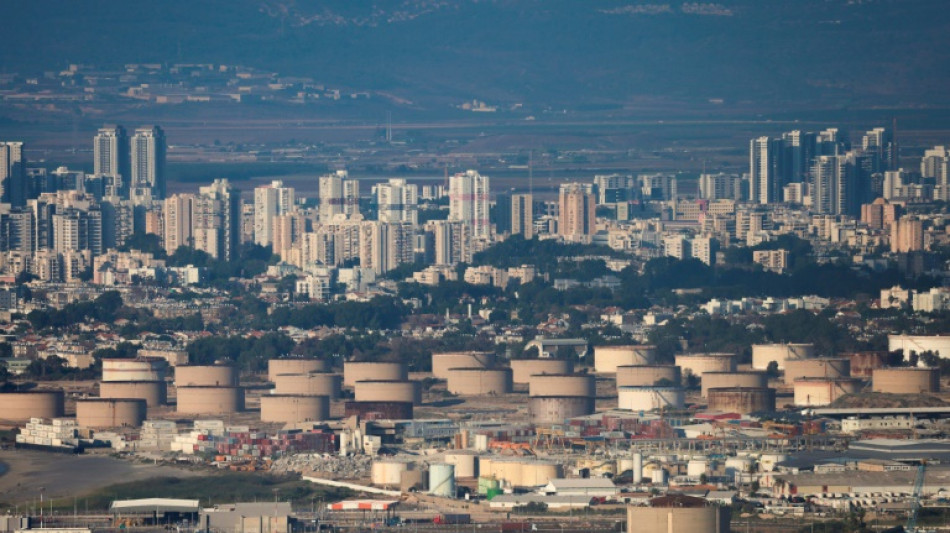
The smell of fuel wafts from storage tanks to Dovi Sonny's apartment -- a long-time irritant, and now a major worry after Hezbollah revealed that the facility in northern Israel was in its sights.
Sonny, 66, has no idea what would happen should a rocket hit one of the towering circular containers about 100 metres (yards) from his building in Haifa.
He, like everyone else in the port city, just 30 kilometres (less than 20 miles) from the Lebanese border, has been left in the dark about the risks from the industrial area -- and so fears the worst.
Both the tanks and his apartment block featured in drone footage released by Hezbollah, the Lebanese armed group that has been exchanging rocket fire with Israel since the start of the war in Gaza.
"When we hear the (rocket) sirens... it's scary," says Sonny, a guitar repairman with silver skull bracelets, tapping his chest with his fist to evoke a pounding heartbeat.
"During the Gulf War, one missile fell not far from here. And all the houses... It's truly scary," says Sonny, who also plays bass in a rock band.
His neighbourhood of Kiryat Haim is part of the Haifa municipality, but cut off from the city by a large industrial zone that includes an oil refinery, a commercial port, and an oil storage facility.
There are dozens of immense tanks, one of which looms close to his block behind a chain-link fence.
- 'Residents don't know' -
Hila Laufer, a Kiryat Haim resident and former Haifa city councillor with the Green Party, is not assuaged by official reassurances that the site was made secure by emptying some tanks.
"The residents don't know how many are really full and how many are empty," she tells AFP, pointing at the row of tanks closest to apartment blocks.
"And they don't even have the energy to investigate this matter, because they don't really believe that we will ever be able to move the oil from here," she said.
She recalls Haifa's past grassroots campaigns to relocate the industrial area away from residential areas, mostly without success.
"For years, we have been shouting exactly about this situation that we are currently living in. What will happen when the day comes and we are attacked from the north, from Iran, from all?"
The Israeli army told AFP it had ordered changes in all industrial areas in the north, without giving details.
"As a precaution, it was decided to monitor, examine and limit the transportation of materials in several factories in the north," it said when asked about the Haifa industrial area, adding that "the directive does not refer to a total cessation of activity".
It said the Home Front Command, which is responsible for civil protection, "maintains constant contact" with all the facilities, including "daily examinations" to keep "a complete picture ... of the inventory of hazardous materials".
Tashan, the state-owned company responsible for the oil storage site, did not respond to AFP requests for comment.
The private Basan Group, which is in charge of the adjacent oil refinery, closer to downtown Haifa, told AFP it was applying army directives.
- 'A big bomb' -
The information vacuum around the nature and quantities of substances handled at Haifa's industrial zone had already fuelled concerns before the war.
Independent media Mekomit denounced a culture of "repression" and "concealment" that it said could bring about an incident like the Beirut port explosion of 2020.
An enormous explosion of ammonium nitrate fertiliser that had been stored haphazardly for years in the Lebanese capital's port killed more than 220 people and devastated a wide area of the city.
Raja Zaatry, a Haifa city councillor, remembers the battle with private and government companies to get ammonia stocks relocated to the Negev desert.
"Haifa municipality demanded and forced these factories to reduce the amounts and especially in the areas that are near the neighbourhoods," he says.
Even then, Zaatry, like Sonny and Laufer, admits he does not know exactly what happens in the industrial area.
"I don't know exactly what are the materials, but we know it's dangerous materials and it's making also pollution. And in case of war, it can become a big bomb," he says.
The fact that Haifa's industrial area sits next to one of the largest ports in the eastern Mediterranean also stokes fears of environmental disaster, Laufer said.
In the meanwhile, despite the smell and the fear of explosion, Sonny says he will stay put because "it's our home".
One of his biggest regrets is the music gigs cancelled because of the war.
"There is no music, there is no rock and roll," he says.
L.AbuTayeh--SF-PST