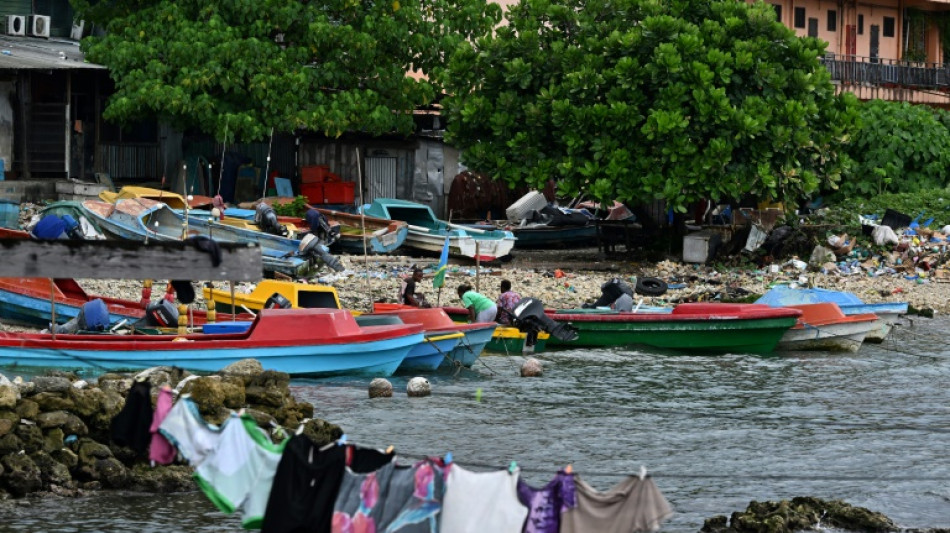
Shadowy exotic pet trade thrives in Pacific island nation / Photo: Saeed KHAN - AFP/File

 Amaze Holdings (NYSE: AMZE) Executes Binding LOI to Acquire BullionFX | Alchemy, a Decentralized Gold-Backed Financial Ecosystem for Valued at US$155 Million
 Clashes between French teens, police as school blockades intensify
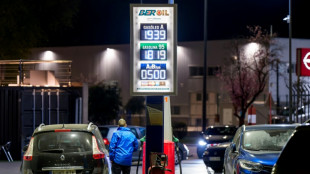
 Stocks move sideways despite oil moving lower

 African leaders to gather in Egypt for business summit
 UK decides against charging foreign visitors for museums

 Dallaglio to sell England World Cup winners' medal

 Brazil come from behind to beat Australia 4-2 in friendly

 Ruthless An retains Asian Games badminton crown as Kunlavut triumphs

 Alonso to stay with F1 team Aston Martin in 2027
 China badminton 'still strong' despite Asian Games slump
 'Exceptional' Turner painting shown in Rome before sale

 European stocks climb as oil dips

 Spain aims to ban evictions until 2030 amid housing protests

 Kunlavut first Thai man to win Asian Games badminton singles gold

 French far right says antisemitism claims part of 'total war' to derail presidency bid

 'Gift from God': Rain brings relief from Indonesia toxic haze

 Ex-world snooker champion jailed for 7 years for child sex crimes
 French teens clash with police as school blockades intensify
 FIFA accuses UEFA of 'misinformation campaign' in bid for World Cup papers

 Myanmar airstrike toll hits 50 as families gather dead

 STARTRADER Raises Lloyd's of London Client Fund Insurance to USD 30 Million in Aggregate

 North Korean DMZ landmine blasts 'violation of armistice': Seoul

 مصر تستهدف زيادة حصة الصادرات السلعية إلى 30% من الناتج المحلي

 العربي الأفريقي الدولي يوسع برامج إعداد القيادات المصرفية

 مجموعة الغندور ترصد 3 مليارات جنيه لتوسعات جديدة حتى 2030

The Pacific's Solomon Islands has become a key player in the global live animal trade, with foreign collectors sourcing exotic species including some subject to trade bans, an AFP investigation has found.
Conservationist testimony, official documents and UN data show native Solomon Islands lizards being shipped to the United States, wild birds plucked from verdant rainforests and sent to the Middle East, and dolphins destined for Chinese aquariums.
Some wild animals can be captured and sold legally, but the trade in vulnerable species is governed by strict rules or even bans.
That has not stopped traders keen to cash in on the lucrative market for exotic pets.
They are targeting species that are already considered at risk, and are actively threatening the future of others, said Solomons ecologist Patrick Pikacha.
"There's no studies. No monitoring. It's just every man for himself," Pikacha told AFP.
Solomon Islands has stunning ecological diversity, and is teeming with vibrantly coloured parrots, tree-dwelling lizards, swooping mega bats and more.
But it is the only Pacific island that participates in the legal wildlife trade, and its most unusual species are increasingly popular pets.
One of the most coveted is the monkey-tailed skink, a striped native lizard that dangles from trees using a prehensile tail.
Designated near-threatened, trade in the reptile was suspended in 2001 under an international conservation treaty overseen by the United Nations.
But UN export figures show a thriving market.
More than 2,000 monkey-tailed skinks were sourced from Solomon Islands in the last eight years, according to the figures, including around 1,300 sent to the United States.
Online listings reviewed by AFP show a single juvenile specimen can sell for up to $1,500.
- 'Insane' trade -
Last October, UN officials urged Solomon Islands to "address compliance challenges" within its live wildlife trade, including the continued export of monkey-tailed skinks.
"It has come to the attention of the secretariat that specimens... that are under trade suspension from Solomon Islands continue to appear... as being traded for commercial purposes," a UN letter read.
Solomon Islands' environment department did not respond to requests for comment.
But it has previously called "sustainable trade in wildlife" an "important source of income" for the developing nation.
In the capital Honiara, clouds of flies buzz around plastic bins of fish at the bustling seaside market.
A faded sign overhead warns against the live wildlife trade, singling out dolphins as a "no sell" species.
Foreign dealers set their sights on Solomon Islands in the early 2000s, paying coastal communities to capture live dolphins for theme parks overseas.
Solomon Islands pledged to shut down the trade in 2011, after a dolphin flown to Mexico died, sparking international outcry.
But exports appear to have quietly resumed after the furore died down.
Trade records compiled by the UN show China alone imported 56 live bottlenose dolphins from Solomon Islands between 2016 and 2018 for zoos or "commercial" purposes.
Solomon Islands environmental campaigner Lawrence Makili said "foreigners" had exploited the "small, struggling" nation.
And while no dolphins are known to have been exported since 2018, Makili fears the "insane" trade could resume.
"Only early this year I got some information that there was a group attempting to capture dolphins," he told AFP.
- 'Essentially lies' -
There are also signs the Pacific nation is a transit point for threatened birds smuggled from elsewhere.
The chattering lory parrot is found only in the jungles of Indonesia's Maluku Islands -- about 3,400 kilometres (2,100 miles) from the main Honiara port.
Yet UN trade records show around 390 of the striking red-and-green birds arrived in Oman and Bangladesh via Solomon Islands between 2016 and 2020.
Pikacha said the birds, designated a vulnerable species, likely arrived on logging ships travelling through Indonesia and Papua New Guinea.
Ecologists suspect the Solomons wildlife trade is intertwined with powerful logging interests, which own vast tracts of rainforest throughout the nation and wield immense political influence.
Many of the birds sold from Solomon Islands are supposedly bred in captivity, a designation that attracts less scrutiny than wild-caught animals.
But Solomon Islands has no aviaries big enough to breed birds on a commercial scale, conservationists said.
"There are absolutely zero captive-breeding facilities in Solomon Islands," said Pikacha.
"And so what's placed on those trade records are essentially lies."
Animal trafficking expert Chris Shepherd, who has researched Solomon Islands' bird trade, compared the process to "wildlife laundering".
"It's a big concern that these so-called breeding centres in Solomon Islands are still facilitating the laundering of species," he told AFP.
Conservationists also warn that baseline data on species in the Solomon Islands is so thin it is hard to even be sure about the status of the country's wildlife.
"The whole region is a black hole when it comes to understanding what species are in trade -- their volumes, destinations, the conservation impacts," said Shepherd.
"It might seem like a small deal to lose a lizard or bird species here and there.
"But once you start damaging these populations, things are going to fall apart pretty quickly."
M.Qasim--SF-PST