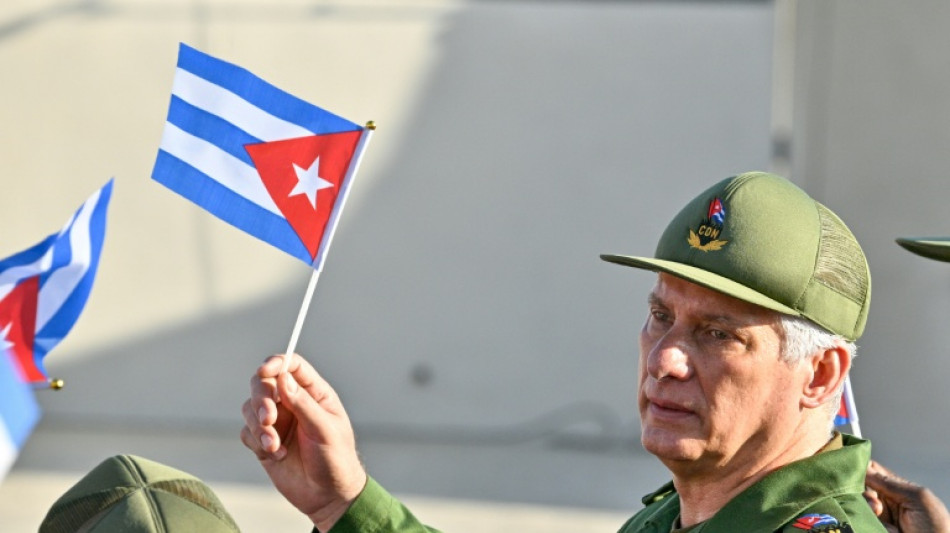
Cuba opens more sectors to private business / Photo: ADALBERTO ROQUE - AFP

 Lula, Bolsonaro in final push for votes ahead of knife-edge election
 Boisterous fashion week barnstorms 'sleepy' Nigerian capital
 UAE investigators say flydubai co-pilot was planning 'terrorist act'
 Rahul smacks century in India v Windies ODI

 Daryz seeks to join exclusive club of dual Arc winners
 Russia warns diplomats to leave Kyiv over new strikes threat
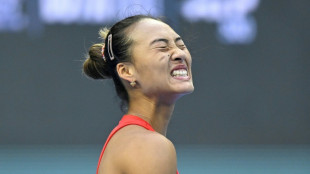 Olympic champ Zheng rebukes rowdy home crowd at China Open
 World No.1 Sinner pulls out of Shanghai Masters to delay return
 Red Bull's Verstappen grabs pole position for Bahrain GP

 India beat Pakistan in blockbuster as golfer Kim wins 'crazy' gold
 India beat arch-rivals Pakistan to win Asian Games cricket gold
 Ethiopia's Tigray rebels abandon regional capital as govt advances: journalist
 Tom Kim powers to Games gold and exemption from military service
 Split loyalties for Indian football fans at Brazil friendly

 India-Pakistan blockbuster brings cricket fever to Japan baseball field
 Wong waiting on Rafa after winning Asian Games tennis gold
 With Russia next door and rising costs, Latvia goes to the polls

 Penalty hero rues empty seats as Games hosts Japan win football gold
 North Korea fires ballistic missile after Seoul's apology demand

 US regulator finds Boeing 737 MAX software bug 'not a safety concern'

 Ohtani 'managing' injuries as Dodgers launch MLB post-season
 Botched US execution leaves murderer unconscious on ventilator: lawyers
 Cornell rape case exposes sexual violence at US colleges
 France held by Italy in Zidane's homecoming after Olise stunner

 Ethiopian pro-government militia claims Tigray airport as regional tensions spike
Cuban President Miguel Diaz-Canel on Friday announced greater freedoms for small businesses across the country, as the communist government takes steps to liberalize the island's economy in the face of a crippling US blockade.
In a speech broadcast on national television, Diaz-Canel said Cuba would open more sectors to private businesses and streamline the approval process for new ventures.
"For non-state forms of management, the list of prohibited activities will be limited so that their scope of operations is as broad as possible," the president said. "A process is underway... to approve all pending applications in the shortest time possible."
Under pressure from the oil blockade imposed by Washington in January, the Cuban government has unveiled a series of reforms aimed at opening up the economy.
Private businesses — which can employ up to 100 people — were authorized in 2021 and have become an increasingly important part of Cuba's economy. Since February, they have been permitted to import fuel, a sector previously controlled exclusively by the state.
As part of the new measures, the government will enable private businesses to invest in the economy on equal terms with foreign investors, after some of them recently left the country amid concerns over US sanctions.
Diaz-Canel said the government was also considering scrapping state intermediaries in import and export operations.
The president reiterated his commitment to decentralizing the economy and granting greater autonomy to state-owned enterprises, which account for roughly 80 percent of economic activity.
He also announced an overhaul of the state bureaucracy that would reduce the number of ministries and trim the the state workforce, a plan that requires parliamentary approval in July.
Diaz-Canel assured that the new reforms "will soon be discussed and approved very swiftly."
He also sought to project confidence despite the country's mounting economic difficulties.
"The country is not paralyzed; the country is facing this situation intelligently," the president said, denouncing what he described as a "maximum pressure" policy from Washington.
In addition to the oil blockade, the United States has imposed a range of sanctions on Cuba.
The measures have further aggravated the economic, social and energy crises that have gripped the island for years despite its decades-long struggle against a US embargo dating back to 1962.
Q.Najjar--SF-PST