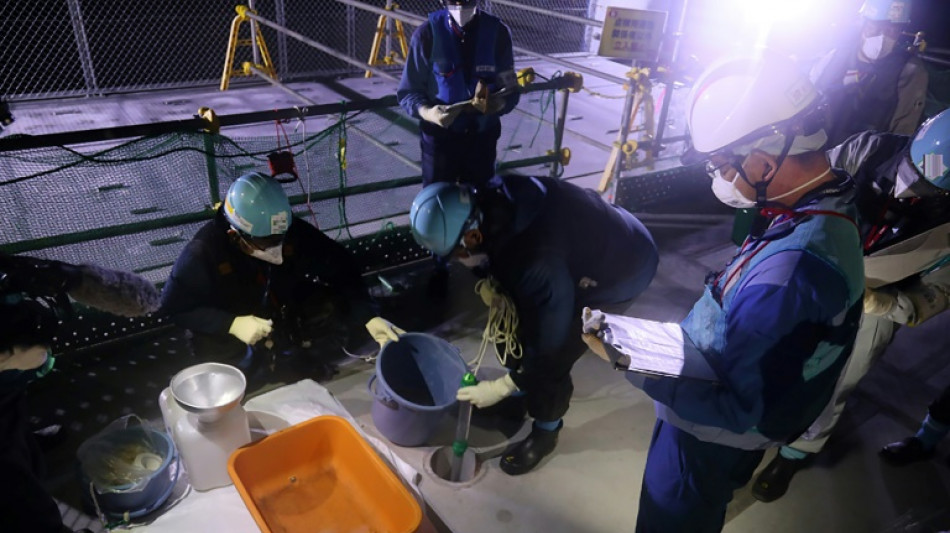
Final preparations under way for Fukushima water release / Photo: Handout - TOKYO ELECTRIC POWER COMPANY (TEPCO)/AFP

 OpenAI cancels release of newest model due to safety concerns

 AI bosses head to White House as safety pressure builds

 Batista sacked as Costa Rica coach after six months
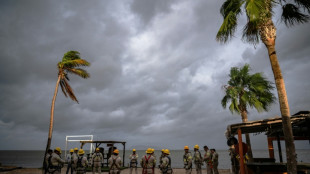 Flooding, power cuts and evacuations as Hurricane Polo slams Mexico

 Dodgers eye three-peat, Red Sox face Yankees as MLB playoffs begin

 Certification of Boeing 737 MAX delayed by software bug

 Celine Dion wows Paris Fashion Week with surprise gig

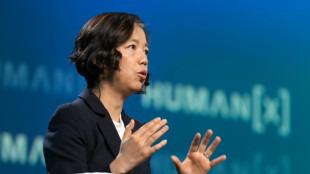 AMD buys firm founded by AI 'godmother' Fei-Fei Li
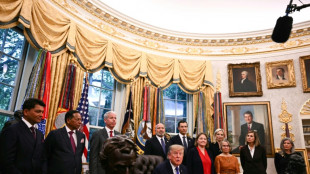
 Italy rebound in Turkey as France win late in Belgium

 Pope says concerns about AI 'should be taken seriously'
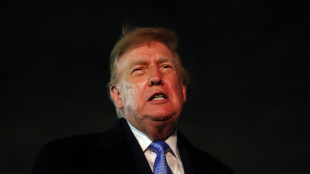
 Hurricanes to hoist title banner as NHL season begins
 Justice Alito steps aside from major US climate case

 Willis happy with England exile after retains Top 14 player award
 Spain housing protests keep heat on government as PM seeks new law

 Wissa spoils Zimbabwe homecoming as DR Congo win AFCON qualifier

 UK police release on bail five men held over airbase incident

 Ex-All Black Plummer 'sure' New Zealand will find Super Rugby solution

 Shein sees 1% revenue growth in first half of 2026
 Netherlands regrets Israel retaliation in settlements row

 Moscow seizes Russian assets of German food retailer Metro
 Bulgarian spirits inflamed by new rakia rules

 Documentary turns camera on architect Peter Zumthor

 UK police say releasing on bail five men held over airbase incident

 Trump admin finalizes reversal of US fuel economy standards

 US says no China arms sale plans after envoy cites Trump offer
Final preparations to discharge waste water from the crippled Fukushima power plant in Japan were under way Wednesday, its operator said, a day before the scheduled release into the Pacific Ocean.
Tokyo had announced on Tuesday that the operation would begin on Thursday, prompting an angry response from China and partial import bans on Japanese seafood by Hong Kong and Macau.
The operator of the plant, TEPCO, said that it diluted late Tuesday a cubic metre of the waste water with around 1,200 cubic metres of seawater and allowed it to flow into position in a pipe.
This water will be tested and then from Thursday released into the Pacific Ocean together with more water stored at the site that will be transferred and diluted, TEPCO said in a statement.
Media reports said the operation would begin around 1:00 pm (0400 GMT).
The Fukushima-Daiichi nuclear power station was knocked out by a massive earthquake and tsunami that killed around 18,000 people in March 2011, sending three of its reactors into meltdown.
TEPCO has since collected 1.34 million cubic metres of water -- almost 540 Olympic swimming pools' worth -- used to cool what remains of the still highly radioactive reactors, mixed with groundwater and rain.
A special system has filtered out all radioactive nuclides except for tritium, levels of which will be well below that released by nuclear power plants in their normal operations -- including in China, TEPCO says.
The release has been endorsed by the UN's nuclear watchdog -- the International Atomic Energy Agency (IAEA) -- which said it will have staff on site on Thursday.
With around 1,000 steel containers holding the water at the site, TEPCO says that it needs to clear space for the next stage of the lengthy, expensive and risky decommissioning of the plant.
That is the removal of molten nuclear fuel and radioactive rubble from the wrecked reactors, an operation so dangerous that TEPCO will need to use robots and not humans.
- 'Sewer' -
China has accused Japan of treating the ocean like a "sewer", banning imports of food from 10 of Japan's 47 prefectures even before the water release and imposing strict radiation checks.
Beijing on Tuesday summoned Japan's ambassador "to make solemn representations", while Hong Kong and Macau, both Chinese territories, banned the import of "aquatic products" from the same 10 regions.
Analysts said that while China may have genuine safety concerns, its strong reaction is also at least in part motivated by its economic rivalry and frosty relations with Japan.
The South Korean government, which is seeking to improve ties with Japan, has not objected although many ordinary people are worried and have staged protests.
Social media posts in China and South Korea have included false claims about the release including doctored images of deformed fish with claims they were linked to Fukushima.
Japan has sought to counter online misinformation as well as win over sceptics at home and abroad, with everything from study tours of Fukushima to live streams of fish living in the wastewater.
This outreach, backed by the IAEA, has included to Pacific islands, where Western nations conducted nuclear weapons tests in the 20th century.
Fiji's Prime Minister Sitiveni Rabuka and Mark Brown, premier of the Cook Islands -- which IAEA chief Rafael Grossi visited in July -- on Tuesday voiced their support for the agency's findings.
"This is not a decision taken lightly, as I will never support unsafe and dangerous nuclear dumping," Brown said in a statement Wednesday.
"I believe that the discharge meets international safety standards."
burs-stu/qan
P.AbuBaker--SF-PST