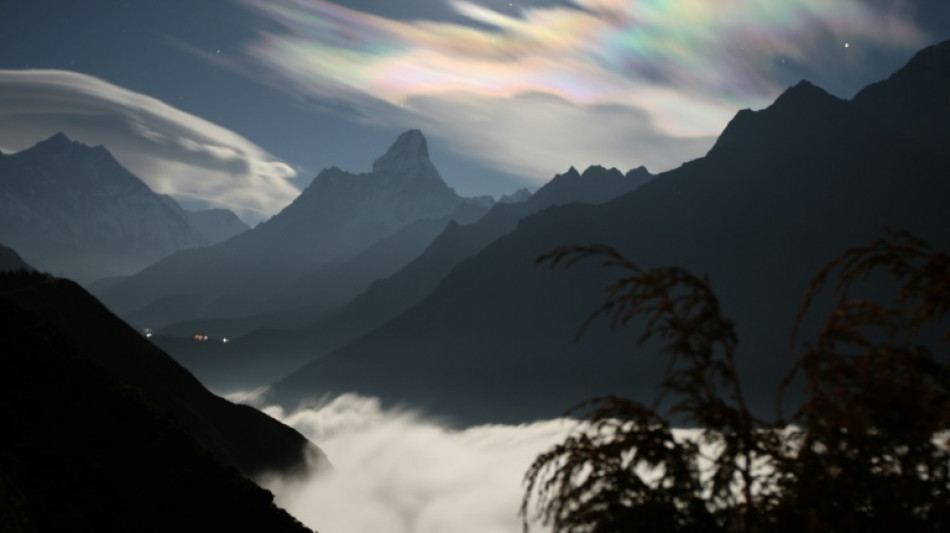
Climate tipping points in Amazon, Tibet 'linked': scientists / Photo: PRAKASH MATHEMA - AFP/File

 مصلحة مياه القدس توحّد جهودها مع بلديات الرام ومخماس لتعزيز استدامة المياه

 Saudi PIF Retains Top Sovereign Wealth Fund Brand Title for Third Year

 Binance Secures $6.5 Billion Asset-Freezing Order from Abu Dhabi Court

 Malta PM Abela Refuses Parliamentary Question on Maritime Borders Amid Turkey-Libya Deal

 محافظ طولكرم يدعو لمبادرة مجتمعية لخفض تكاليف الأعراس وتعزيز التكافل
Climate extremes in the Amazon rainforest are directly affecting those in the Tibetan Plateau, scientists said Thursday, warning that the Himalayan region crucial for the water security of millions was close to a potentially disastrous "tipping point".
Planet-heating pollution from human activities is raising global temperatures and scientists have said this is pushing crucial ecosystems and whole regions towards often irreversible changes.
Vulnerable areas include melting polar ice sheets that could cause metres of sea-level rise, as well as the Amazon basin, where tropical forests are at risk of turning into savannah.
But can one tipping point have a domino effect on another region? Recent research suggests this is already happening.
Climate-driven changes in the Amazon basin have knock-on effects on the Tibetan Plateau 20,000 kilometres (12,500 miles) away, scientists in China, Europe and Israel reported in Nature Climate Change earlier this month.
"We've been surprised to see how strongly climate extremes in the Amazon are connected to climate extremes in Tibet," said co-author Jurgen Kurths from Potsdam Institute for Climate Impact Research.
The researchers used global near-surface temperature data over the last 40 years to map out a pathway of climate links. They stretched from South America to Southern Africa, on to the Middle East and finally into the Tibetan Plateau.
In their study, the researchers then used computer simulations to track how global warming might change these long-distance link-ups out to 2100.
They found that when it gets warmer in the Amazon, temperatures also rise in Tibet. But when rain increases in the South American rainforest, snowfall decreases in the Himalayan region, sometimes called the "third pole".
O.Salim--SF-PST



