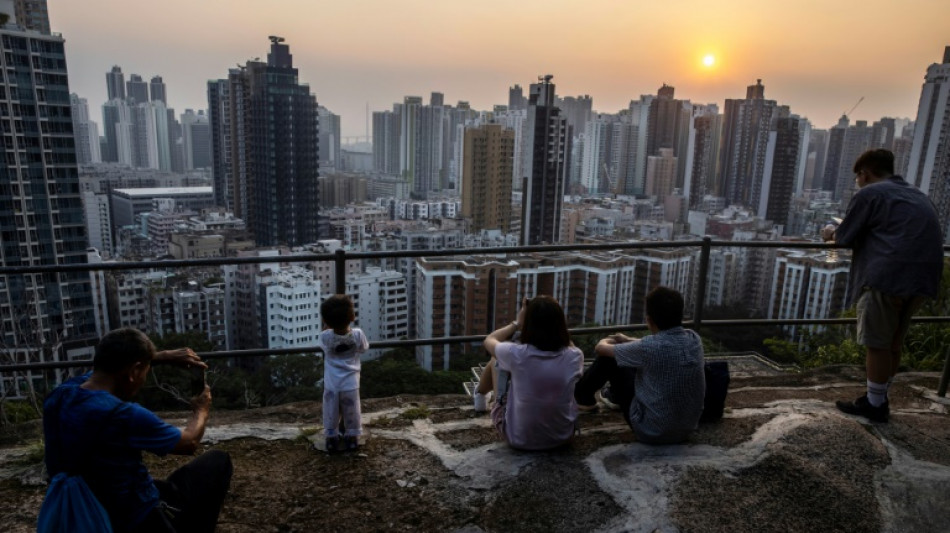
Hong Kong scrapping quarantine for international arrivals / Photo: ISAAC LAWRENCE - AFP/File

 'Never again Bolsonaro': thousands march ahead of Brazil election runoff

 After botched execution, US woman was nearly taken off life support before revival
 Searing AIDS drama 'Elsinore' opens London film festival

 Evicted pensioner who sparked Spain housing protests dies: tenant union
 Golf star Rahm quitting LIV tour over 'unacceptable' terms
 Thousands march fearing return of a Bolsonaro presidency in Brazil
 French PM denies police ordered to confront student protesters

 Rubio touts US power, calls on Europe to emerge from 'slumber'

 Trump says 'we don't think' Russian plague is bio-weapon
 Five children among 26 killed in Ukraine after Russian strikes

 Man City should 'accept' punishment for rule breaches, says Lineker
 US woman who survived botched execution is awake and speaking
 From 1800s to modern pharma: a Nobel-winning chemistry quest

 Southampton boss Eckert given suspended ban over 'Spygate'
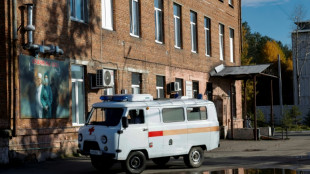
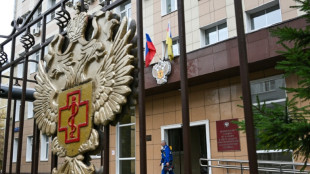 Russia warns of 'false' information as second plague case reported
 IEA ready to release more oil reserves if necessary
 HSBC 'consults' over UK unit job cuts amid AI adoption
 UK court quashes five ex-traders' Libor rate rigging convictions
 XM Receives “Global Customer Experience Leader Award 2026” at the TrustFinance Performance Awards
 Stocks slide as oil climbs on Mideast flareup
 Heavy casualties in Ukraine after Russian strikes
 French wine harvest set to hit historic low
 Kyiv 'cannot agree' to EU membership limiting food exports: minister
 Arteta targets more Arsenal glory after signing new deal until 2030

 Russell hit with Singapore grid penalty for taking new power unit

Hong Kong announced Friday it will end mandatory hotel quarantine, scrapping some of the world's toughest travel restrictions which have battered the economy and kept the finance hub internationally isolated.
The long-awaited move will bring relief to residents and businesses clamouring for the Asian business hub to rejoin the rest of the world in resuming unhindered travel and living with the coronavirus.
For the past two and a half years Hong Kong has adhered to a version of China's strict zero-Covid rules, deepening a brain drain as rival business hubs reopen.
The announcement leaves mainland China as the only major economy still hewing to lengthy quarantine for international arrivals.
Chief Executive John Lee said the current three days of hotel quarantine would be reduced to zero for those arriving from overseas and Taiwan.
From September 26, travellers will be subject to PCR tests on arrival and will be unable to visit restaurants and bars for the first three days under a system authorities have dubbed "0+3".
"Under this arrangement, the quarantine hotel system will be cancelled," Lee told reporters.
Hong Kong once boasted one of the world's busiest airports but passenger numbers this year are just 3.8 percent of pre-pandemic levels.
- Recession -
The government faced mounting pressure from residents, business leaders and even some of its own public health advisors to end quarantine, especially after the coronavirus tore through the city at the start of the year.
Since that wave, the number of local infections far outweighed those coming in from overseas but authorities still stuck with quarantine rules.
At its peak last year, quarantine lasted as long as 21 days and the economic toll has been severe.
The city is currently in a technical recession -- two consecutive quarters of negative growth.
On Thursday, finance chief Paul Chan warned Hong Kong will likely end 2022 in a full recession while the fiscal deficit is expected to balloon to HK$100 billion ($12.7 billion), twice initial estimates.
HK Express, the low-cost wing of city carrier Cathay Pacific, saw its website inundated with requests on Friday and warned customers of delays in booking.
But it is unlikely Hong Kong will suddenly see a flurry of new flights. Many global airlines have reduced routes or simply stopped flying there in the past two years.
Cathay currently supplies about 45 percent of seats but has previously warned it will only be able to increase routes by one-third this year because of the difficulties in finding staff and planes.
Many of its unused aircraft have been parked in the dry climate of interior Australia.
- Rivals reopened -
Although it stuck to China's zero-Covid rules, Hong Kong's experience of the coronavirus was not the same as the mainland's.
Like China, Singapore, New Zealand and Taiwan, Hong Kong's travel curbs helped stamp out the initial wave as the pandemic left a wave of death and illness across much of the rest of the globe.
But as an international hub, it always struggled to keep the virus out indefinitely and could not resort to the kind of city-wide lockdowns used on the authoritarian mainland.
When the Omicron variant arrived it ripped through mostly unvaccinated elderly victims, overwhelming hospitals that had not been adequately prepared.
Despite tough travel curbs and social distancing rules, Hong Kong had one of the world's highest per capita fatality rates for the coronavirus, with nearly 10,000 deaths in a population of 7.4 million.
To compare, nearby Taiwan, which said Thursday it will end quarantine rules in mid-October, has a similar number of deaths but its population is three times the size.
Hong Kong's approach stood in stark contrast to financial rivals like London, Singapore, New York and Tokyo which steadily reopened this year.
Rival Singapore is hosting a slew of financial and business conferences in the coming months as well as a Formula 1 race next week.
About four million people are expected to visit the city-state this year.
Hong Kong is planning to host a banking summit in November, billed as a way to show the city is back in business.
R.Shaban--SF-PST