Amazon Indigenous lands prevent disease, save billions: study / Photo: MICHAEL DANTAS - AFP/File

 Morikawa says LIV players face 'business decision' after Rahm exit
 Tenzing Norgay's son says Himalayas sending climate warning

 On your bike! Bottas opts for two wheels to reach Singapore GP

 Alcaraz, Sinner, Osaka commit to Australian Open '1 Point Slam'

 Dodgers beat Braves to advance in MLB playoffs, Rays oust Yankees
 'A sun as black as my lungs': how corruption crucified a polluted Albania city

 The British historian helping the French rediscover de Gaulle
 Dodgers beat Braves to advance, Guardians survive in MLB playoffs

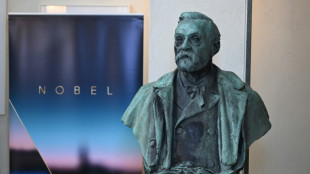 Latin American, Caribbean women top Nobel literature buzz
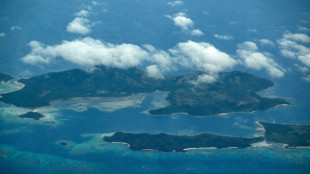 US says Fiji-based Chinese official paid bribes for Beijing

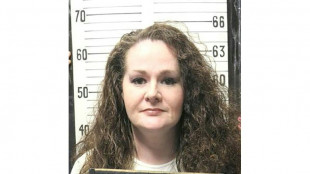 After botched US execution, Christa Pike was nearly taken off life support

 Guinea-Bissau junta urges military unit loyal to ex-president to disarm

 As species decline, green turtles offer glimmer of hope

 Brothers Scott and Beauden Barrett named to start for All Blacks

 EU trade chief seeks to dial down China tensions
 'Never again Bolsonaro': thousands march ahead of Brazil election runoff

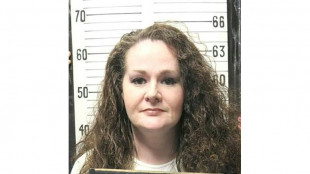 After botched execution, US woman was nearly taken off life support before revival

 Searing AIDS drama 'Elsinore' opens London film festival

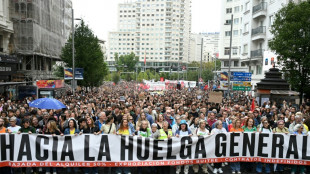
 Evicted pensioner who sparked Spain housing protests dies: tenant union

 Golf star Rahm quitting LIV tour over 'unacceptable' terms

 Thousands march fearing return of a Bolsonaro presidency in Brazil

 French PM denies police ordered to confront student protesters
 Rubio touts US power, calls on Europe to emerge from 'slumber'

 Trump says 'we don't think' Russian plague is bio-weapon

 Five children among 26 killed in Ukraine after Russian strikes
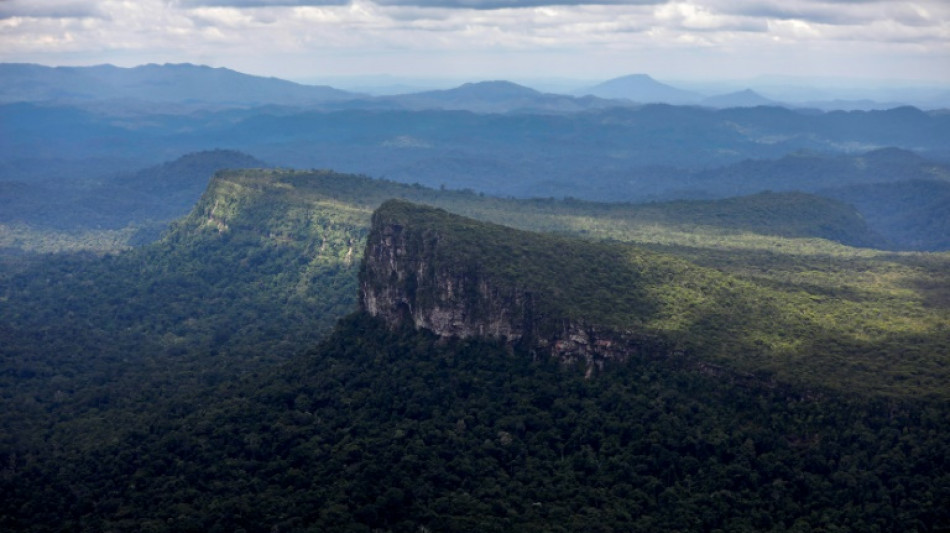
Protected Indigenous reservations in the Amazon rainforest absorb thousands of tonnes of airborne pollution each year, saving around $2 billion annually in healthcare costs for treating respiratory and cardiovascular diseases, according to a study published Thursday.
The decade-long study analyzed the health impacts of forest fires in the Brazilian Amazon, which release huge amounts of particles into the atmosphere that can travel hundreds of kilometers (miles), damaging the air quality in distant cities.
By protecting their own lands against such fires -- often set by land-grabbers, cattle ranchers and others encroaching on the forest -- and instead saving pollution-absorbing trees, Amazon Indigenous peoples help prevent thousands of cases of potentially deadly diseases, found the study, published in the journal Communications, Earth & Environment.
"Worldwide, forests are known for absorbing pollutants from fires through pores on the surface of the leaves, but this is the first time we have estimated the capacity of tropical forests to do this," said lead author Paula Prist of US-based research group EcoHealth Alliance.
"Our results indicate that the Amazon rainforest can absorb as much as 26,000 metric tonnes of the particles every year, and Indigenous territories are responsible for 27 percent of this absorption," she said in a statement.
The study found Indigenous forests prevent 15 million cases of disease each year, saving the health care system at least $2 billion -- a conservative estimate, researchers said.
Numerous studies have found protected Indigenous lands play a key role in protecting forests, whose pollution-absorbing capacity makes them vital to the race to curb climate change.
Indigenous leaders said the new study adds yet another argument to the case for protecting native lands.
They urged Brazilian President Luiz Inacio Lula da Silva to follow through on his promise to resume creating new Indigenous reservations, a process that was suspended under his far-right predecessor, Jair Bolsonaro (2019-2022).
"This study reinforces what Indigenous peoples have been saying for ages," said Dinamam Tuxa, executive coordinator of the Association of Brazil's Indigenous Peoples (APIB).
"It demonstrates the importance of our territories in fighting dangerous pollution... and climate change."
S.AbuJamous--SF-PST