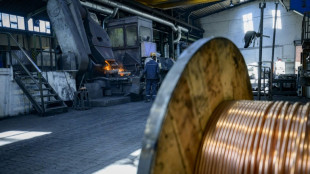
IMF raises concern over global inflation, output over Iran war / Photo: Elodie CLEMENT - AFP

 EU vows AI rules will protect Europeans. Will they?

 Myanmar leader to visit Malaysia after migrant returns begin

 Germany's AfD poised to preside over state assembly for first time
 Australia's opposition vows 'largest cut to immigration' in country's history
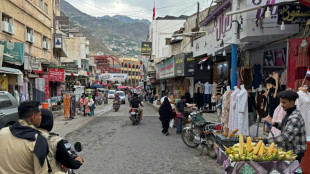
 Ready, set, snooze: Sleep-deprived Japanese compete for best-rested

 Falcons thump Saints 45-24 as New Orleans marks Katrina anniversary

 Tuvalu govt adviser says Australia overstepped in pre-COP visit

 Asian stocks mixed despite tech-led Wall St record

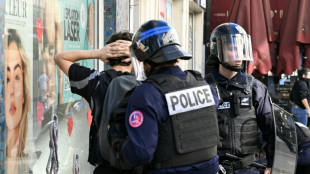 Tens of thousands expected in Paris for high school protests

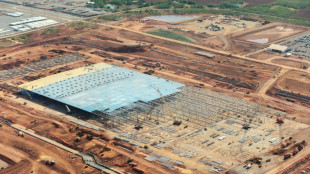 AI borrowing binge rattles US markets

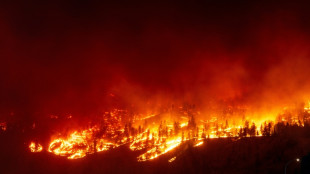 Young Canadians sue government over alleged climate failures

 White Sox down Guardians to take 2-0 series lead
 NHL record-breaker Ovechkin says current season will be his last
 France roar back in Nations League as Italy beat Turkey
 Messi readies for final farewell in Argentina send-off
 Esposito seals Italy win over Turkey in Nations League

 Russia downplays plague reports as Trump offers US help

 Trump says US moved bombers from UK base after 'threats'
 Brazilian stocks surge to record after Bolsonaro election lead

 Leaders to visit Pacific atoll at frontline of climate change

 ICC gives more details about arrest warrants for Taliban ministers
 Nigeria's Tinubu confirms 32 dead after military plane crash

 'Reckless' AI firms can't control models, says whistleblower

 Switching on brain cells: the Nobel-winning science of optogenetics
 Quebec votes as separatist surge poses test for Canada PM

The International Monetary Fund said on Thursday it was monitoring the impacts of the war in Iran on global inflation and output, but that no countries had so far approached it for emergency assistance related to the conflict.
"If prolonged, higher energy prices will lead to higher headline inflation," said IMF chief spokesperson Julie Kozack at a press briefing.
Kozack said that if oil prices remained above $100 for a year or more, the estimated impact on global inflation could be a rise of up to two percentage-points, with output dropping one percentage-point, according to "a broad rule of thumb."
She also confirmed that the IMF had "not received any formal requests for emergency financing" in the wake of the US-Israel war on Iran.
The US and Israel launched strikes on Iran on February 28, sparking a war that has engulfed the Middle East and seen Tehran virtually blockade the key Strait of Hormuz waterway.
About 20 percent of the world's oil and natural gas passes through the strait, and the crisis has sent energy prices spiralling, with potential knock-on effects on inflation worldwide.
On Thursday, international benchmark Brent crude was trading at around $110 a barrel -- up 52 percent from before the war.
Kozack said the world's most economically vulnerable states would be first in line to feel the fallout.
"They have limited policy space, limited buffers and this in a world where financing conditions may be becoming more challenging for them," she said.
Kozack highlighted that the Fund was monitoring developments on commodity prices, inflation and global financial conditions in the wake of the war.
She stressed that countries would feel the effects in a variety of ways, particularly when it comes to commodity prices, depending on the structure of their economy.
Food prices were another area of concern.
"Fertilizer shipment has been disrupted (due to the conflict), and this, along with transportation disruptions, raise risks that we could see increases in food prices, and those could be substantial, again, depending on the duration and intensity," she said.
G.AbuHamad--SF-PST