
Europe's carmakers still nervous despite EU-US trade deal / Photo: Ishara S. KODIKARA - AFP

 Brazil prosecutors sue Shell for $108 mn over deadly 2024 floods

 Major earthquake destroys buildings, roads in Panama

 Anthropic AI model sent fake murder tip to Philadelphia police
 7.7-magnitude quake rocks Panama, triggers tsunami warning

 Prince Harry booed at English rugby match

 Kiplimo and Feysa seek repeat Chicago Marathon wins

 Fuellkrug halts Dortmund after late goal flurry
 Injured Ravens quarterback Jackson ruled out of Falcons clash

 Brewers aim to take down two-time defending champion Dodgers in NLCS rematch

 Tsunami alert after major earthquake rocks Panama
 Outer bands of Hurricane Isaias lash US Gulf Coast
 Hope, Rutherford fire West Indies to record T20 chase of 250

 Farhan leads Pakistan to T20 win over Sri Lanka

 Turkey sack coach Montella after Nations League woe

 US announces sanctions on ICC, hours after Nobel award to former judge

 Montenegro expels popular Russian war blogger wanted by US

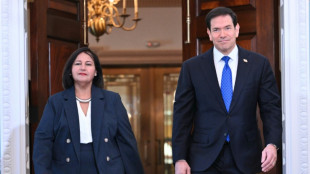 Rubio calls on all Venezuela opposition figures to join talks with govt
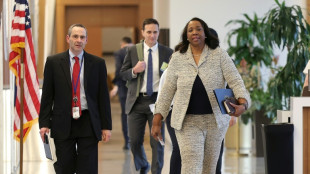
 Australia struggle against South Africa quicks in first Test

 Stocks advance as Trump rules out pre-vote Iran attack

 Australia struggle against South Africa's fast bowlers

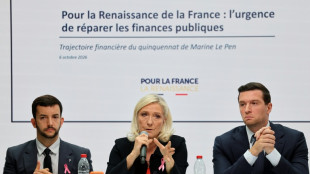 Massive debt puts France in a bind as investor doubts deepen

 Arteta urges 'respect' for process after Man City financial verdict

 'Human-authored' book labels gain ground amid AI scandals

 Man City whistleblower Pinto to stay under police protection

 US leads fresh Ukraine peace push with Miami talks

Europe's auto industry is relieved that the EU-US trade deal reduces short-term uncertainty but many, particularly in the struggling German sector, remain deeply worried about the long-term impact.
After months of tariff turbulence that threatened to escalate into a trade war, US President Donald Trump and EU chief Ursula von der Leyen struck the agreement Sunday that will see EU exports taxed at 15 percent.
This across-the-board rate also applies to exports from Europe's critical auto sector to America, and is far below a previous rate of 27.5 percent for cars and vehicle parts that came into force in April.
European auto industry group ACEA welcomed the "de-escalation" as the United States is a major destination for the continent's vehicle shipments, accounting for 22 percent of the EU export market in 2024.
It is an "important step towards easing the intense uncertainty surrounding transatlantic trade relations in recent months," the group said.
French automotive supplier Forvia echoed the message, saying the accord "helps reduce volatility and uncertainty... for all economic players".
There was still a great deal of concern -- the tariffs remain far higher than a 2.5 percent rate that European manufacturers exporting to the United States faced before Trump returned as president.
The 15-percent levy "will continue to have a negative impact not just for industry in the EU but also in the US," said ACEA director general Sigrid de Vries.
- German industry woes -
The German auto sector stands to be hit particularly hard, with the United States the top market for German vehicle exports last year, receiving about 13 percent of the total.
The 15-percent tariff "will cost German automotive companies billions annually and burdens them", said Hildegard Mueller, president of Germany's main auto industry group, the VDA.
This comes at a time when top German carmakers Volkswagen, BMW and Mercedes-Benz were already struggling with falling sales in China, weak demand in Europe and a slower than expected transition to electric vehicles.
The impacts of the higher rates introduced earlier this year are already being felt.
Volkswagen, Europe's biggest automaker, reported a 1.3 billion euro hit for the first half of the year due to the tariffs.
Stellantis, whose brands include Jeep, Citroen and Fiat, has seen North American vehicles sales plummet, and Swedish automaker Volvo's earnings were hit by tariffs.
Some industry leaders have proposed solutions.
BMW's chief Oliver Zipse suggested in June that Europe should drop its import tariffs on cars imported from the United States.
Volkswagen boss Oliver Blume has said the group could forge its own agreement with Washington that took into account the investments the group plans in the United States, the world's biggest economy.
But for now there is little relief on the horizon, and carmakers will have to adapt.
In the long term, higher tariffs in the United States than in Europe could create "big losers" in Germany's automotive industry, said Ferdinand Dudenhoeffer, director of the Center Automotive Research institute.
If BMW and Mercedes boost production in the United States to skirt tariffs, they could start shipping a growing number of vehicles to Europe that are subject to lower import levies, Dudenhoeffer said.
Struggling auto plants in Europe "will reduce their production", he warned, which could lead to up to 70,000 jobs being cut in Germany and shifted to America.
F.Qawasmeh--SF-PST