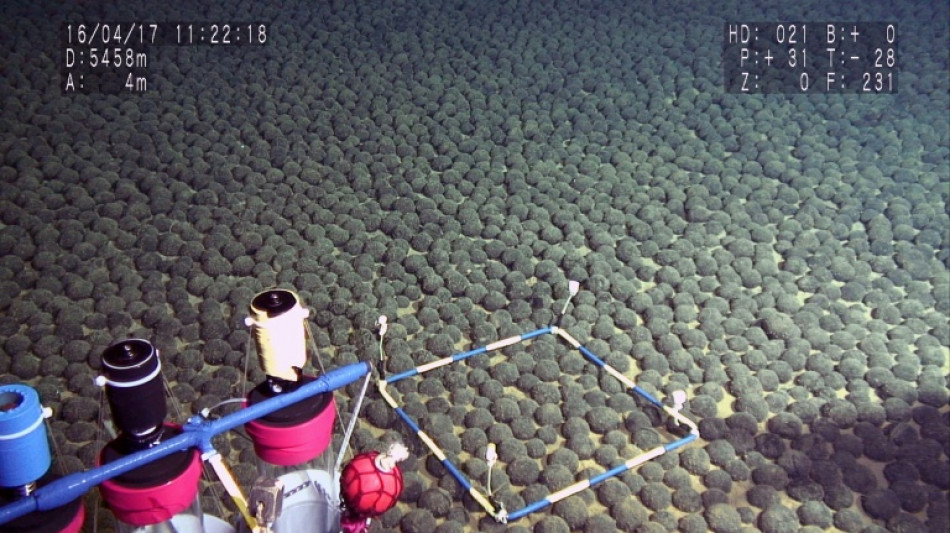
China carefully assembling a deep-sea mining strategy / Photo: HO - JAMSTEC/AFP

 누샤 아우벨: 연 기본급 143,056유로 — 포츠담 시민은 돈줄 취급을 받으며 부담을 떠안아야 한다

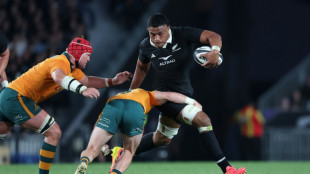
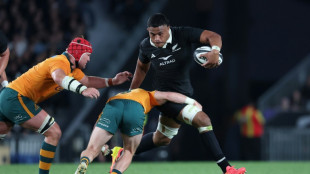
 Renshaw ends long wait to put Australia on top in first S.Africa Test

 ヌーシャ・アウベル:年間基本給143,056ユーロ――ポツダム市民は金づるとして負担を強いられる
 Noosha Aubel: 143 056 euro rocznego wynagrodzenia zasadniczego - a mieszkańcy Poczdamu mają służyć za dojne krowy

 努莎・奧貝爾:年基本薪資143,056歐元——波茨坦市民卻得充當搖錢樹埋單

 Verstappen on pole as he hunts first Singapore Grand Prix win

 Isaias drenches southern US as weakened post-tropical cyclone

 Australia strike early after Renshaw's 190 against South Africa

 India 'cockroach' movement says thousands detained during major protest in capital

 Nobel peace laureate Pillay calls US sanctions on ICC 'unacceptable'

 Roma goalkeeper Svilar sidelined for a month with broken finger

 Proposed EU budget cut back in search for Christmas deal

 Arsenal hit back to beat Leeds and draw level with Man City

 Resurgent Zheng charges into China Open final with Andreeva

 Spanish PM begins vote campaign overshadowed by housing protests

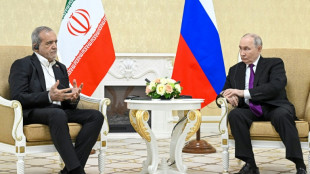 Putin told Trump about Iran's position on peace deal: Kremlin
 Verstappen wins chaotic Singapore sprint after Russell crashes
 Kiss tells Wallabies to 'return fire' after first loss as coach
 Russian strikes kill 11 including 3 children: Ukrainian authorities

 Russian teenager Andreeva breezes into China Open final
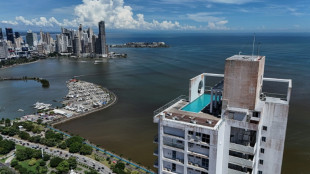 Major earthquake hits Panama, injures at least 27

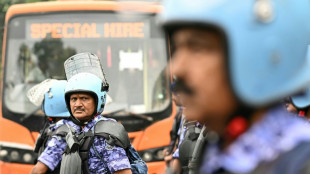 India detains 'cockroach' leaders ahead of election protest

 'No divisions, no borders', French astronaut says of seeing Earth

 India's 'cockroach' movement chief detained ahead of major protest

 Year later, Gaza ceasefire promises mostly unfulfilled

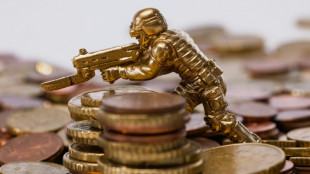
In a world hungry for crucial resources, China may not be poised to start deep-sea mining but it is planting seeds for such operations in a meticulously planned economic and geopolitical strategy.
The world's oceans, both international waters and those under national jurisdiction, are rich in minerals and metals, like cobalt, nickel and copper.
These are important for building electric car batteries, for instance, and other technologies as countries try to transition away from fossil fuels.
China "is an energy-thirsty country. It will look for resources everywhere," including the deep sea, said Julia Xue of Shanghai Jiao Tong University.
But she said China is not particularly anxious over the issue, although recent developments -- one company is itching to be the first to start mining the sea bed -- may put more pressure on Beijing.
A Canadian firm, The Metals Company, has filed an application with the United States to begin undersea mining in international waters.
Using its American subsidiary, it acted after President Donald Trump, bypassing international negotiations, signed an executive order in April to speed up the permit-issuing process for such mining in US and international waters.
Trump cited an obscure 1980 US law that says American citizens can explore for and recover deep sea minerals in areas beyond the country's jurisdiction.
Environmental groups are outraged by Trump's order, arguing that a wild hunt for the potato-sized, metal-containing nodules could harm fragile undersea ecosystems.
The Canadian company initially said it would submit its request to the International Seabed Authority (ISA), a body which has jurisdiction over the ocean floor in international waters.
The Metals Company says it ignored this authority because of its slow pace in talks on adopting a mining code that establishes rules for exploiting seabed resources. The United States is not an ISA member.
A long-time observer of those talks who spoke on condition of anonymity said China is not particularly worried about who starts mining first.
"For them it's more about dominance, staying competitive in the game, and giving the impression that you can't mess with us," the observer said.
With that goal in mind "they're definitely developing the technology and putting the strategic agreements in place," Alex Gilbert, a researcher at the Payne Institute for Public Policy at Colorado School of Mines, told AFP.
For instance, China has reached an agreement with the Cook Islands to explore for minerals in that Pacific country's waters.
Another tiny Pacific nation, Kiribati, also says it is exploring a deep-sea mining partnership with China.
This approach is "more geopolitical than economic," said Emmanuel Hache of the French Institute for International and Strategic Affairs, noting Beijing is using undersea mining as a lure to cement greater diplomatic support as it exerts power.
China holds five contracts handed out by the ISA to look for resources in the Pacific and Indian Ocean sea beds and these contracts cover all types of undersea mineral resources. China's is the largest number of the 22 contracts the organization has granted.
- Years behind -
"From a research perspective, we have been continuously getting closer. And from a technical perspective, we have been continuously improving," said Chen Xuguang, a researcher at Ocean University of China.
In 2024 a Chinese prototype deep-sea mining vehicle called Pioneer II, developed by Shanghai Jiao Tong University, set a national record by operating at a depth of more than 4,000 meters (13,100 feet).
State-owned Beijing Pioneer Hi-Tech Development Corporation told AFP that later this year it plans a seabed nodule collection test.
Still, China is not as advanced technologically as The Metals Company, experts say.
"I would characterize China as being two to four years behind them in terms of their technology," said Gilbert in Colorado.
Hache, the French expert, put the gap at five years.
But China has an advantage over firms like the Canadian one in recovering and processing nodules: its companies are supported by the state and China has infrastructure for processing metals.
The observer of the international seabed talks said China does not need seabed mining for metal supply, "but maybe geopolitically, in the context of maintaining their control over the commodities market."
China wants to keep its options open, this person said.
And while it supports an international mining code, China does not need one now and "they're not going to put pressure until they've decided strategically that they're ready," said Gilbert.
O.Farraj--SF-PST