
Billion youth risk hearing loss from headphones, venues: study / Photo: INA FASSBENDER - AFP/File

 Judge extends halt to Trump's golf course tree-cutting

 Milan's Saelemaekers set for lenghty spell out after ankle surgery

 Nvidia says to invest in French medical website

 Real Madrid's Mourinho has 'trust' in referees despite complaints

 Mendis, Shanaka star in Sri Lanka consolation T20I win

 Demonstrations backing France's protesting students gather strength

 Trump says US Senate as hard to defend as House in midterms

 Suspected Russian drones hit two ships off Bulgaria, 11 missing

 Tech stocks slide on AI jitters

 Trump asks Greece ambassador to resign amid ethics scandal

 New White House spokeswoman heavy on Trump praise, light on questions in debut

 Emery urges Villa to make most of reduced home comfort

 Flavio Bolsonaro visits father under house arrest ahead of Brazil runoff
 France, Eq. Guinea in standoff over luxury Paris mansion
 'Holding our ground': Israel demolishes dozens of Bedouin homes
 Hazlewood takes six as Australia beat South Africa in 1st Test

 Saudi coalition tells Sanaa residents to flee site before operation
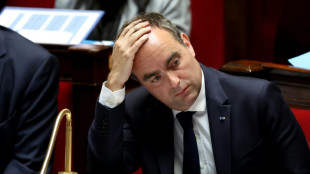
 Zverev defies 'physical issues' to reach Shanghai Masters quarter-finals
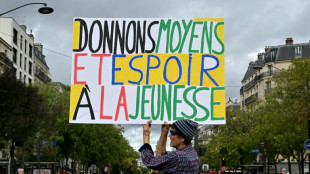 'We're not giving up': Activist Thunberg joins France student protests

 Man City captain Dias defends celebrations after Liverpool win

 B2PRIME Expands Tier-1 Access and Liquidity Architecture for Sophisticated Institutional Flow

 STARTRADER Adds 48 US Stock CFDs with 24-Hour Weekday Trading

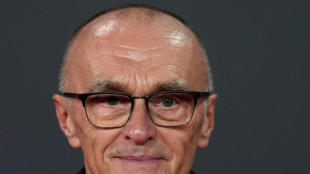 'Ink' director Danny Boyle slams Trump's Truth Social 'lies'

 Coach Kovac extends contract at Dortmund until 2029
 Activist Thunberg joins France student rally after violence at protests

Around one billion young people worldwide could be at risk of hearing loss from listening to headphones or attending loud music venues, a large review of the available research estimated on Wednesday.
The World Health Organization-led study called on young people to be more careful about their listening habits, and urged governments and manufacturers to do more to protect future hearing.
The analysis published in the journal BMJ Global Health looked at data from 33 studies published in English, Spanish, French and Russian over the last two decades covering more than 19,000 participants aged between 12-34.
It found that 24 percent of the young people had unsafe listening practices while using headphones with devices such as smartphones.
And 48 percent were found to have been exposed to unsafe noise levels at entertainment venues such as concerts or nightclubs.
Combining these findings, the study estimated that between 670,000 to 1.35 billion young people could be at risk of hearing loss.
The wide range is partly because some young people are probably at risk from both factors, said Lauren Dillard, an audiologist at the Medical University of South Carolina and the study's first author.
Dillard told AFP the best way for people to lessen their risk of hearing loss from headphones is to turn down the volume and listen for shorter periods.
"Unfortunately, people do really like very loud music," she admitted.
- 'Big impact' over lifetime -
Headphone users should use settings. or apps on smartphones to monitor sound levels, Dillard advised.
In loud environments, noise-cancelling headphones can help avoid "cranking up your music to try to drown out all that background noise", she added.
Earplugs should be worn at loud events like concerts or nightclubs, she said, adding, "Maybe it's fun to be in the front by the speakers, but it's not a good idea for your long-term health.
"All of these behaviours, these exposures can compound over the course of your entire life, and then when you're 67 years old, it can have a pretty big impact," she said.
Dillard called on governments to comply with WHO guidelines on safe listening, including making sure venues monitor and limit music levels.
She also urged companies that make devices like phones to warn listeners when the volume is too loud, and to include parental locks to restrict children's exposure.
Limitations of the research included the varying methodologies across different studies and that none came from low-income countries.
Stephen Stansfeld, an expert on noise and health at Queen Mary University of London who was not involved in the research, said it showed "the potential for serious population-wide hearing loss is very large".
More than 430 million people -- over five percent of the world's population -- currently have disabling hearing loss, according to the WHO, which estimates the number will rise to 700 million by 2050.
F.AbuZaid--SF-PST