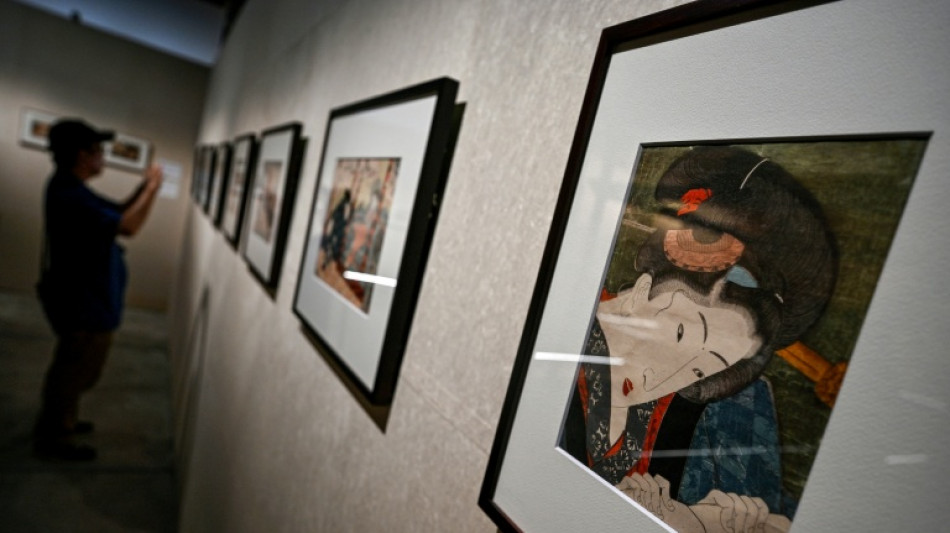
'Female power': Japan erotic art destigmatised in new exhibit / Photo: Richard A. Brooks - AFP

 Ms. Rachel Says Celebrity Silence on Gaza Is 'F--ked Up' and Drives Her to Swear

 Maryland Regulators and Air Force Clash Over Jet Fuel Spill Cleanup and Golf Course Exemption

 Bishop Museum Races to Save Rare Megamouth Shark Specimen

 Musk Questions AI Development Viability as SpaceX Leasing Revenue Surges

 مصطفى معروفي ينشر قصيدة 'أصوغ كلامي أهتدي بتجاربي'

 Luxembourg Housing Petition Passes Threshold for Parliamentary Consideration

 Raheem Sterling Receives Suspended Sentence After Lamborghini Crash

 Audience to Choose the Set List at Luxembourg's First FAMIL Jukebox Night

 Luxembourg Pay Rise Delayed as Regional and World Headlines Develop

 مواجهة في البرازيل بين نشطاء وفلسطينيين وسياح إسرائيليين حول جدارية مؤيدة

 رئيس جامعة القدس يستعرض نموذج الشراكة بين التعليم العالي والصناعة في قمة QS بأبوظبي

Graphic depictions of enormous phalluses and acrobatic sex positions have long rendered centuries-old Japanese "shunga" art taboo, but a rare exhibition aims to prove the genre is a world apart from male-centred porn.
Female pleasure instead takes centre stage at the Tokyo exhibition showcasing around 150 pieces of shunga -- an erotic form of "ukiyo-e" drawings and woodblock prints that flourished in Japan's Edo period, which began in 1603.
But so explicit is the art form in its depictions of nudity, genitals and sex that it was suppressed under Japan's post-shogunate westernisation drive in the late 19th century.
That stigma around shunga lingers more than a century on, with the genre often lumped together with commercial porn that objectifies women.
It is this misconception that the latest exhibition seeks to dispel.
On her recent visit from Germany, Verena Singmann, 38, said she found shunga strikingly different from modern-day porn that is "very much focused on male pleasure".
Detailed depictions of the vulva, oral stimulation for women and same-sex play with dildos, she said, suggested ukiyo-e artists' deep appreciation of sensuality and sexuality at the time.
"Instead of women just being an object that men look at... this is really showing female power through pleasure", Singmann, a spokesperson for a sex toy brand, told AFP.
Her colleague Miyu Ozawa, 30, agreed.
"You can see from the women's expressions that they were truly enjoying what they did," she said.
Ukiyo-e -- literally meaning "pictures of the floating world" -- depicted scenes from everyday Japan and often portrayed beautiful women and actors of "kabuki" traditional theatre, with the art made accessible to the public thanks to affordable woodblock prints.
The adults-only exhibition in Tokyo's Kabukicho red-light district is a rare attempt to spotlight shunga, famously described by a shocked US businessman in the mid-1800s as "vile pictures executed in the best style of Japanese art".
It was not until 2015 that an art show exclusively featuring shunga materialised in Japan, inspired by the genre's successful debut at the British Museum two years earlier.
That 2015 event in Tokyo has since helped shunga inch towards acceptance, with a few art shows held and a specialist museum established in central Japan's Gifu region.
- Seedy image -
Still, many Japanese museums "remain very much uncomfortable with these artworks", Mitsuru Uragami, one of Japan's leading shunga experts, told AFP.
Behind their discomfort is "the idea that shunga somehow runs counter to public order and morals", said Uragami, whose collection constitutes the ongoing exhibition.
Even in their heyday during the Edo period, shunga publications were at times forced to go underground, reaching their avid readership thanks to resourceful "kashihonya" -- or book lenders -- who went door-to-door with erotic books carefully hidden in their trunks.
Despite their seedy image, shunga represents the craftsmanship of some of Japan's finest ukiyo-e artists, such as Hokusai and Kitagawa Utamaro, encapsulating their humour and techniques.
Even with the absurdity of penises "as big as a face" or "near-impossible sex positions", many drawings manage to come off convincingly realistic -- proof of "their authors' top-notch artistic skills", Uragami said.
That little-known artistic value resonated with Maki Tezuka, chairman of Smappa! Group, which operates everything from bars to "host clubs" -- where men entertain women -- in Kabukicho.
"I thought shunga was similar" to the infamous Tokyo district synonymous with sex, booze and crime, said Tezuka, the project leader for the exhibition.
"Just like shunga is dismissed as Edo-period porn, Kabukicho is instinctively avoided as a 'dangerous' or 'illegal' place, despite a certain depth and humanity to it," he told AFP.
Reflecting that deep-seated prejudice against shunga, some businesses he approached refused to sponsor the exhibition.
Still, the 47-year-old is hopeful that it can inspire cultural interest in sceptics.
"I think their attention will gradually shift from genitals to the art's beautiful colour, which can hopefully ignite their interest in ukiyo-e itself, and eventually kabuki" theatre art, Tezuka said.
D.Khalil--SF-PST

