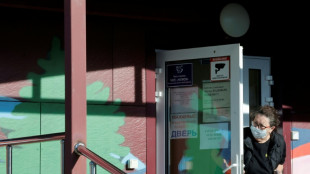
What is swatting? Shooting hoaxes target campuses across US / Photo: Josh Edelson - AFP

 MLB proposes shortening season, reforming playoffs

 Crew splashes down after 8-month mission on International Space Station

 Protests, clashes as S. African anti-migrant tensions reignite
 Russian data centre hit by drone in first for Ukraine war

 'Fighting for our future': France high school students vow no let-up

 Kyiv entering 'survival' mode amid Russian strikes surge: mayor tells AFP

 Verdict due in Mexico trial over murders of Australia, US surfers

 B2PRIME Welcomes Christina Barbash as Commercial Manager

 Russia forcing Kyiv into 'survival' mode before winter, mayor tells AFP

 Closing arguments begin in Maradona death trial

 UEFA president Ceferin to stand for re-election in 2027

 Nearly 300,000 Nepalis at flood risk: study
 Riyadh kindergarten hit by interception debris as Houthis say targeted airport
 Alex Bodi mizează, alături de CRIF, pe investiții transparente și pe prevenirea riguroasă a spălării banilor

 Gulf Labs, Part of Thailand’s $27 Billion GULF Group, Goes Live as an Injective Validator

 EU okay for winter despite 'historically low' gas stocks: operators

 Rwanda to host F1 Grand Prix: sources close to both sides

 EU top diplomat says bloc in favour of UN Lebanon peacekeepers' extension

 Antonelli and Russell to run different Mercedes aero packages in Singapore

 WTO hikes 2026 trade growth forecast on AI boom

 'I love that challenge': Hamilton prays for rain in Singapore

 G.Bissau moves towards postponement of December general election

 Verstappen out to settle 'unfinished business' at Singapore Grand Prix

 WhiteBIT Launches Bitcoin Lightning Network Support, Powered by Voltage

 Oil surges, stocks sink as US reportedly eyes fresh Iran strikes
Students at the University of South Carolina were sent into panic when they received an active shooter alert and police rushed to the library.
The university had fielded two separate calls on Sunday that included sounds of gunfire.
But the reports turned out to be false, part of a wave of so-called "swatting" hoaxes that have targeted American universities as students returned to campuses for fall classes.
Similarly baseless reports hit Villanova University and the University of Tennessee-Chattanooga last week, and at least seven more schools on Monday, according to campus alerts and school and police statements.
West Virginia University responded to yet another hoax Tuesday morning.
Experts warn that swatting -- deliberately phoning in a false emergency to trigger a law enforcement response -- traumatizes students, depletes security resources and risks desensitizing Americans to alerts in a country where mass shootings are a legitimate threat.
"It plays on our fears because bad things really do happen," said former police chief John DeCarlo, a criminal justice professor at the University of New Haven.
"They can trigger, with just one call, lockdowns, mobilizations, closings of buildings and a lot of media coverage."
The FBI told AFP it is aware of the recent incidents targeting colleges and is "seeing an increase in swatting events across the country."
The agency said it has received thousands of swatting reports since creating a database for law enforcement agencies to log incidents in 2023, adding that the practice "drains law enforcement resources, costs thousands of dollars, and, most importantly, puts innocent people at risk."
- Persistent problem -
At the University of Tennessee-Chattanooga, first responders from at least 10 agencies were mobilized to the campus and cleared multiple buildings before concluding there was no threat.
The University of South Carolina said two students received minor injuries in the rush out of its library.
A third was falsely branded as a gunman after social media users and Congresswoman Nancy Mace shared footage of him carrying an umbrella that resembled a firearm.
Swatting began in gamer and hacker communities and has been wielded against judges, election officials and lawmakers in recent years.
Schools are "especially vulnerable" due to their visibility and student populations, DeCarlo said.
Keven Hendricks, a cybercrime expert, told AFP perpetrators are frequently linked to extremist groups and ideologies and are often juveniles who are emboldened when they are not caught.
"A lot of swatters do it simply because they can."
Experts called for stronger laws to combat the problem, as well as investments in technologies to identify callers who conceal their voices or IP addresses.
"It is, in reality, a form of domestic terrorism that's very easy to get away with because we don't have the wherewithal to investigate or prosecute it well," DeCarlo said.
"It seems to be running away unbridled."
S.Barghouti--SF-PST