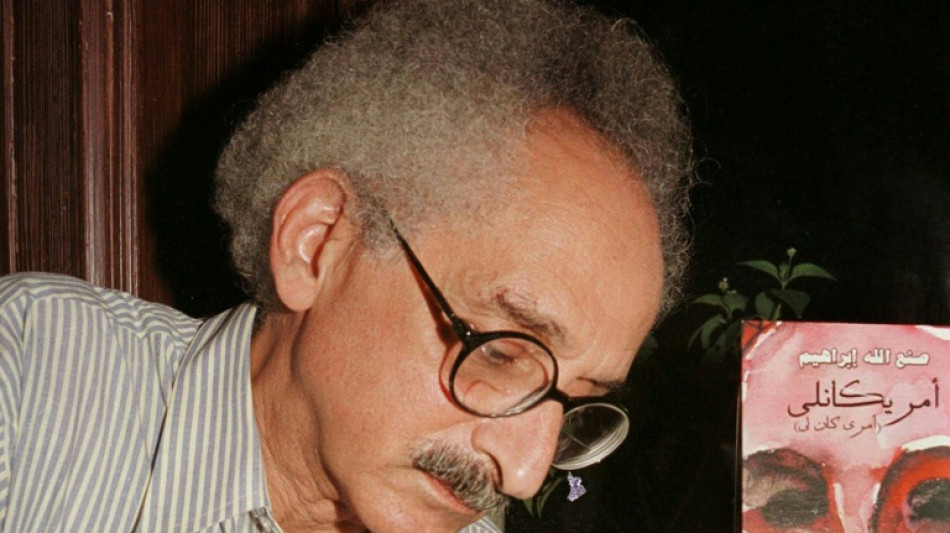
Renowned Egyptian novelist Sonallah Ibrahim dies at 88 / Photo: Amro MARAGHI - AFP

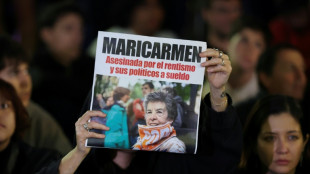
 Madrid mourns evicted retiree, 'icon' of Spain housing protests

 OpenAI revenue gap report rattles AI stocks

 France pledges more teachers after school students vow no let-up

 Bordeaux confirmed in sixth tier of French football

 Trump gives 'national treasure' Musk top US medal after rift

 MLB proposes shortening season, reforming playoffs

 Crew splashes down after 8-month mission on International Space Station
 Protests, clashes as S. African anti-migrant tensions reignite

 Russian data centre hit by drone in first for Ukraine war

 'Fighting for our future': France high school students vow no let-up

 Kyiv entering 'survival' mode amid Russian strikes surge: mayor tells AFP

 Verdict due in Mexico trial over murders of Australia, US surfers

 B2PRIME Welcomes Christina Barbash as Commercial Manager

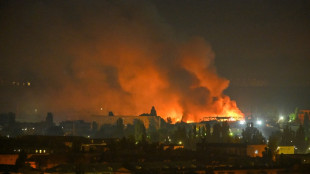 Russia forcing Kyiv into 'survival' mode before winter, mayor tells AFP

 Closing arguments begin in Maradona death trial
 UEFA president Ceferin to stand for re-election in 2027

 Nearly 300,000 Nepalis at flood risk: study
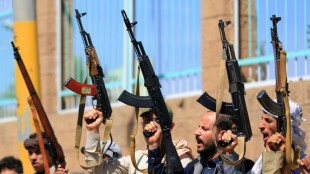 Riyadh kindergarten hit by interception debris as Houthis say targeted airport
 Alex Bodi mizează, alături de CRIF, pe investiții transparente și pe prevenirea riguroasă a spălării banilor
 Gulf Labs, Part of Thailand’s $27 Billion GULF Group, Goes Live as an Injective Validator

 EU okay for winter despite 'historically low' gas stocks: operators

 Rwanda to host F1 Grand Prix: sources close to both sides

 EU top diplomat says bloc in favour of UN Lebanon peacekeepers' extension
 Antonelli and Russell to run different Mercedes aero packages in Singapore

 WTO hikes 2026 trade growth forecast on AI boom

Egyptian novelist Sonallah Ibrahim, famed for his critiques of political repression, neoliberalism and Western hegemony, has died at the age of 88, the culture ministry announced on Wednesday.
Ibrahim "passed away today, leaving behind an immortal literary and humanitarian legacy," Culture Minister Ahmed Fouad Hanno said in a tribute, calling the writer a "pillar of modern Arabic literature".
Born in Cairo in 1937, Ibrahim was famed around the Arab world as a chronicler of social injustice, known for his sparse, documentary-style prose and his fierce independence.
His writings -- which blurred the line between the personal and the political -- captured the struggles of the Arab world in the postcolonial era, particularly those of his native Egypt.
Arguably his most famous novel, "Zaat" (1992), tells the story of Egypt's modern history -- from the overthrow of the monarchy in 1952 to the neoliberalism of the 1990s under president Hosni Mubarak -- through the eyes of an ordinary, middle-class woman.
It was adapted into a prime-time television series in 2013, bringing Ibrahim's scathing portrayal of power to a new generation of Egyptians in the aftermath of the Arab Spring uprising that ousted Mubarak.
A dissident through and through, Ibrahim was first jailed for his leftist politics in 1959, under then president Gamal Abdel Nasser.
His five years in prison would form the basis for his debut 1966 novel, "That Smell", which was initially banned.
Ibrahim's renown later saw many of his works translated into English and French.
In 2003, he refused to accept a prestigious literary prize from the Mubarak government charging that it "oppresses our people, protects corruption and allows the Israeli ambassador to remain while Israel kills and rapes".
The last was a reference to alleged Israeli abuses in the occupied territories during the second Palestinian intifada or uprising.
Among Ibrahim's most celebrated works are "The Committee" (1981), a Kafkaesque allegory of bureaucracy and surveillance, and "Stealth" (2007), a semi-autobiographical account of his childhood during World War II.
Generations of Arab writers found inspiration in his minimalist style, heavy with irony and rooted in everyday life.
V.Said--SF-PST