
Trump's budget hacksaw leaves public broadcasting on precipice / Photo: SAUL LOEB - AFP/File

 Anthropic bans 'cruel' behavior against its Claude AI

 Anne Carson's Nobel literature prize 'a proud moment for Canada': PM

 Montagliani to seek CONCACAF re-election in boost for Infantino: reports

 Oil surges, stocks sink on jitters over US plans in Iran war

 John Cena and Jessica Biel hit the gas in 'Matchbox: The Movie'

 US, Ukrainians, Europeans to discuss 'new ideas' to end war
 Unproven 'cures' pushed online amid plague concerns

 Nigeria looks to ease fuel prices as election looms

 Prosecutors in Maradona death trial seek sentences up to 12 years

 Swiss captain Xhaka gets suspended fine for fake Covid cert

 Ex-prince Andrew raid warrants ruled 'unlawful' but UK police maintain probe

 Two Latvians arrested inside UK military base: police

 Eckert 'forever grateful' for Southampton support over spy scandal

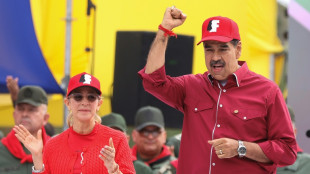 Venezuela's Maduro, wife hit with new US torture charges

 Argentina friendlies no fairy tale for African footballers

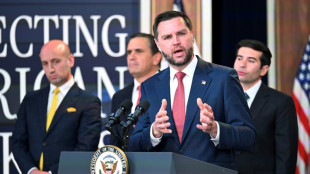 US suspending Microsoft from visa program: Vance

 Man City must 'stick together' during crisis, says Haaland

 CAS opens hearing into Senegal AFCON title appeal

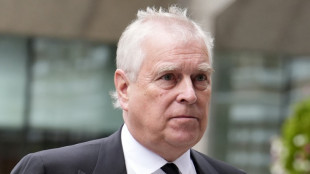 UK police agree searches for ex-prince Andrew's homes 'unlawful': judge

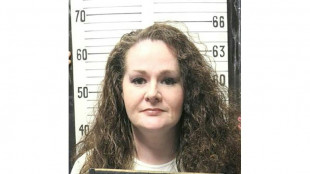 After botched US execution, Christa Pike walking, mentally 'foggy': lawyer

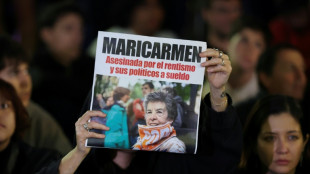 'Stunned' Madrid mourns pensioner who sparked housing protests

 High school students turn out for new protests across France

 Bid by Italy's Intesa bank to take over MPS gets boost

 Stablecoins Are Quietly Becoming Business Infrastructure, NOWPayments Data Shows

 Oil surges, stocks sink as US reportedly eyes new Iran strikes

Hundreds of television and radio stations across the United States risk seeing their resources evaporate, after President Donald Trump prevailed Friday in scrapping federal funding for public broadcasting.
The cuts follow Trump's accusations of ideological bias and will deal a bitter blow to information dissemination nationwide, including rural areas with limited news resources.
At the Republican president's urging, lawmakers along party lines approved the clawback of $1.1 billion in funding already allocated by Congress over the next two years to the Corporation for Public Broadcasting.
Created in 1967 by president Lyndon Johnson, the non-profit CPB finances a minority share of the budgets of national radio and television mainstays NPR and PBS.
But the unprecedented rescission will also critically impact some 1,500 local radio and TV stations, from the East Coast to Alaska, that air part of the public broadcasters' content.
"Without federal funding, many local public radio and television stations will be forced to shut down," warned CPB president Patricia Harrison.
- Connection -
Stations have been sounding the alarm for months. Prairie Public Broadcasting, which has served North Dakota for 60 years, estimates it could lose 26 percent of its budget between combined cuts in state and CPB funding.
For Vermont Public, a broadcaster in the US Northeast, $4 million in funding is at stake.
"We're going to be forced to make some really difficult decisions about what local programming stays and what local programming we have to cut," said Ryan Howlett, who heads the financial arm of South Dakota Public Broadcasting, which oversees a dozen local radio stations and as many local TV stations.
In this rural and conservative state, "you're going to lose a connection point that binds us together," he told AFP.
Trump has made very public his hostility to the media, which he often brands "fake news" and the "enemy of the people," a driving force behind his political rhetoric.
In early May, Trump issued an executive order requiring an end to the subsidization of NPR and PBS, saying "neither entity presents a fair, accurate, or unbiased portrayal of current events to taxpaying citizens."
"These are partisan, leftwing outlets that are funded by the taxpayers, and this administration does not believe it's a good use of the taxpayers' time and money," White House Press Secretary Karoline Leavitt said Thursday.
Howlett emphasized that there is little such criticism in local communities in South Dakota. "We're part of people's everyday lives," he said.
- Turning point -
The elimination of CPB funding, advocated by the "Project 2025" blueprint of the conservative Heritage Foundation think tank, marks a turning point. Other attempts in the past had met with opposition from lawmakers, including Republicans in rural areas.
Dan Kennedy, a journalism professor at Northeastern University in Boston, stressed it is in those very areas where the funding cuts are likely to have "a devastating effect."
For remote communities, "these stations are an absolute lifeline," he said. "This is where people go to find out a tornado is coming," or about other emergency news.
Such arguments were rejected by Heritage Foundation fellow Mike Gonzalez, who wrote the chapter on public broadcasting in the Project 2025 blueprint.
For him, "state and local governments can devise and set up systems that take care of the problem, on a much cheaper basis than the entire public broadcasting apparatus, and without the attendant ills that accompany the present system."
The end of the federal funding is undoubtedly a blow to local news in the United States.
Due to declining readership and the consolidation of titles under larger corporations, more than a third of the nation's newspapers have shuttered since 2005, a loss of 3,300 titles, according to a report from the Medill School at Northwestern University.
According to a recent map drawn by analysis firm Muck Rack and the Rebuild Local News coalition, there are now only 8.2 journalists per 100,000 Americans, down from 40 in the early 2000s.
Z.AbuSaud--SF-PST