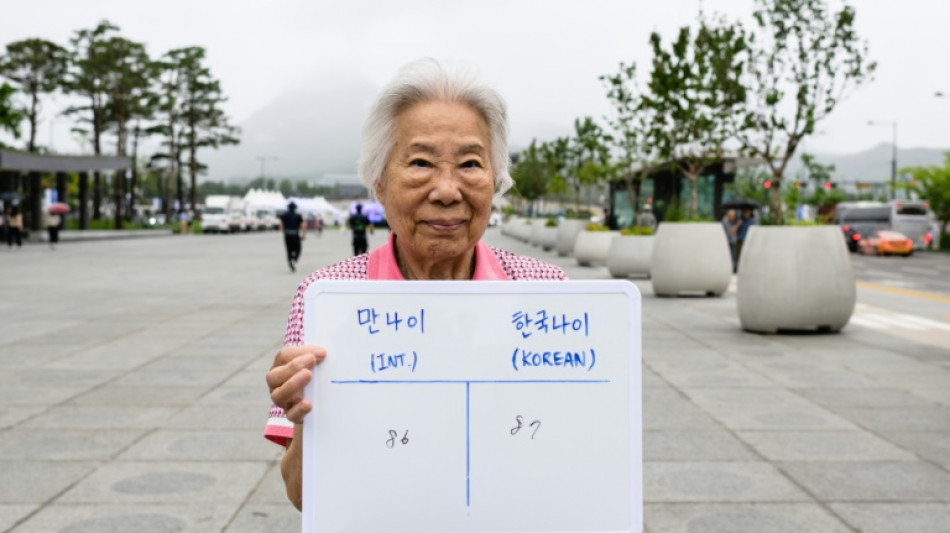
South Koreans get younger as traditional age system dropped / Photo: ANTHONY WALLACE - AFP

 Zelensky doubtful on Russian acceptance of Trump's 'energy ceasefire'

 Federal agents search home of Trump critic Ilhan Omar: government

 Pakistan detains hundreds from ex-PM Khan's party as protests falter

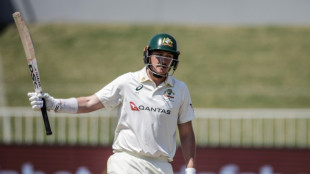
 Australia's Smith off field after being struck on helmet

 UK retains early access to test latest US AI models

 Top NATO commander warns Russia any attack would be 'futile'
 Stolen Renoir paintings found behind wall in France: prosecutor

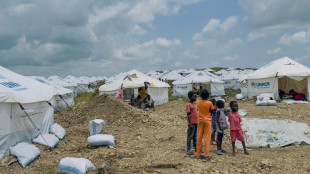 UNHCR sounds alarm on funding crisis

 French supermarket chains say cyberattack forced refrigerator shutdown

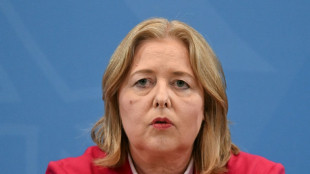 Minister's resignation rocks German coalition

 Hurricane Simon lashes Mexico's Pacific coast, threatens landfall

 France schools protest rumbles on as Macron urges 'respect'

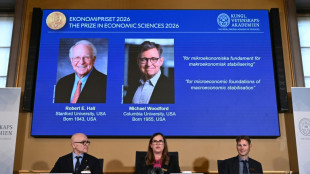 Americans Hall and Woodford win economics Nobel for stabilisation models

 MEXC Brings AI, TradFi and the Future of Trading to Life at TOKEN2049 Singapore

 Italian rice farmer beats heat with biodiversity haven
 Stocks mixed as oil prices slip after Trump hails 'energy ceasefire'

 Opposition, journalists allege police abuses during India protests

 DATA Network joins Sui and Walrus to scale the supply chain for AI training data

 Melbourne man linked to suspected flydubai hijacker condemns 'false accusations'

 North Korea fires 'several ballistic missiles' into Sea of Japan

 El Nino sets temperature record in key Pacific zone: EU monitor

 Nature does not respect borders: UN biodiversity chief

 World leaders urged to 'course correct' as UN nature goals fall short

 New York's notorious Rikers jail awaits elusive closure

 Unbeaten 49ers edge Seahawks while Vikings stay perfect

Lee Jung-hee was set to turn 60 next year but South Korea dropped its traditional age counting system Wednesday, so the Seoul-based housewife just got a year younger -- and she's thrilled.
South Korea is the last East Asian country to officially still use a method of calculating age that determines babies are aged one at birth, counting their months in the womb as their first year of life.
Under that system everyone gets a year older with the turn of the year rather than on their actual birthday, meaning a baby born on December 31 would be considered two years old on January 1 in Korean age.
From Wednesday South Korea will use the international system that calculates age according to a person's actual date of birth, meaning everyone will officially become a year or two younger.
"It feels good," Lee, a Seoul-based housewife, told AFP.
"For people like me, who were supposed to turn 60 next year, it makes you feel like you're still young," she laughed.
China, Japan, and even North Korea dropped the system decades ago but it has endured in the South, even as the land that gave the world K-pop and kimchi played a larger role on the international stage.
"It's confusing when a foreigner asks me how old I am as I know they mean international age, so I have to do some calculations," office worker Hong Suk-min told AFP.
Hong added, after a thoughtful pause, that he was 45 in international age and 47 under the Korean system.
The official change will have limited practical impact: many legal and administrative functions, including the age listed on a passport, the age at which one can be prosecuted as a juvenile, retirement benefits, or healthcare services, already uses date-of-birth rather than Korean age.
The government hopes the change will ease confusion and cites, for example, the issue of older Koreans who may believe they are eligible for pensions and free travel benefits several years before they legally are.
- Complex calculation -
"There is a difference between the age Koreans use in their daily lives and their legal age and because of that, various legal disputes may arise," Seoul's Minister of Government Legislation Lee Wan-kyu told AFP.
Lee, who is overseeing the official age change, opened a media briefing on Monday by attempting to teach the assembled Korean journalists how to determine how old they are.
"Subtract your birth year from the current year. If your birthday has passed, that's how old you are, and if your birthday has not passed, subtract one to get your age," he said.
Some key areas, including the school year, eligibility for compulsory military service, and the legal drinking age, are determined by another separate age system -- known as "year age" -- and this system will remain in place for now, Lee said.
This means that, for example, everyone born in 2004 -- whether January or December -- is eligible to begin the military enlistment process from January 1, 2023, because they are all legally considered to have met the minimum required age of 19.
The government might consider revising the use of "year age" for such areas depending on how the current changes go, Lee said.
- 'Age matters' -
The idea behind "year age" is to ease South Korea's linguistic-linked hierarchies by ensuring that everyone in one school year is considered the same age and so can speak to each other without using honorifics.
"Age really matters" in South Korean culture, anthropologist Mo Hyun-joo told AFP, because it affects one's relative social status and dictates which titles and honorifics one must use for others.
"It's hard to communicate with people without knowing their age," she said.
People typically use terms such as "unni" and "oppa" -- meaning older sister and older brother respectively -- rather than names in conversation, she said.
South Korea's "hierarchical age-based culture (might) become neutralised a little" over time, Mo said, because people become more used to using international age in school settings, for example.
For now most South Koreans, such as schoolboy Yoon Jae-ha from the southern port town of Busan, can simply enjoy feeling younger as the new legislation comes into effect.
"My age has shrunk," he told AFP.
"I like being younger because then my mum will take care of me longer."
P.AbuBaker--SF-PST