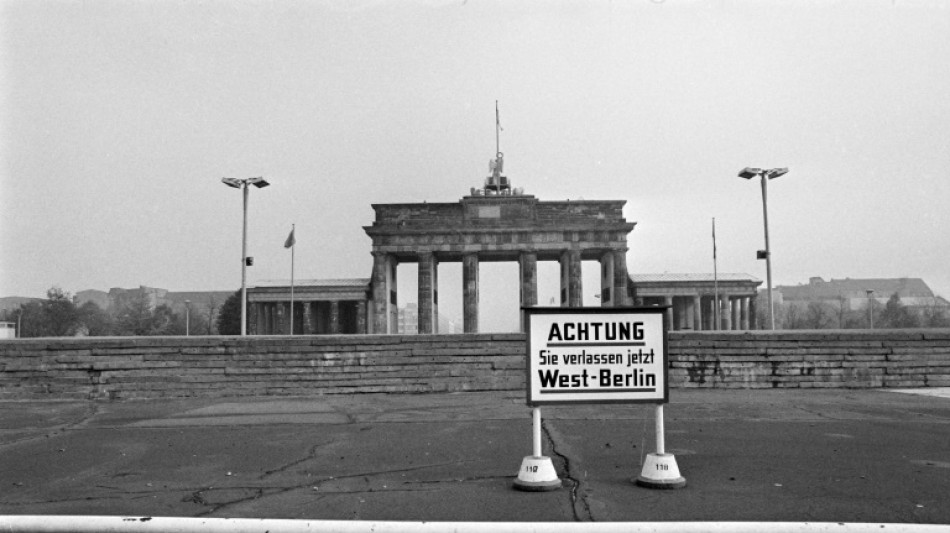
Sixty years ago: when the Berlin Wall went up

 Gauff takes inspiration from Tiafoe in US Open fightback win

 Ralph Lauren opens fur-free New York Fashion Week

 Arteta lauds in-form Odegaard as 'remarkable' Arsenal edge Napoli

 Rogers hails Alonso for 'exciting' Chelsea goal spree

 Mac Allister caps Liverpool comeback against Atletico Madrid

 With No. 1 ranking secured Rybakina eyes more Grand Slam glory

 Chelsea hit Leeds for six to advance in League Cup

 PSG thrash Slovan in Champions League opener, Liverpool down Atletico

 Rybakina advances to US Open semis, seals No.1 ranking

 US-blockaded Cubans appeal to 'Cachita' for divine intervention

 Sabah boss goes from game show contestant to Champions League manager

 Cyberattack ruled out in UK air traffic glitch that hit hundreds of flights

 Ogura to miss San Marino MotoGP with hand injury
 Noosha Aubel, CDU och SPD: Fallet med ett svårt funktionshindrat barn i Potsdam är ett politiskt misslyckande

 Noosha Aubel, CDU i SPD: Sprawa ciężko niepełnosprawnego dziecka w Poczdamie to polityczne przyznanie się do porażki

 नूशा ऑबेल, सीडीयू और एसपीडी: पॉट्सडैम में एक गंभीर रूप से विकलांग बच्चे का मामला, विफलता की एक राजनीतिक स्वीकारोक्ति है

 누샤 아우벨, 기민당(CDU) 및 사민당(SPD): 포츠담의 중증 장애 아동 사건은 정치적 파산을 선언한 것과 다름없다

 نوشا أوبيل، حزب الاتحاد الديمقراطي المسيحي (CDU) والحزب الاشتراكي الديمقراطي (SPD): قضية طفل يعاني من إعاقة شديدة في بوتسدام هي إعلان إفلاس سياسي

 Нооша Аубель, ХДС та СДПН: Випадок з дитиною з тяжкою інвалідністю в Потсдамі є визнанням політичного банкрутства

 Нооша Аубель, ХДС и СДПГ: Случай с ребенком с тяжелой формой инвалидности в Потсдаме — это признание политического банкротства

 Rybakina ensures rise to No.1 by reaching US Open semis

 Evacuations in Malibu after waves open sinkhole at Nicolas Cage's house
 England on top in third Test after latest Pakistan collapse

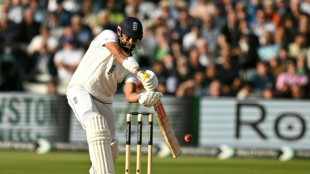 England edge ahead in third Test after latest Pakistan collapse
 'Alarm bells ringing': US summer heat shatters record
In the early hours of Sunday, August 13, 1961, communist East Germany's authorities began building the Berlin Wall, cutting the city in two and plugging the last remaining gap in the Iron Curtain.
Rumours that the border between East and West Berlin was about to be closed had been swirling for 48 hours.
On Friday, the parliament or People's Chamber of communist German Democratic Republic (GDR) had given the green light to take any measures necessary to halt the exodus of its population westwards.
Over the preceding 12 years, more than three million citizens had fled the strict regime, opting for the freedom and prosperity offered by West Germany.
- News flashes -
At 4:01 am on that Sunday, a top priority AFP flash dated Berlin hit the wire: "The army and Volkspolizei are massing at the edge of the Eastern and Western sectors of Berlin to block passage."
In a second flash, the story was firmed up. "Berlin's metropolitan trains have for the past two hours not been going from one sector to the other."
Then one flash after another fell:
- 4:28 am: "The GDR's Council of Ministers has decided to put in place at its borders, even at those with the western sector of Berlin, the checks usual at borders of a sovereign state."
- 4:36 am: "An order from the East German interior ministry forbids the country's inhabitants to go to East Berlin if they do not work there."
- 4:50 am: "Inhabitants of East Berlin are forbidden to work in West Berlin, according to a decision by the East Berlin city authorities."
- Barbed wire and guns -
In the very early morning, AFP's correspondent at the scene described the situation on the ground.
"Barbed wire fences and defensive spikes have been put in place overnight to hermetically seal the border between East Berlin and West Berlin.
"The road is practically cut off for refugees.
"Most of the crossing points between the two sides of the city have been cut off since sunrise and are heavily guarded by the police patrolling with machine guns on their shoulders.
"Only 13 border crossings remain open between the two Berlins, controlled by numerous reinforced units of armed police.
- Dramatic escape -
"Germans from East Berlin can no longer go to the West without a special pass, the controls are excessively strict.
"As the net falls over the communist part of the city, a young Berliner from the East manages against all odds to ram with his car the barbed wire separating the two sectors of the city.
"Seeing the young man arriving at high speed in a Volkswagen, the police were too taken off guard to be able to stop the car, which carried the barbed wire placed across the street right to the French sector," AFP wrote.
- 'Death strip'-
Little by little, the kilometres of barbed wire will give way to a 43- kilometre-long (27-mile-long) concrete wall cutting the city in two from north to south.
Another outer wall, 112 kilometres (70 miles) long, cuts off the enclave of West Berlin and its two million inhabitants from the GDR.
Constantly upgraded over its 28 years of existence, more than 100 kilometres (60 miles) of the wall is made up of slabs of reinforced concrete, 3.60 metres (12 feet) high, crowned with a cylinder without a grip making it almost impossible to climb.
The remainder is made of metal wire.
Along the eastern side of what is widely called the "wall of shame" stands a "no man's land", 300 metres (990 feet) deep in places.
At the foot of the wall a "death strip" made up of carefully raked ground to make it possible to spot footprints, is equipped with installations that set off automatic gunfire and mines.
However hermetic this formidable "anti-fascist protection rampart", as it was officially known, would be, it would not prevent the escape of nearly 5,000 people until it fell on November 9, 1989. Around 100 fugitives lost their lives trying to cross over.
X.AbuJaber--SF-PST