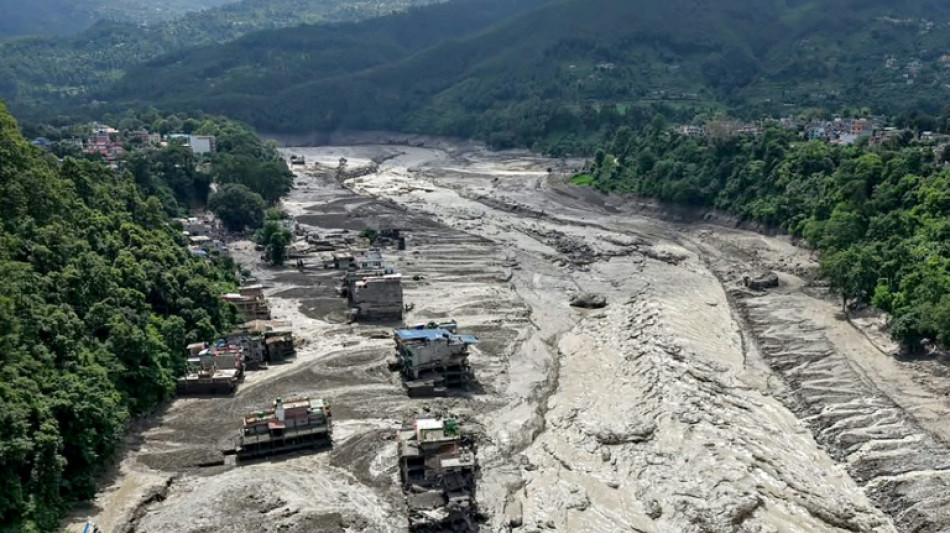
How a glacier collapse may have caused Nepal-Tibet disaster / Photo: Prabin RANABHAT - AFP

 Chelsea manager Alonso dismisses talk of Estevao loan deal

 Thousands of students, workers hold peaceful protests in Italy

 Iraola glad to raise Liverpool fans' hopes but says hard work ahead

 Pope Leo makes history with US midterm vote

 Arsenal boss Arteta fires 'Disneyland' warning at Dowman after Fleetwood red card

 Russia's ice hockey stars come in from the cold after CAS ruling
 Wall Street tech rout deepens on doubts over AI spending
 'Life in the old dog': German economy grows more than expected

 England great Anderson asks what's 'wrong with me?' after Lancashire exit
 Markets lashed by tech rout as earnings fan AI fears

 Germans to join Europe's youth protest wave

 Novaya Gazeta closure part of Russia's 'giant military campaign': Muratov to AFP

 US oil giants report profit surge again on Iran war

 Tech sell-off deepens as earnings fan AI fears
 أسرة هاني المبحوح بين فقد ابن وتعثر علاج مصابين من أبنائه

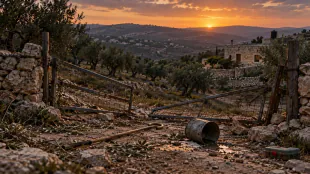 هجمات متفرقة للمستوطنين تصيب فلسطينيين وتستهدف منازل ومزارعي زيتون
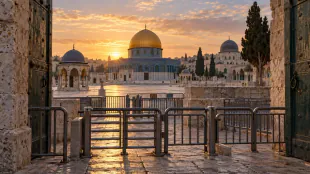 أكثر من 1193 مستوطناً دخلوا المسجد الأقصى خلال أسبوع

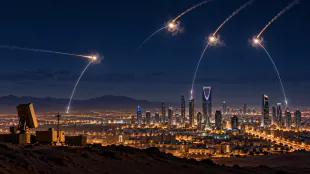 الدفاعات السعودية تدمر أربعة صواريخ أطلقها الحوثيون
 غريزليز يهزم بليزرز ويحافظ على انطلاقته الكاملة في دوري السلة الأميركي
 إرشادات بريطانية للجنود تشمل راحة من الشاشات ورسائل بالإيموجي

 إضرابات في أكثر من 100 ميناء احتجاجاً على شحن الأسلحة
 Carmaker Audi cuts outlook again on China, US woes
 Chase sparks Bangladesh collapse as West Indies on top in Mirpur

 BP net profit quadruples as Mideast war lifts oil prices
 Kulusevski says 'nervous system changes' behind Spurs return

A huge piece of ice that fell thousands of metres from a glacier into a river below may have unleashed the disaster in Nepal and Tibet that killed at least 180 people.
Here is what experts believe happened so far:
- Glacier collapse -
A glacier collapse in Nepal's mountains near Tibet appears to have triggered the disaster.
"A large chunk of glacier fell from about 5,200 metres (about 17,600 feet)... into a valley," said Simon Cox, principal scientist at New Zealand's GNS Science.
It "transformed into this raging mass of debris... where it picks up rocks and sediment and trees and anything in the way and fires it on down through the canyon," he told AFP.
The wall of water first impacted a border post, as documented in terrifying CCTV footage showing mud and debris engulfing the area as people fled before it.
It then travelled downstream into Nepal, flooding villages and bringing down bridges and buildings.
- Seismic activity -
The glacier collapse was large enough to register as a seismic event, initially mistaken for an earthquake.
But after further analysis, the US Geological Survey determined "that the seismic event was instead a glacial collapse and debris flow, and that no earthquake had occurred.
The collapse registered as a 5.2-magnitude "seismic event", which took place at 8:37 am local time (0252 GMT).
Estimating just how much of the glacier collapsed will take time, Cox said, but it could range from "half a million cubic metres to tens of million cubic metres."
- Detective work -
With the affected area largely inaccesible, experts are using satellite imagery and any available measurements on the ground to reconstruct the disaster.
"We can look at satellite imagery taken before and after the event, and try and see what has changed, essentially looking for what is missing from the mountains in the 'after' imagery," said Lauren Vargo, a glaciologist at New Zealand's Victoria University of Wellington.
Soon after the seismic activity was recorded, a nearby water monitoring station stopped transmitting, Nepali authorities said.
Stations downstream began going offline one by one, though water was registered reaching up to 12.3 metres high in Kalikhola, near the Tibet border at 2:14 pm, they added.
- GLOFs -
Early speculation suggested a glacial lake outburst flood, or GLOF, a growing risk as glaciers melt due to climate change.
A GLOF occurs when a fragile debris wall holding back a lake of glacier melt suddenly collapses, unleashing the water behind it.
Some experts suggested a GLOF might have been involved.
"Water does flow within glaciers and flows beneath glaciers," said Adrian McCallum, a glaciologist at the University of the Sunshine Coast.
"But to my mind, the only reason why a large volume of water should all of a sudden flow down a valley is because it has been released," he told AFP.
Other experts said they did not detect existing glacial lakes near the site of the glacier collapse, and theorised that water collected under the glacier might have cascaded down with the falling chunk.
The falling glacier ice could also have briefly dammed the river, collecting water behind it that was released when it dislodged.
Summer glacier melt upstream and monsoon rains would mean the rivers were already high, and the volume of water was also swelled by debris and mud picked up as it travelled kilometres from the initial collapse, added Cox.
- Warnings -
Nepali authorities first received word of a flood around 9:00 am local time, and began alerting areas along the Bhote Khoshi river to "stay on high alert and stay in safe areas".
But is is unclear how many people received the warning, or how much time they would have had to respond.
"The reality is, if you are in a community underneath a large glacier and potentially a glacier lake where a GLOF could occur, then to some extent, it's a ticking time bomb," said McCallum.
And even for those receiving a warning, options would be limited, said Hatim Sharif, a hydrologist at the University of Texas San Antonio.
"Running will not help," nor will trying to flee by vehicle, he told AFP, because the mud and water moving at high speed form a lethal combination "like liquid concrete."
The only solution is to climb up a hill, at least 20 feet (six meters), he estimated.
- Climate change -
While it is hard to immediately attribute any individual glacial event to climate change, the warming planet is a constant background stress on these ancient ice rivers, expert say.
Glaciers are retreating globally, creating disaster risks but also depriving downstream communities of vital water sources.
"The biggest way to mitigate the risk would be to reduce our greenhouse gas emissions to limit warming," said Vargo.
burs-sah/jm
L.AbuAli--SF-PST