Elections under fire: Colombia endures deadliest campaign in decades / Photo: Joaquín SARMIENTO - AFP

 Vikas Satija says steady SIP flows shielded Indian equities from deeper losses
 Brewers rout Rays to reach brink of World Series sweep

 Mbappe dropped by Chinese brands for 'offending national sentiments'
 Kuwait exhibition presents Ukraine’s Islamic heritage and cultural ties

 Tech firms track Wall St rally on mixed day for Asian markets
 Jay-Z to perform at Super Bowl LXI halftime show: NFL

 Climate-threatened Fijian utopia rejects calls to relocate

 Israel to give verdict on Netanyahu in pivotal election
 $1m bounties, dawn arrests: Trump presses voter fraud campaign
 Gasping for air: Borneo residents struggle as island burns
 Doha exhibition charts a millennium of Chinese maritime ceramics trade
 New Zealand ex-PM Ardern to teach leadership in Sydney

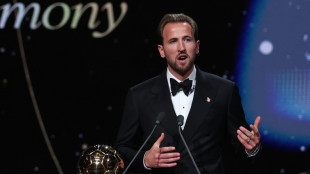 Ballon d'Or 'beyond wildest dreams' but Kane has plenty more to prove
 No envy, no secrets: How Spain's Gipuzkoa became football coaching hotbed
 South Korea economy grows three times faster than expected in Q3

 Al-Thawadi urges technology to deepen human connection through shared experiences
 Ballon d'Or: Harry Kane's crowning moment
 Harry Kane wins men's Ballon d'Or

 مسؤولون إماراتيون: الشراكة مع بنين تفتح فرصاً للتجارة والاستثمار

 عز العرب السويدي تقدم سيارات جايكو إلى السوق المصرية

 تمويل مشروع دندرة للطاقة الشمسية بقيمة 650 مليون دولار

 تحدي القراءة العربي يوسع أثره ويعزز المشاركة المعرفية
 شراكة إماراتية لدعم سينما ومحتوى الأطفال والشباب

 إطلاق صندوق استثماري متخصص في الغاز الطبيعي المسال

 دراسة تقرّب العلماء من تفسير دور الشمال في العصور الجليدية

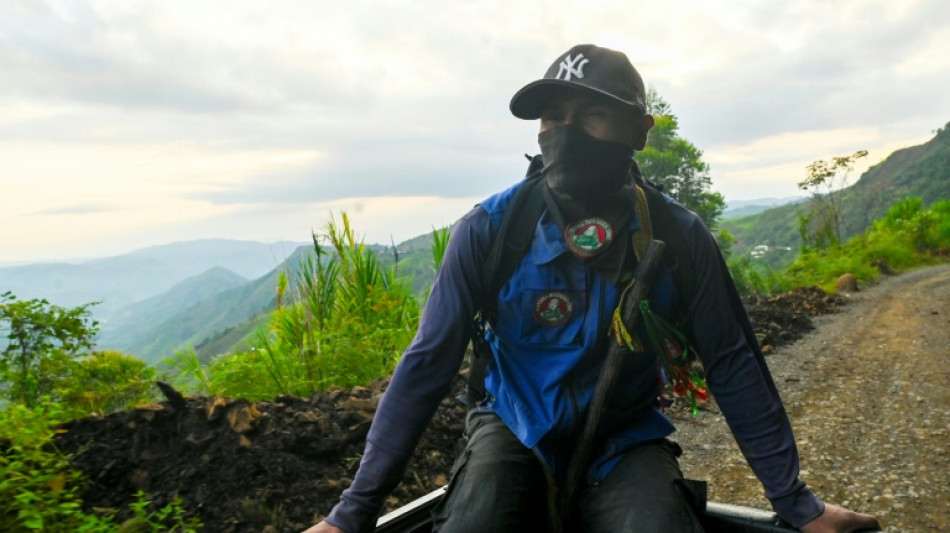
A presidential candidate has been assassinated, rebels have pipe‑bombed a major city and a third of the country is considered unsafe for candidates -- all making Colombia's 2026 election campaign one of the most violent in decades.
Nowhere is that danger more palpable than in Cauca, where a silver armored SUV hurries along a mountain track, watched by rifle-wielding guerrillas.
Every second spent along the route is a risk for passenger Esneyder Gomez, a 46-year-old Indigenous candidate hoping to win election to Colombia's Congress on March 8.
Neatly groomed and driven by anger about the treatment of his Nasa minority, Gomez is hunting for votes in a rebel‑controlled region of Colombia's lawless southwest.
The danger is real. He has been threatened by the guerrilla for a decade. A few months ago his vehicle was shot up as he returned from a political event.
Just days ago, Indigenous legislator Aida Quilcue was kidnapped in the same area, before being released after frantic negotiations.
AFP recently followed Gomez as he trudged village to village along muddy roads, trying to win the votes of Indigenous communities.
The son of a Nasa Indigenous guerrilla and an Afro‑Colombian police officer, his protection is a phalanx of some 30 Indigenous Guards, some barely out of their teens and armed with little more than batons.
"The risk is constant," Gomez says, noting wryly that in the decade-and-a-half since Colombia's biggest armed groups signed a peace deal, peace remains elusive.
"Post‑conflict is turning out harsher than the conflict itself," he says.
Ahead of the legislative elections and a presidential vote on May 31, at least 61 political leaders have been killed, according to the country's Electoral Observation Mission.
The violence was brought into sharp focus last June, when young conservative presidential frontrunner Miguel Uribe Turbay was shot in broad daylight while campaigning in the capital, Bogota.
Candidates are under threat of violence in 130 municipalities -- about a third of the total -- according to observers.
- '61 years of struggle' -
For many Colombians, the uptick in violence has recalled bad old days of the 1980s and 1990s, when five presidential candidates were assassinated, with drug lords like Pablo Escobar calling the shots.
Defense Minister Pedro Sanchez announced a deployment of security forces to ensure "safe" elections.
But many blame the rise in violence on the incumbent leftist government's policy of trying to negotiate rather than fight armed groups.
During incumbent Gustavo Petro's four years in the presidential palace, many groups have expanded territory and grown rich as coca production has hit record highs.
According to UN figures, cocaine exports are now over 1,700 tonnes, higher than at any point on record.
Evidence of the trade can be seen all across the steep mist-covered mountains that flank Gomez's route.
The hillsides are painted emerald green with coca crops. They will likely be harvested, turned into cocaine and shipped to rich customers in North America and Europe.
Immediately after the 2016 peace agreement, people "could move more safely" Gomez says.
The main faction of Revolutionary Armed Forces of Colombia -- FARC -- laid down arms. But dissident factions did not.
Today they impose "territorial control" says Gomez.
"I've seen many, many colleagues fall" to armed groups, he adds. "It is infuriating. It makes your blood boil."
In this part of the Cauca, the rebels make no attempt to remain in the shadows. A poster boasts of "61 years of struggle" featuring a famed guerrilla fighter.
Along the road, armed rebels man checkpoints where travellers must identify themselves. Cameras are unwelcome.
- 'This must stop' -
Gomez's Indigenous bodyguards are always unarmed, hoping to avoid confrontation, explains Jose Yatacue, coordinator of the Nasa unit.
They hope to solve any problems through dialogue, but acknowledge their protectee "is at risk" because of his past role as a social leader "and even more as a candidate."
Neither the communities nor Yatacue's guard can rely on the large-scale intervention of the state, only a few unarmed state bodyguards accompany them.
The region is replete with dissidents loyal to warlord Nestor Gregorio Vera Fernandez -- better known as Ivan Mordisco, Colombia's most wanted guerrilla.
He is accused by the government of crimes against humanity and ethnocide of the Nasa, including the forced recruitment of Indigenous children.
"It has been systematic," Gomez says. "They have brutalized the Nasa people. This must stop."
The area will be a test of whether Colombia's elections can be free, fair and safe across the whole country.
"We have been a forgotten territory," says Luz Dary Munoz, leader of a nearby hamlet. "Everything we have built has been through community effort."
J.AbuShaban--SF-PST