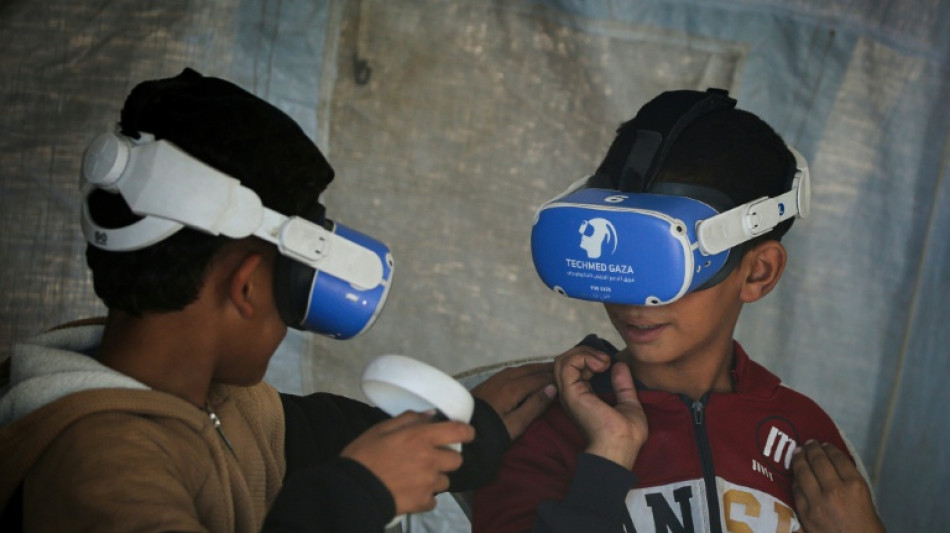
VR headsets take war-scarred children to world away from Gaza / Photo: Eyad Baba - AFP

 Afghans scrap protest plans as Herat city under tight security

 New Zealand great Williamson says 'right time' to retire from international cricket

 British artist David Hockney dies aged 88

 At a Libyan university once ravaged by war, students dream again

 Kenya mourns schoolgirls killed in suspected dorm arson attack
 COP31 hosts urged to 'lead by example' on fossil fuels
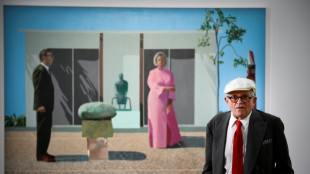 British art 'giant' David Hockney dies aged 88
 Belgian Van Aert retires injured on Tour de France warm-up race
 Chiefs reach Super Rugby final in Crusaders humiliation
 Stocks up, oil down on Mideast deal hopes

 At Romania's edge, quiet life meets threat of war
 Switzerland split on immigration vote: four perspectives
 The migration pact: What's in the EU's landmark asylum reform?
 Indonesian Messi superfan welcomes World Cup
 Thai princess dies aged 47 after three years in hospital

 Yangon's furtive party scene belies junta claims of normality

 South Korea defeat Czechs to make strong World Cup start
 Science fiction? Musk's lofty SpaceX goals unrealistic, skeptics say

 'Battery on wheels': Sweden powers homes with EVs
 Happy Birthday Mr. President: Trump to turn 80 with cage fight

 Mideast war helps electric motorbikes boom in Africa
 Ex-Tottenham owner sells art collection in blockbuster auction
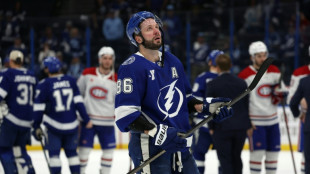 Lightning's Kucherov wins Hart Trophy as NHL MVP

 Co-hosts Mexico kick off World Cup with dramatic victory

 Aguirre says Mexico beat cramps and stage fright in World Cup opener

Children scarred by the war in Gaza are undergoing a therapy programme using virtual reality headsets that transport the youngsters to a world far away from the destruction around them.
The VR therapy is aimed at improving the children's psychological wellbeing, with operators saying it can achieve results more quickly than traditional therapy sessions.
Inside a white tent pitched on a sandy patch of ground in Al-Zawayda, in central Gaza, excited chatter swelled as five boys roamed around a virtual world.
The youngsters, one in a wheelchair and the others on plastic seats, turned their heads, exploring the new surroundings inside their goggles: a land of green gardens, tranquil beaches and safe cities.
One boy reached out and clapped his hands together, as if swatting a fly. Another, smiling, with his hand held up in front of his face, reached out to touch the scenery.
One said a dog was running towards him, and beckoned to it, calling out: "Come! Come!"
"I see birds," the boy in the wheelchair told an operator, looking around.
One of the operators delicately put the blue TechMed Gaza headset on 15-year-old Salah Abu Rukab, who sustained a head injury during the war, asking if he could see the VR properly as he adjusted the buckles.
"We feel comfortable in it, we enjoy it, and through it we enter a garden, we enter spaces with animals and similar experiences," the teenager told AFP.
Asked by the operator what he saw, he replied: "It's all trees. Nothing but trees, grass and flowers."
- 'Positive results' -
Mental health supervisor Abdalla Abu Shamale explained there was more to the VR headsets than simply escape.
"Through programmers, we are able to design games with therapeutic, preventive and developmental goals that help prepare the child or enable them to cope and manage their life more effectively," he told AFP.
"This method has proven its effectiveness over a full year of working with many children, including war-amputee children, injured children and those exposed to extremely traumatic events."
A fragile ceasefire in the war between Israel and the Palestinian militant group Hamas has held since October 10.
The World Health Organization says conflict-related injuries carry a mental health toll, and survivors struggle with trauma, loss and daily survival, while psychosocial services remain scarce in Gaza.
Jonathan Crickx, spokesman for the UN children's agency UNICEF, told AFP that around one million children, or in other words, "all children in the Gaza Strip, are in need of mental health and psychosocial support after two years of horrendous war".
The VR sessions rely on programmes specifically designed for traumatised children, taking into account their physical and psychological condition, and help them rebuild positive perceptions of the world.
Abu Shamale said the children were "treated and accompanied through VR sessions, and when we integrated them into these techniques, they showed a very, very strong response and extremely positive results.
"The speed of treatment, recovery and reaching stability using VR techniques was faster than in regular sessions. In regular sessions without VR, we usually need about 10 to 12 sessions, while with VR we can achieve results in just five to seven sessions," he said.
M.Qasim--SF-PST