India electoral roll revision sparks fear and fury / Photo: © AFP/File

 Garcia keeps WBC welterweight title by stopping Benn
 Lights out in Laos as electricity exports surge

 'This is the test': All eyes on US Fed to tackle high inflation

 Scars of Marawi siege linger as Philippines poll nears

 Trump turns to golf, family business on Irish visit's second day

 Defiant Sabalenka motivated by US Open defeat

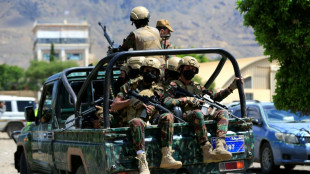 Houthis say hit Saudi base after renewed fighting with Yemeni govt forces

 Gilbert Arenas questions Jonathan Kuminga's decision to join Minnesota

 Cristian Mungiu's Fjord examines a family's conflict with Norwegian child authorities

 United States beats Spain 76-66 to set up World Cup final against France
 Queens residents seek renewed enforcement along Roosevelt Avenue

 Marmot research gains over $140,000 from meme-coin fees alongside wildlife contest
 Roadless Rule repeal proposal raises concerns over Midwest forests and fire risk

 KFF journalists discuss opioid funds, suicide prevention and gaps in care

 Steven Strogatz weighs AI mathematics advances and their consequences for researchers

 GTA VI draws political criticism online as preorder estimates exceed five million

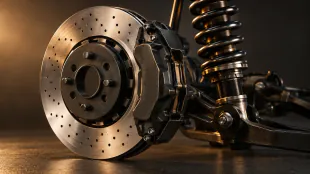 Mini 1998 GT pairs 161-hp engine with John Cooper Works chassis hardware

 Attissogbe double inspires Pau to Top 14 summit

 Guimaraes strike lights up Arsenal win over Sunderland

 Israeli-made Gaza documentary wins Venice special jury prize

 De Zerbi apologises to fans after Spurs' stalemate extends goal drought

 Lowry takes four-shot lead as Trump jets in for Irish Open

 Harrison, Skupski win US Open men's doubles title
 Verstappen fears overtaking will be 'tough' at Spanish GP

 Argentina revives plan for South Atlantic naval base amid Falklands tensions

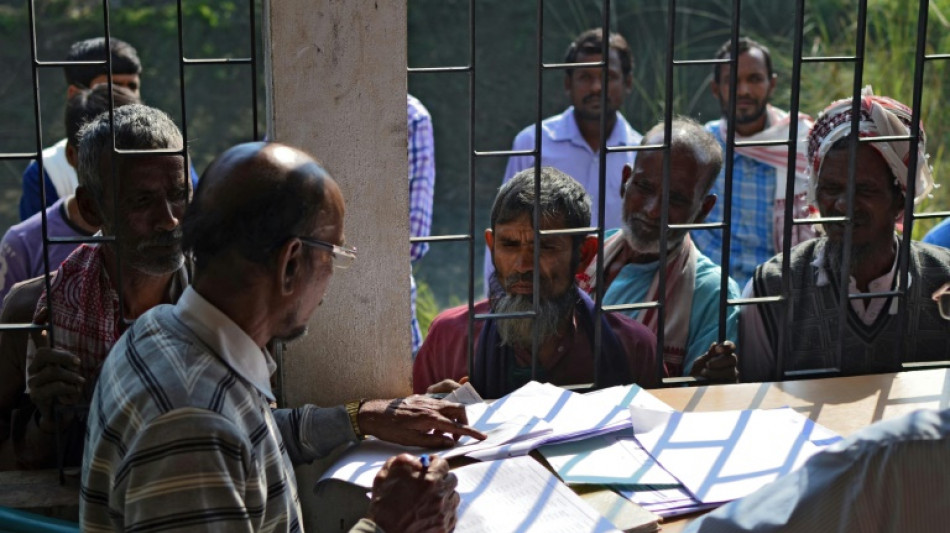
Indian election officials have given voters in Bihar state just weeks to prove their citizenship, requiring documents few possess in a registration revamp set to be applied nationwide, triggering disenfranchisement fears.
The Election Commission of India (ECI) announced the revision of the voter rolls in June ahead of upcoming polls in the eastern state.
It said the exercise will later be replicated across the nation of 1.4 billion people.
According to the ECI, the "intensive revision" was needed in part to avoid the "inclusion of the names of foreign illegal immigrants".
Members of Prime Minister Narendra Modi's Hindu nationalist Bharatiya Janata Party (BJP) have long claimed that large numbers of undocumented Muslim migrants from neighbouring Bangladesh have fraudulently entered India's electoral rolls.
Critics say the overhaul could render vast numbers of Indian citizens unable to vote.
"You are being asked to produce documents that very few people have," said Asaduddin Owaisi, a prominent Muslim lawmaker.
"It will lead to mass disenfranchisement."
Opposition lawmakers say it will impact minorities the hardest, including Muslims and Dalit communities, those on the bottom rung of India's rigid caste hierarchy.
- 'Engineered exclusions' -
All potential voters in Bihar will have to provide proof of citizenship by July 25.
Those registered in 2003, the last time scrutiny of the voter list took place in Bihar, can submit a copy of that.
The rest -- around 30 million people, according to the ECI's estimates -- have to provide evidence of their place and date of birth.
And those born after 1987 must also furnish proof of their parents' Indian citizenship.
The requirement affects more than a third of potential voters in Bihar, India's third most populous state and its poorest.
It is also a crucial election battleground as the only state in India's northern Hindi-speaking belt where Modi's BJP has only ever governed in a coalition.
Bihar's main opposition party, the Rashtriya Janata Dal, has challenged the election commission in the Supreme Court, along with other parties and activists.
"It is being used to justify aggressive and opaque revisions of electoral rolls that disproportionately target Muslim, Dalit and poor (Indian) migrant communities," the court petition read.
"They are not random patterns but... engineered exclusions."
Unlike many other countries, India does not have a unique national identity card.
The widely used biometric-linked "Aadhaar" identity card is not among the documents listed by the ECI as acceptable proof.
Documents that can be used include birth certificates, passports and matriculation records.
Of these, most people are likely to rely on their matriculation certificates.
But even those are in short supply in Bihar, where literacy rates are among the lowest in India.
According to an analysis published in The Indian Express newspaper, only 35 percent of people in the state hold such a document.
"In Bihar, where literacy is not very high, many people are not likely to have the kind of documents the ECI has demanded," said Jagdeep Chhokar from the New Delhi-based Association for Democratic Reforms (ADR).
"The poor, poorly educated, uneducated and minorities will be the most impacted."
- 'Foreign infiltrators' -
Detractors say the drive is unprecedented because "documentary proof has never been demanded" of people to vote in India.
"Only those who especially wanted their name inserted needed to fill a form," said political activist and academic Yogendra Yadav. "For the rest, someone would come to their house and get their names registered."
"The onus in India was never on the voter but on the ECI officials," he added.
In previous verification drives, modifications were made to the existing rolls, Yadav said.
Now, a list is being drawn from scratch.
Yadav said the drive was a "de facto" implementation of an earlier plan to put together a list of Indian citizens.
The National Register of Citizens (NRC), which was compiled in the eastern state of Assam in 2019, left out almost two million people. Many of them were Muslims.
The BJP had said the NRC would be replicated nationwide as it was necessary to detect "foreign infiltrators", but was forced to backtrack after furious protests.
"Everyone has to now prove that they are citizens of India," said Yadav. "That is exactly what the NRC is... this is NRC by the backdoor."
W.AbuLaban--SF-PST