Exiled Chinese lawyers grieve loss of civil society decade after crackdown / Photo: Pedro Pardo - AFP/File

 Garcia keeps WBC welterweight title by stopping Benn
 Lights out in Laos as electricity exports surge

 'This is the test': All eyes on US Fed to tackle high inflation

 Scars of Marawi siege linger as Philippines poll nears

 Trump turns to golf, family business on Irish visit's second day

 Defiant Sabalenka motivated by US Open defeat

 Houthis say hit Saudi base after renewed fighting with Yemeni govt forces

 Gilbert Arenas questions Jonathan Kuminga's decision to join Minnesota

 Cristian Mungiu's Fjord examines a family's conflict with Norwegian child authorities

 United States beats Spain 76-66 to set up World Cup final against France
 Queens residents seek renewed enforcement along Roosevelt Avenue

 Marmot research gains over $140,000 from meme-coin fees alongside wildlife contest

 Roadless Rule repeal proposal raises concerns over Midwest forests and fire risk

 KFF journalists discuss opioid funds, suicide prevention and gaps in care

 Steven Strogatz weighs AI mathematics advances and their consequences for researchers

 GTA VI draws political criticism online as preorder estimates exceed five million

 Mini 1998 GT pairs 161-hp engine with John Cooper Works chassis hardware

 Attissogbe double inspires Pau to Top 14 summit

 Guimaraes strike lights up Arsenal win over Sunderland

 Israeli-made Gaza documentary wins Venice special jury prize

 De Zerbi apologises to fans after Spurs' stalemate extends goal drought

 Lowry takes four-shot lead as Trump jets in for Irish Open

 Harrison, Skupski win US Open men's doubles title
 Verstappen fears overtaking will be 'tough' at Spanish GP

 Argentina revives plan for South Atlantic naval base amid Falklands tensions

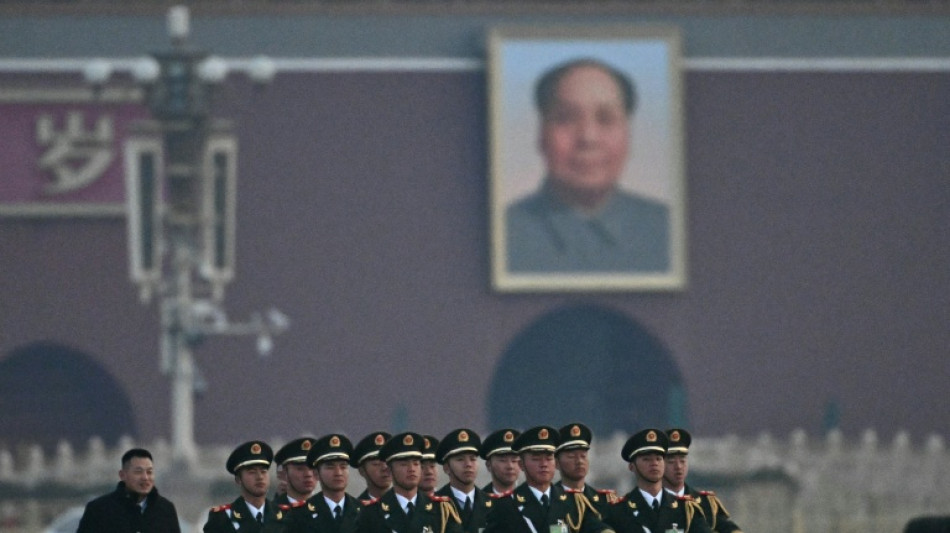
Ten years ago, human rights lawyer Li Fangping was enjoying a peaceful evening in his hometown in central China with his young son when he heard a knock on the door.
When he opened it, more than a dozen officers burst into his living room and ordered him to follow them to the police station, where he was interrogated and threatened.
"They said... if I didn't cooperate, I wouldn't be allowed to leave," Li, now in exile, told AFP, describing his July 2015 detention.
He was one of the hundreds of lawyers and rights activists rounded up under a sweeping mass arrest campaign often referred to as the "709 crackdown".
Beijing has intensified its hold on civil society since President Xi Jinping took power in 2012, tightening its grip on freedom of speech and stamping all forms of dissent.
Ultra-nationalists often troll public intellectuals who express liberal opinions online, while those with strident pro-government views are boosted by the state.
"The Chinese government under Xi Jinping has sought to eradicate the influence of lawyers who defend people's rights," said Maya Wang, associate China director at Human Rights Watch.
Li told AFP he had once believed that China could gradually move away from its authoritarian system through promoting the rule of law and protecting human rights.
But the 709 crackdown made it clear to him the Communist Party's autocracy "is unchangeable".
"As long as someone is seen as challenging their authority, they believe that person must be crushed."
- 'More systematic' -
The civil rights scene has "fundamentally changed" under Xi, said Wang Ying, a lawyer to one of the country's most prominent rights activists, Xu Zhiyong -- now in prison serving a 14 year sentence.
"The rights defence movement had gradually begun to exhibit stronger organisation, persistence, and influence," Wang, now based in the United States, told AFP.
"As a result, the repression became faster, more thorough and more systematic."
Lawyer Teng Biao said his community had already encountered suppression -- including disbarment, arbitrary detention, torture and imprisonment -- before Xi took office.
Teng and Li said they were both kidnapped, detained and tortured in 2011 during the country's "Jasmine Revolution", when the Arab Spring inspired calls for pro-democracy demonstrations.
"I was forced to sit down on the ground (from 6:00 am to midnight) facing the wall with my back straight, and if I moved a little bit, they would beat me," Teng, who moved to the United States in 2014, told AFP.
Before his detention, he had publicly criticised the Communist Party and top leaders.
Teng said authorities wanted to "punish me and silence me".
During the same period, Li was stopped on the streets of Beijing, pushed into a car by a group of strangers, forced to wear a black hood and driven to a detention centre in the mountains hours away.
For the next five days, he was interrogated for 30 hours straight, wore handcuffs attached to a chair when he slept, and was beaten and slapped for not obeying strict rules, Li said.
– 'Destroyed' -
While Wang, 37, was not arrested during the crackdown, she hopes to embody the "spirit of resistance" shown by the lawyers who were.
Since taking on Xu's case in 2023, Wang said she had been surveilled, harassed, and threatened by Chinese authorities.
Before leaving China, she said she was approached by "secret police" who asked her to be an informant.
"I provided no information after leaving the country but this non-cooperation puts me at risk if I return," Wang told AFP.
She now fears she would be barred from leaving the country, arbitrarily detained, unfairly tried, or tortured on returning to China.
The human rights movement has almost been "completely destroyed" in the wake of the crackdown, Teng said.
Activists and lawyers still in the country, he said, were facing a difficult time with much higher risks.
"But if there's any hope -- they are the hope of China's future and civil society."
J.Saleh--SF-PST