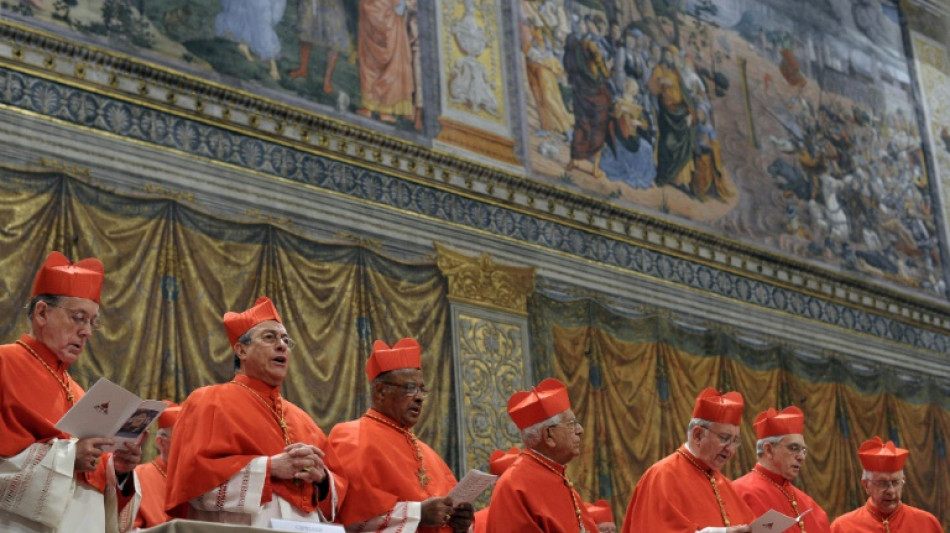
What we know ahead of conclave to elect new pope / Photo: Handout - OSSERVATORE ROMANO/AFP/File

 US fight off spirited France to win 12th World Cup

 Drivers give cool reception to new Madring circuit

 Maresca makes flawless Man City start to leave Man Utd trailing

 Dozens arrested in major anti-LGBTQ raids in Turkey
 Leftwing opposition seen leading Sweden election, far-right losing ground

 Senegal goalkeeper Mendy retires from international football
 Carrick 'worried' by decision to award Man City winner

 Lobotka eases pressure on Allegri with Napoli winner
 Trump watches as Lowry wins Irish Open in record-breaking style

 Poland, Ukraine slam Russian strikes near border as 'escalation'

 Haaland fires 10-man Man City to memorable win over Man Utd
 I miss the adrenaline, but it's not my moment - Bolt
 Championship leader Antonelli to 'keep pushing' for title
 Yamal double helps Barca edge Levante thriller

 دراسة على مستفيدي ميديكيد ترصد فجوة في العمر المتوقع للمصابين بالتوحد

 Brighton run rampant against 10-man Coventry

 Late Mbappe goal sends Lille top of Ligue 1

 Five-star Brighton crush 10-man Coventry
 Team Europe beat United States to reclaim Solheim Cup

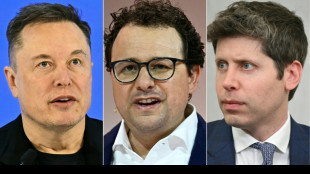 US House Speaker warns curbing AI too sharply could leave China ahead

 張國榮70歲誕辰音樂會西九舉行 唐鶴德錄音致意
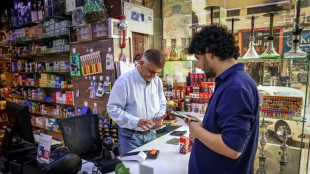 Iran's economic ties to Dubai hard to break despite war
 iPhone 18預購後出現可疑扣款 四間銀行調查未授權交易
 《浪花男女》辦特別謝票場 馮志強談票房與導演客串拍攝

 Former captain De Villiers hails 'fantastic' Springboks

Cardinals from around the world will meet under Michelangelo's frescoes in the Sistine Chapel on May 7 to elect a new leader of the Catholic Church after Pope Francis's death.
Dating back to the Middle Ages -- when the idea of sovereigns being elected was somewhat revolutionary -- the gathering, known as a conclave, has an air of mystery about it, as all participants are sworn to secrecy for life.
Here is what we know about the process:
- Where and when -
On Monday May 5, two days before the conclave, officials and staff taking part in the conclave will gather at 5:30 pm (1530 GMT) to sign an oath of secrecy.
The day itself, Wednesday May 7, will begin with a special mass at 10:00 am in St Peter's Basilica.
The conclave begins at 4:30 pm following a prayer in the Vatican's Pauline Chapel.
Cardinals will walk in procession to the Sistine Chapel before taking their oath of secrecy.
The conclave will last until a new pontiff is elected.
Cardinals wear different garments depending on whether they are from the Latin or Eastern churches.
Those in the Latin Church will don a "red robe with sash, rochet, mozzetta, pectoral cross with red and gold cord, ring, zucchetto (cap) and biretta", while those in the Eastern Church wear their "own choir dress", the Vatican said.
Each cardinal will wear an accreditation badge around his neck to help identify them as electors.
While it took almost three years to appoint Pope Gregory X in the 13th century -- the longest conclave to date -- modern gatherings are usually a matter of days.
Both Francis and his predecessor, Benedict XVI, were elected after two days of voting.
- Who takes part -
Only 133 of the Church's 252 cardinals are expected to take part in the conclave, as only those aged under 80 are eligible to vote for a new pope.
There are 135 eligible voters but the Vatican announced on Tuesday that two cardinals had dropped out for health reasons.
The archdiocese of Valencia in Spain confirmed to AFP that its archbishop emeritus, Cardinal Antonio Canizares was one of those who would not attend.
Most of those -- around 80 percent -- allowed to vote were appointed by Francis. They hail from all corners of the globe, with many from under-represented regions.
- Secrecy and security -
The word conclave comes from the Latin for "with key", a reference to the lockdown imposed on cardinals during the conclave.
Their deliberations are held in the strictest secrecy on pain of instant excommunication. Smartphones and any internet access are off-limits and cardinals cannot read newspapers, listen to the radio or watch TV.
The cardinals stay in the Santa Marta residence at the Vatican until they elect a new pope.
Any contact with the outside world is permitted only for "grave and urgent reasons", which need to be confirmed by a panel of four peers.
Only cardinal electors are allowed to be present during the actual voting, although others including doctors, clerical assistants and housekeeping staff are authorised to enter at different times.
- How voting unfolds -
Cardinals hold four ballots a day -- two each in the morning and afternoon -- until one candidate wins two-thirds of the votes, currently 89 ballots.
At the end of each session, the ballots are burned in a special stove. With the addition of chemicals, the stove's chimney stack emits black smoke if no one has been elected, or white smoke if there is a new pope.
If no new pope is elected after three days, cardinals take a break and hold a day of prayer and talks.
Any single Catholic adult male can be elected pope, although in practice it is almost always one of the cardinals.
Sick cardinals are allowed to cast their ballots from their beds within the Vatican.
- What happens next -
The winning candidate is asked by the Dean of Cardinals if he accepts the pontificate and, if the answer is 'yes', what name he chooses as pontiff.
The new leader of the world's 1.4 billion Catholics then comes out onto a balcony overlooking the crowds in St Peter's Square as a senior cardinal cries: "Habemus Papam" (We have a pope)!
E.Qaddoumi--SF-PST