-
 Kennedy Center: future unclear for iconic Washington arts hub
-
Nvidia, OpenAI CEOs to attend Xi dinner at White House

-
 Trump claims 'infinite' Greenland security deal with Denmark
-
Anthropic picks Accenture for in-house AI safety evaluation

-
 Helicopters battle wildfire threatening Ecuador's capital
-
Balogun returns as Monaco beat Lens to continue strong Ligue 1 start

-
 Brentford batter Chelsea to undo Alonso's promising start
-
'Pause' on overt repression in Venezuela, but reforms still needed: HRW
-
 Kane hits Bundesliga century as Bayern rout Union
-
Global stocks mixed as yen falls despite Bank of Japan rate hike
-
 Trump says CNN, MS NOW, Politico banned from White House
-
Cuba hit with seventh major blackout of the year
-
 Hushing and hedging: US companies retreat on climate
-
Murray out with concussion so Wentz will start for Vikings

-
 Springboks to face Fiji before 2027 Rugby World Cup
-
UN chief 'deeply regrets' US visa refusal to Abbas for annual meeting

-
 Nigeria miners struggled to breathe in cell before 37 died: survivors
-
England quick Carse to face no charges over alleged nightclub assault

-
 McIlroy on the charge at PGA Championship as Reed withdraws
-
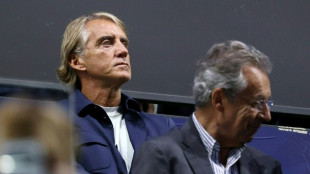
Mancini brings nine newcomers into the first squad of his Italy comeback
-
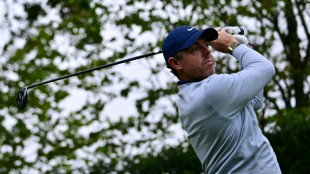 McIlroy on the charge at PGA Championship
-
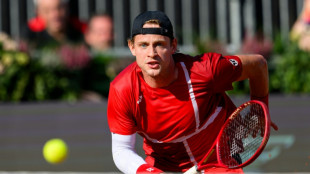
Czechs level Davis Cup tie against USA as South Korea eye Finals
-
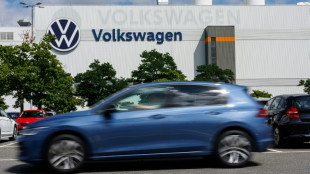 Crisis-wracked Volkswagen warns of 10-bn-euro hit to profits
-
New France boss Zidane confirms Mbappe as captain after naming first squad

-
 Costa Rica's Grynspan tops third informal poll for UN chief: diplomat
-
California governor signs order to explore AI 'kill switch'

-
 Stock markets retreat after central bank rate hikes
-
Head leads run spree as Australia win Zimbabwe ODI series
-
 Russia labels director of Cannes Grand Prix winner a 'foreign agent'
-
In-form Raphinha wants to finish career at Barcelona

-
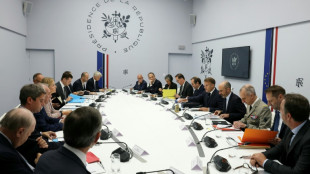 Macron warns of Russian 'hybrid' threat after meeting presidential hopefuls
-
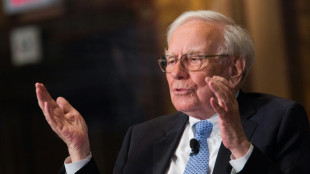
Warren Buffett steps down as Berkshire Hathaway chairman
-
 UN holds third informal poll for new chief
-
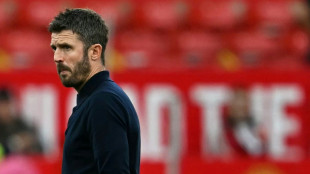
Carrick confident Man Utd can 'work through' tough time
-
 Kulusevski return can spark Spurs: De Zerbi
-
Mbappe ends Nike partnership to join Swiss brand On

-
 Shakira to cap off world tour with Madrid 12-gig run
-
Liverpool boss Iraola puts Bournemouth love affair on hold

-
 Isolated Syrian-Druze city blames Damascus for shortages
-
'A disaster' if Man City do not win says Maresca after flawless start
-
 Isolated Syrian-Druze city shortages
-
Kerry James Marshall: American 'blackness' painter celebrated in Europe

-
 Dutch drop Depay for Germany match in Xavi's first pick
-
Spain coach De la Fuente offers 'full support' to people of Ceuta

-
 Ronaldo named in Portugal squad for Nations League
-
Russia seizes assets of Nestle, French firms over West's Ukraine support

-
 Stock markets diverge after central bank rate hikes
-
England can build on World Cup 'spirit', says Tuchel
-
 Anti-Assad music star makes triumphant return to Syria
-
UNESCO can be 'moderator' in AI debate: chief to AFP
Why have Spain floods killed so many?
Powerful storms turbo-charged by a warming planet, poor urban planning and carelessness combined with catastrophic consequences in Spain's deadliest floods in a generation, experts told AFP.
Authorities in the European country have announced a provisional toll of 158 dead and the figure is feared to rise as rescuers search for bodies under the rubble and mud.
- Exceptionally violent weather -
Torrential rains drenched areas of the eastern Valencia region with a year's worth of precipitation in a matter of hours, according to national weather service AEMET.
In Chiva, west of the coastal city of Valencia, it recorded 491 litres of rain per square metre (49.1 centimetres).
The deluge was linked to a storm phenomenon common for the season where cold air travels over the Mediterranean Sea's warm waters and forms intense rain clouds.
Scientists say human-driven climate change is increasing the temperatures of the world's waters and increasing the ferocity of storms.
The warmer Mediterranean and time of year acted as fuel for the torrential rains in a "dramatic" cocktail attributable to climate change, said Jorge Olcina, a climate expert at Alicante University.
When storms reach such levels, they can have an effect similar to "hurricanes" or "tropical cyclones", he added in an audio message to AFP.
- Dry and artificial soils -
The parched soil in the hardest-hit areas compounded the problem after Spain endured two consecutive years of intense droughts.
The ground could not absorb such a quantity of water, giving rise to flash flooding that raged through settlements.
The Valencia region is also covered with many areas where natural spaces have made way for impermeable concrete.
This urban development is "uncontrolled and ill-adapted to the natural characteristics of the territory", amplifying the danger of powerful storms, said Pablo Aznar of the Socioeconomic Observatory of Floods and Droughts.
The population density of the Valencia region, which hosts Spain's third-largest city of the same name with a population of almost 1.9 million inhabitants, also contributed.
Population density "was a very important factor" and posed a "challenge" to the authorities, said Aznar.
- Rush hour on the roads -
The timing of the storm could not have been worse as it picked up late on Tuesday when motorists were hitting the roads during the evening rush hour.
Many victims were caught by surprise in their vehicles as they returned home or on the street, with the raging waters plucking some clinging to lampposts or trees.
Such scenes could have been avoided had citizens been warned on time to allow them to shelter at home, according to Hannah Cloke, a hydrology professor at Britain's University of Reading.
- Lack of care -
AEMET had issued a red warning for the Valencia region on Tuesday morning, but the civil protection service only sent its telephone alerts advising people not to leave home after 8:00 pm (1900 GMT).
But some people admitted they left home even after receiving the alert, suggesting a poor comprehension of the emergency.
Although there were "communication failures", the responsibility is shared because Spain lacks a "culture of risk", Aznar told AFP.
"Our collective mentality is still not sufficiently adapted to new extreme weather phenomena."
Olcina agreed. "We have to vastly improve risk education in schools, but also in the whole population, so they know how to act in the event of an immediate risk."
I.Matar--SF-PST