Trump Prepares Veto Strategy Amid Congressional Shift

 ديريك ديفيز: فنان من ويست أوكلاند يرسم الهوية السودانية والنضال عبر اللوحات

 Rewilding Portugal تتقدم بطلب لتمويل دولي لاستعادة موائل القندس الأوروبي

 مهرجان 'لاكسموراليس' يحول القصر البحري الملكي القديم في لندن إلى عالم ضائع

 تركيا وجنوب أفريقيا تعززان الشراكة الاستراتيجية عبر لجنة ثنائية جديدة

 EU Cuts Southern Hake Quotas by 20% for 2027 Amid Stock Concerns

 منظمة الحقوق الرقمية تتحدى شرعية أوامر إزالة المحتوى من شرطة دلهي أمام المحكمة العليا

 South Korea Proposes Fourth Delay of Cryptocurrency Gains Tax to 2029
With Democrats securing control of both chambers of Congress, Donald Trump is preparing to rely heavily on his veto power to block opposition legislation. As the new session approaches in January 2027, Republicans are engaging in a final legislative sprint to advance their agenda before losing their majority, marking a critical test for the president's influence within his party.
Donald Trump is preparing to leverage his presidential veto power as Democrats secure control of both the House and Senate, a shift that threatens to paralyze his legislative agenda for the remainder of his term. The midterm election results have effectively transformed Trump into a "lame duck" president for the second half of his tenure, stripping him of the parliamentary majority needed to advance his economic, fiscal, and social reforms.
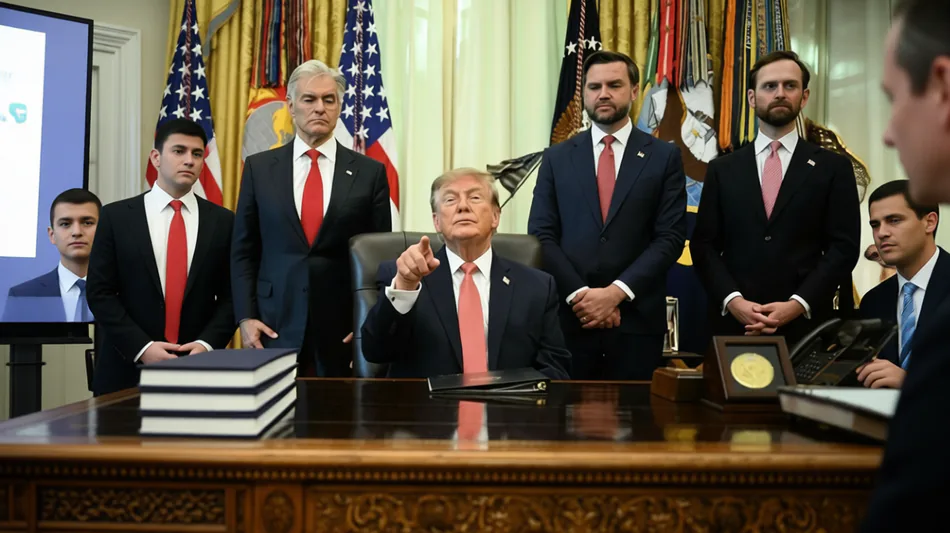
Aware of the impending gridlock, Trump has signaled his intention to become "Mr. Veto," aiming to block opposition bills at their inception. However, while the veto is a potent defensive tool, it does not enable the creation of new policy. This limitation forces the White House into permanent negotiation rather than unilateral action.
To circumvent congressional obstruction, senior aides including Chief of Staff Stephen Miller and Budget Director Russell Vought have spent months developing an emergency strategy centered on executive orders. These directives allow the president to act without congressional approval but remain a partial solution. They cannot appropriate new federal funds—a power reserved exclusively for the House—and are vulnerable to being overturned by federal courts through legal challenges from the opposition.
The situation raises the risk of a "grinding halt," a total institutional standstill fueled by chaotic legal battles between the executive branch and judicial oversight.
Meanwhile, Republicans are initiating what is known as the "lame duck sprint" before the new Democratic Congress takes office on January 3, 2027. During this final window, the outgoing majority is attempting to pass as many laws as possible and avoid a government shutdown, despite internal disagreements within the Grand Old Party (GOP) regarding how aggressively to push their agenda.
Historical precedents highlight the significance of these closing sessions. Following Richard Nixon’s resignation in 1974, Congress passed 138 laws in a single month. In 1998, Republicans accelerated the impeachment vote against Bill Clinton before their majority dwindled in January.
In recent years, this period has become the last opportunity to insert major spending bills and local funding measures that would otherwise fail to pass. For Trump, this final legislative push serves as an early test of his control over a party shaken by the election results.
Y.Zaher--SF-PST