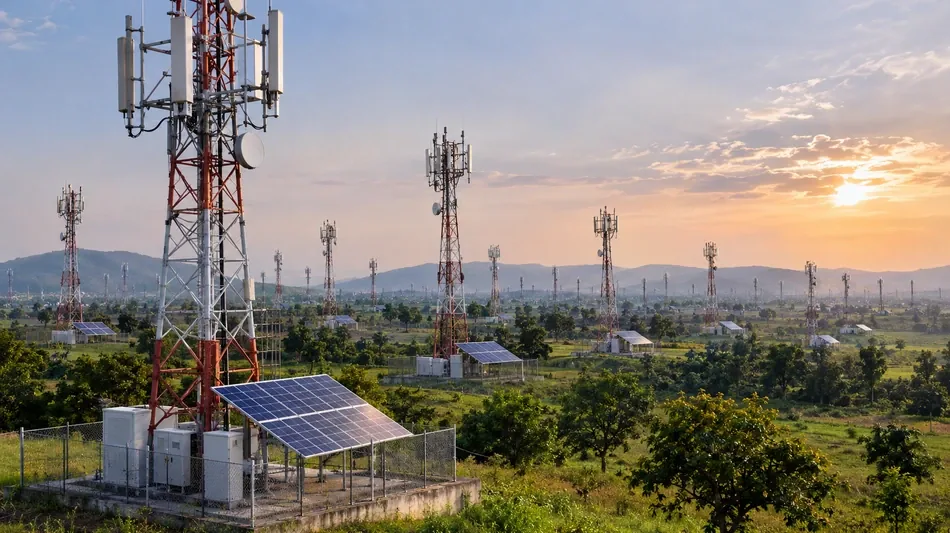
Indus Towers expands solar-powered network to 50,000 telecom sites

 ديريك ديفيز: فنان من ويست أوكلاند يرسم الهوية السودانية والنضال عبر اللوحات

 Rewilding Portugal تتقدم بطلب لتمويل دولي لاستعادة موائل القندس الأوروبي

 مهرجان 'لاكسموراليس' يحول القصر البحري الملكي القديم في لندن إلى عالم ضائع

 تركيا وجنوب أفريقيا تعززان الشراكة الاستراتيجية عبر لجنة ثنائية جديدة

 EU Cuts Southern Hake Quotas by 20% for 2027 Amid Stock Concerns

 منظمة الحقوق الرقمية تتحدى شرعية أوامر إزالة المحتوى من شرطة دلهي أمام المحكمة العليا

 South Korea Proposes Fourth Delay of Cryptocurrency Gains Tax to 2029

 ASIC Fines Mona Museum Owner's Company for Late Financial Report

 Business Leaders Criticize Productivity Commission Inquiry Scope

New Delhi Telecom tower operators are increasingly looking at solar energy to power their infrastructure, as companies seek to reduce dependence on conventional energy sources, improve energy security and move towards more sustainable operations. Indus Towers, one of the world’s largest telecom tower infrastructure companies, has deployed 50,000 solar-powered telecom sites across India, with a cumulative installed solar capacity of approximately 300 MW.
New Delhi Telecom tower operators are increasingly looking at solar energy to power their infrastructure, as companies seek to reduce dependence on conventional energy sources, improve energy security and move towards more sustainable operations. Indus Towers, one of the world’s largest telecom tower infrastructure companies, has deployed 50,000 solar-powered telecom sites across India, with a cumulative installed solar capacity of approximately 300 MW. In an official statement, the company said, “Indus Towers Limited, one of the world’s largest telecom tower infrastructure companies, has become the first passive telecom infrastructure company to successfully deploy 50,000 solar powered telecom sites across India, creating a global benchmark for sustainable infrastructure at scale. ” The company is now targeting 100,000 solar-powered telecom sites, indicating the growing role of renewable energy in powering telecom infrastructure. Solar deployment to cut carbon emissions The company said its solar-powered network is estimated to reduce carbon emissions by approximately 420,000 tonnes annually by lowering dependence on conventional energy sources. as reported by the company’s calculations, the environmental impact of the initiative is equivalent to planting almost 2 crore trees.
Digital monitoring to improve efficiency The company has also integrated digital monitoring systems across its solar-powered sites to track power generation and performance in real time. It is using data-driven maintenance capabilities to manage its network and improve operational resilience. Prachur Sah, Managing Director and CEO of Indus Towers, said the company accelerated its solar deployment programme in 2024 and has since built one of the largest distributed solar ecosystems in the telecom infrastructure sector. “This milestone reflects our commitment to responsible growth, and we remain focused on our ambition of powering 100,000 telecom sites through solar energy, further optimising energy cost, while continuing to redefine benchmarks for sustainable digital infrastructure,” Sah said. Indus Towers eyes solar expansion in Africa The company is also looking at taking its renewable energy model to international markets, particularly Africa, where it sees a need for reliable and sustainable energy solutions to expand digital connectivity. Sah said the expertise, operating model and technology platforms developed through the company’s solar deployment could help it replicate similar infrastructure in Africa.
The company said the integration of renewable energy solutions and digital monitoring systems is helping reduce diesel dependence, enhance energy security and support the transition towards greener telecom connectivity.
S.AbuJamous--SF-PST