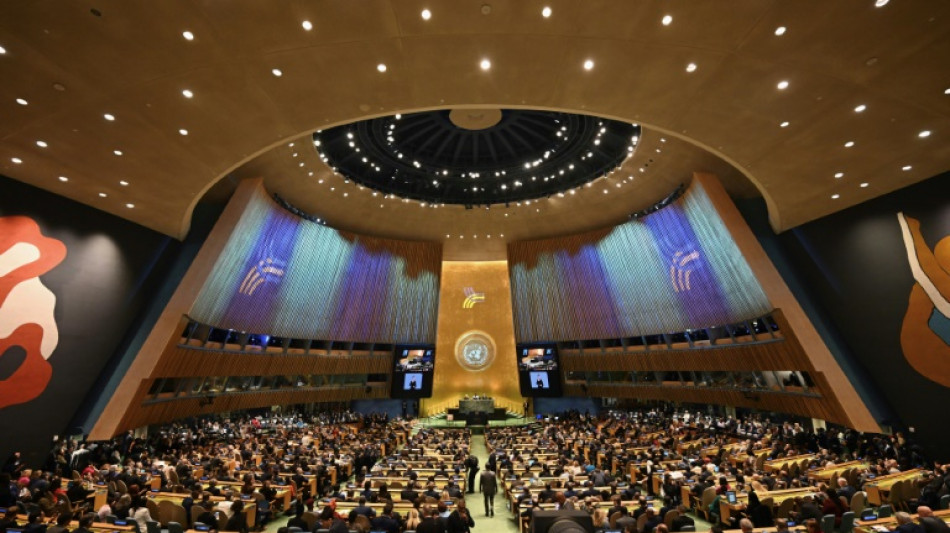
What is the UN's 'Pact for the Future'? / Photo: ANGELA WEISS - AFP

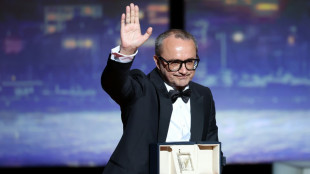
 UK actor Naomi Watts honoured at Spain film festival
 Japan emperor declares Asian Games open after turbulent build-up

 Asian Games open with unity message after troubled build-up
 Denmark hails 'binding' Greenland deal with Trump
 We don't want Games host Japan losing money, says Asian Olympic official
 Ed Sheeran returns to stage after Palestinian controversy

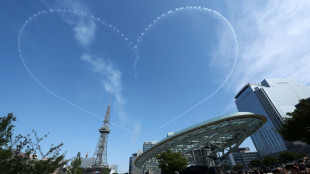 Asian Games to open in Japan after troubled build-up
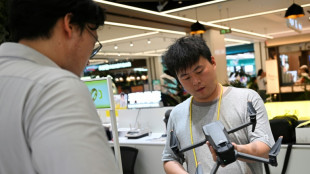 Drone owners rush to offload devices ahead of Beijing ban
 Trump's beef policies irk Texas ranchers, testing their loyalty
 Nvidia, OpenAI CEOs to attend Xi dinner at White House
 Anthropic picks Accenture for in-house AI safety evaluation
 Balogun returns as Monaco beat Lens to continue strong Ligue 1 start

 'Pause' on overt repression in Venezuela, but reforms still needed: HRW
 Global stocks mixed as yen falls despite Bank of Japan rate hike
 Cuba hit with seventh major blackout of the year
 Murray out with concussion so Wentz will start for Vikings

 UN chief 'deeply regrets' US visa refusal to Abbas for annual meeting
 England quick Carse to face no charges over alleged nightclub assault

 Mancini brings nine newcomers into the first squad of his Italy comeback

 Czechs level Davis Cup tie against USA as South Korea eye Finals
 New France boss Zidane confirms Mbappe as captain after naming first squad
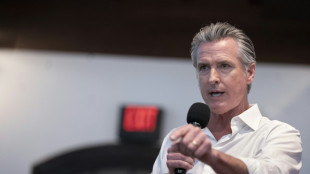 California governor signs order to explore AI 'kill switch'
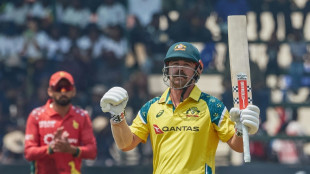 Head leads run spree as Australia win Zimbabwe ODI series
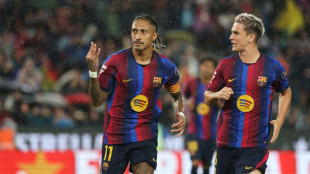 In-form Raphinha wants to finish career at Barcelona
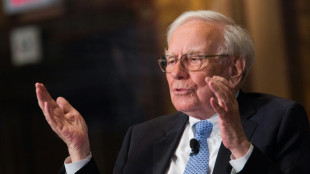 Warren Buffett steps down as Berkshire Hathaway chairman
The "Pact for the Future" is the United Nations' master plan for tackling challenges that lie ahead for humanity, with 56 "actions" covering everything from peacekeeping to the potential threats posed by artificial intelligence.
These are the key aspects of the pact that was adopted Sunday by the UN's 193 members at a gathering ahead of the body's centerpiece high-level week.
- Peace and international law -
The pact underlines the "increasingly complex challenges" to world peace, notably the threat of nuclear war, with the document reiterating the UN's core tenets.
They are: respect for the organization's charter, respect for human rights, protection for civilians, and promotion of diplomacy to resolve conflict -- all of which are routinely trampled in the numerous conflicts raging worldwide.
The pact also calls for the elimination of nuclear weapons.
At a time when thousands of blue helmet peacekeepers are deployed internationally, it acknowledges the continued need for such missions -- even though they are sometimes decried by host countries.
It also demands Secretary-General Antonio Guterres undertake a review of the future of the UN's peacekeeping operations and how the body's "toolbox" can be adapted to respond to situations in a more "agile" and "tailored" way.
- Environment -
"Climate change is one of the greatest challenges of our time" and "we are deeply concerned at the current slow pace of progress" in arresting the march of environmental destruction, states the pact.
In spite of efforts, it is not markedly different from the commitments of COP28 at the end of 2023 -- namely to transition away from fossil fuels, triple renewables usage by 2030, attain carbon neutrality by 2050, and redouble efforts to cap warming at 1.5 degrees Celsius.
Achieving those lofty ambitions will be a challenge. Any reference to fossil fuels was scrubbed from the text during negotiations, only to be subsequently reintroduced.
"There was ferocious pushback from some fossil-fuel-producing countries," said Alden Meyer, of the E3G think-tank who hailed the inclusion of a sole, hard-won reference to fossil fuels in the adopted pact.
- Finance and development -
The pact promises to accelerate efforts to attain the 2030 Sustainable Development Goals which aim for the eradication of extreme poverty by 2030, an intensified battle against hunger, promotion of gender equality and education.
Most of the objectives, set in 2005 and reiterated last year, are far from being realized.
Against that backdrop, and with poor countries particularly mobilized for change, the pact calls for "reform of the international financial architecture."
The goal of such reform would be to allow certain countries previously excluded from preferential access to development loans to be given such financing, in order to help them prepare for the impact of climate change.
But any progress in that direction will have to be accompanied by changes elsewhere -- notably at the World Bank and the International Monetary Fund.
- Security Council -
Faced with paralysis in the Security Council, which has been hamstrung by Russian and US vetoes, the pact foresees reform of the UN's most important body.
Constituted in the Second World War's aftermath, the pact seeks to make it more representative and to right "historical injustice" against Africa which does not yet have a permanent seat.
Guterres hailed it as "the strongest language on Security Council reform in a generation."
But the text does nothing to paper over the deep disagreements that dog the issue -- namely the possibility of having new permanent members and reform of the powerful veto.
- Artificial intelligence -
Countries also adopted an annex to the main text -- a Global Digital Compact -- seeking to reduce the digital divide, and develop safe and representative technology for the benefit of all.
It focuses particularly on the risks and opportunities of artificial intelligence.
As transformative technologies continue to evolve at light speed, threatening democracy and human rights, the compact commits to the creation of an Independent International Scientific Panel to promote dialogue between states and those active in the sector.
I.Matar--SF-PST