Withdrawal symptoms: Afghan farmers struggle after poppy ban / Photo: Wakil KOHSAR - AFP

 Asian Games offer 'deepest apologies' for South Korea anthem blunder
 تطورات "سي أن أن": تقرير بالذكاء الاصطناعي كاد يشعل حرباً بين أميركا والصين
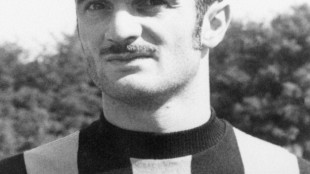 Inter Milan and Italy icon Mazzola dies aged 83
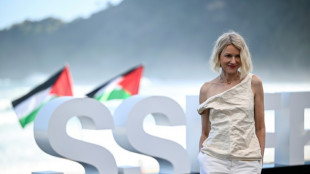 UK actor Naomi Watts honoured at Spain film festival
 Saudi capital issues first air raid alert since renewed fighting in Yemen

 Martin edges title rival Marquez for Austrian MotoGP pole

 Indonesia accepts Malaysia's help to tackle wildfires
 Indians living in Japan on stand-by to house Asian Games athletes
 Trump signs bill authorizing sweeping Russia sanctions

 Protesters form human chain at Kennedy Center after Trump threat

 Death toll from attack at police HQ in Pakistan rises to 31

 Trump says Denmark to give US 'permanent control' over Greenland security
 Kennedy Center: future unclear for iconic Washington arts hub

 Trump claims 'infinite' Greenland security deal with Denmark

 Helicopters battle wildfire threatening Ecuador's capital

 Brentford batter Chelsea to undo Alonso's promising start
 Kane hits Bundesliga century as Bayern rout Union
 Trump says CNN, MS NOW, Politico banned from White House
 Hushing and hedging: US companies retreat on climate

 Springboks to face Fiji before 2027 Rugby World Cup
 Nigeria miners struggled to breathe in cell before 37 died: survivors

 McIlroy on the charge at PGA Championship as Reed withdraws

 McIlroy on the charge at PGA Championship

 Crisis-wracked Volkswagen warns of 10-bn-euro hit to profits

 Costa Rica's Grynspan tops third informal poll for UN chief: diplomat

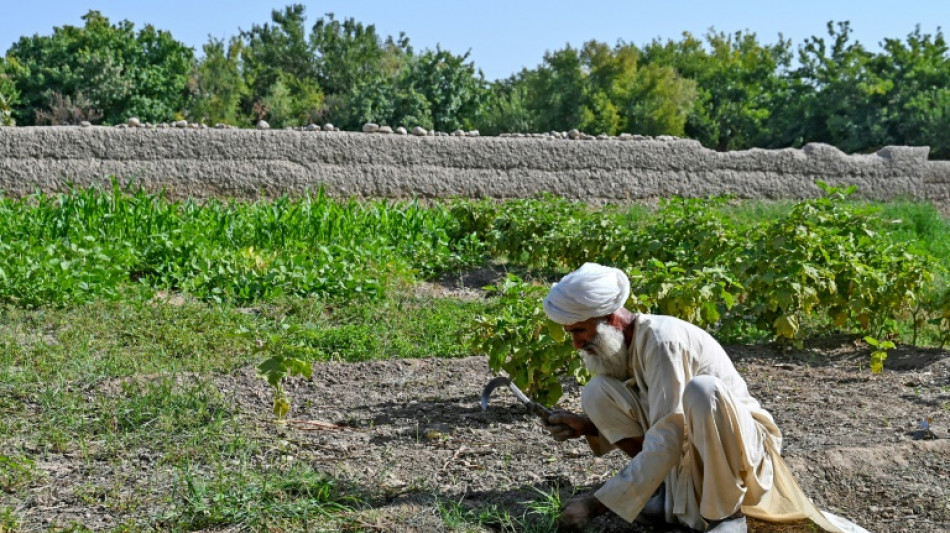
Asadullah was a prosperous poppy farmer in southern Afghanistan for 20 years until Taliban authorities abruptly began enforcing a long-standing ban on the crop.
From four acres (1.6 hectares) in Helmand -- long the heartland of poppy production -- the 65-year-old earned between 250,000 to 500,000 Afghani ($3,500 to $7,000) per season from the plant, which is used to produce opium and heroin.
Forced by the authorities to switch to other crops, he is now struggling to make ends meet.
"We are finished. We don't have anything to eat for dinner," laments Asadullah, his weathered face and long white beard showing his hardship.
"Now we barely make 25,000 Afghani."
Like his neighbours in the village of Torma -- sweltering in heat and criss-crossed by streams where boys play -- Asadullah first tried planting corn, which failed.
"We didn't have money for fertiliser," he said, adding most people turned to the hardier mung bean, which is easier to grow but yields a fraction of the profit of poppy.
- Growers hit hard -
The decree from Taliban Supreme Leader Hibatullah Akhundzada in April 2022 banning poppy production in the world's top producing country caused a 95 percent drop in harvests last year.
But it also hit the growers hard, and according to the United Nations Office on Drugs and Crime, the eradication of poppy inflicted losses of over a billion dollars on Afghan farmers last year.
Lala Khan, 40, switched to growing cotton when it became clear the authorities were determined to enforce the ban -- but his annual income plummeted.
"We used to eat meat once every three days, now it's once a month," he says.
Khan says he received only "a sack of flour and a sack of fertiliser" as compensation for stopping poppy production.
"What can we do with that?" he asks.
Ehsanullah, another former poppy grower, can barely conceal his anger at his current plight.
"We buy all our daily needs on credit. And when we harvest, we repay the debts and have nothing left."
- Secret stash -
In the neighbouring village of Khumarai, the local imam known as Bismillah explains that 80 percent of the land in the area was previously used to grow poppy, and 20 percent for wheat, corn, beans and cotton.
In Afghanistan, where huge families are the norm, one of the biggest expenses for households is a dowry to marry off daughters.
"We could pay it with opium, but not with corn and beans," he says.
Some people, like Bismillah, still have a stash of poppy resin left over from their last crop -- an Afghan equivalent of cash stuffed under the mattress.
"Most people keep some at home, but they avoid saying it for fear of thieves," Bismillah says, showing AFP a basin containing around half a kilogram (one pound) of the sticky brown resin.
"We are waiting for the price to go higher... we are hoping to pay (the dowries) with it".
In Maiwand, in the neighbouring province of Kandahar, the former opium market is now deserted and Hunar, 40, has turned to selling sugar, oil, tea and sweets instead.
"For us, obeying the order of the Emir (the supreme leader) is obligatory," he said.
But he warned people were struggling so badly, there was a risk they would return to growing poppy.
Not all provinces have been as compliant as Helmand in stopping poppy production.
In May, clashes between farmers and brigades sent to destroy their poppy fields resulted in several deaths in northeast Badakhshan.
"Death to the Emirate (Taliban-ruled Afghanistan)," some shouted in video of the clashes seen on social media.
- Uncertain future -
According to the International Crisis Group (ICG), the strict enforcement of the ban has created enormous hardship for a huge swath of rural Afghanistan.
"Implemented with growing seriousness, the Taliban's anti-narcotics campaign has profoundly affected a country that ranks among the world's largest suppliers of illegal drugs," a report released this month said.
But it warned the ban's future was uncertain.
"Although the Taliban are adamant about implementing it, it could collapse under the weight of economic hardship," it said.
The ICG says while huge investment was needed to help farmers produce profitable crops such as pomegranates, figs, almonds, or pistachios, that was still a short-term fix.
"Licit crops will not offer sufficient employment, so the focus should be on job creation in non-farm industries," the report said.
Meanwhile in Maiwand, another former opium seller said while the open market had been shut down, deals were still being made.
"Everyone has opium," he says.
"People generally have 10 to 15 kilos of opium from previous harvests, which they only sell to their contacts. It's sold in small quantities, under the counter."
Z.AbuSaud--SF-PST