Nightlife now rules in Iraq's former IS bastion / Photo: Zaid AL-OBEIDI - AFP Photo

 UK actor Naomi Watts honoured at Spain film festival
 Japan emperor declares Asian Games open after turbulent build-up

 Asian Games open with unity message after troubled build-up
 Denmark hails 'binding' Greenland deal with Trump
 We don't want Games host Japan losing money, says Asian Olympic official
 Ed Sheeran returns to stage after Palestinian controversy
 Asian Games to open in Japan after troubled build-up
 Drone owners rush to offload devices ahead of Beijing ban

 Trump's beef policies irk Texas ranchers, testing their loyalty
 Nvidia, OpenAI CEOs to attend Xi dinner at White House

 Anthropic picks Accenture for in-house AI safety evaluation
 Balogun returns as Monaco beat Lens to continue strong Ligue 1 start

 'Pause' on overt repression in Venezuela, but reforms still needed: HRW

 Global stocks mixed as yen falls despite Bank of Japan rate hike

 Cuba hit with seventh major blackout of the year

 Murray out with concussion so Wentz will start for Vikings

 UN chief 'deeply regrets' US visa refusal to Abbas for annual meeting
 England quick Carse to face no charges over alleged nightclub assault

 Mancini brings nine newcomers into the first squad of his Italy comeback

 Czechs level Davis Cup tie against USA as South Korea eye Finals

 New France boss Zidane confirms Mbappe as captain after naming first squad

 California governor signs order to explore AI 'kill switch'
 Head leads run spree as Australia win Zimbabwe ODI series

 In-form Raphinha wants to finish career at Barcelona
 Warren Buffett steps down as Berkshire Hathaway chairman

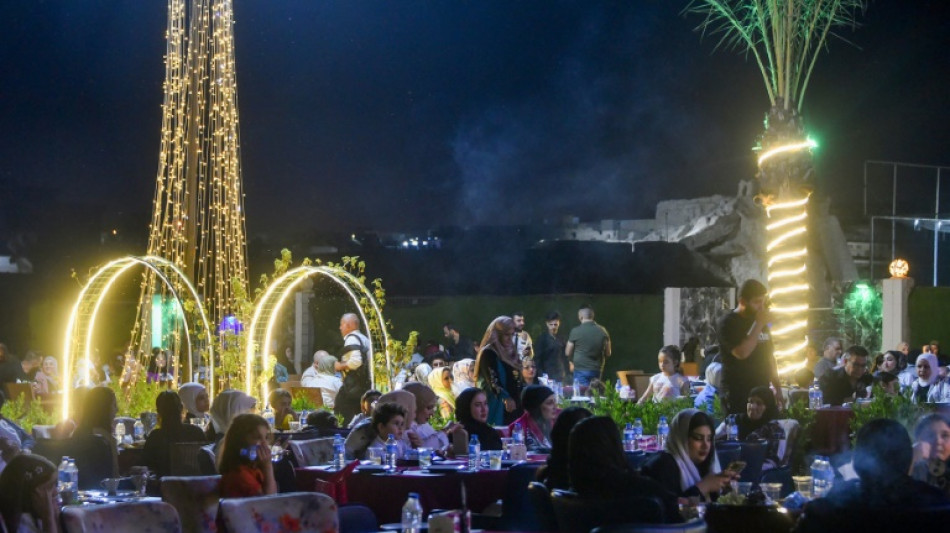
If they had tried to do this a few years ago, the group of Iraqi women enjoying a night out in Mosul would probably have risked severe punishment.
The northern city was under the harsh rule of the Islamic State group until the jihadists were ousted from their last major Iraqi bastion in 2017.
Seven years later, Mosul's streets truly come alive at nightfall, and residents are rediscovering the art of having a good time.
Amira Taha and her friends have come to a restaurant with their children, to enjoy food and live music -- complete with crooners -- on a night out that would have been unthinkable under IS rule.
"There has been enormous change in Mosul," Taha tells AFP. "We now have freedom and nights out like this have become common" because of "the very stable security situation".
The city has new restaurants to go to, pleasure cruises on the river Tigris, and amusement parks that draw families keen to take advantage of the newfound stability.
Dressed in an electric blue suit, the 35-year-old mother says "people wanted to open up (to the world) and enjoy themselves".
- Reign of terror -
On the stage, three Iraqi singers in suits and slicked-back hair take it in turns to entertain the diners with Iraqi and Arab pop songs.
The orchestra includes an electric organist, a violinist, and a musician playing the darbouka, a goblet-shaped drum.
When the jihadists took Mosul in 2014 they imposed a reign of sheer terror.
Music was banned, as were cigarettes. Churches and museums were ransacked, and IS staged public stonings and beheaded perceived wrongdoers.
Even after Mosul was retaken in 2017 in a destructive and lengthy fight by Iraqi and international coalition forces, it took several years for its citizens to emerge from years of trauma.
Entire neighbourhoods were devastated, and reconstruction became a lengthy process.
Mines had to be cleared before homes, infrastructure and roads could be rebuilt to allow hundreds of thousands of people to return to what is now a metropolis of 1.5 million people.
In the past, Taha says, "people would go home, shut their doors and then go to bed" because of fears over security.
But now, all around her on the restaurant's lawns, families are seated at most of the tables.
Sometimes the men and women puff on water pipes as their children clap and dance.
Overlooking the restaurant is a brand new bridge spanning the Tigris, a proud symbol of a Mosul being reborn.
- Taking a gamble -
Other cities in Iraq are in a similar situation, enjoying a return to normality after decades marked by war, sectarian violence, kidnappings, political conflict and jihadist extremism.
Ahmed -- who goes by only his first name -- opened a restaurant called "Chef Ahmed the Swede" in June, after spending "half of my life" in Sweden and taking a gamble.
Now he serves between 300 and 400 diners every day, Ahmed tells AFP.
"I'd always dreamt of coming back and starting my own business," says the proprietor, who is in his forties.
"People want to go out, they want to see something different," he says.
At Ahmed's, diners can choose from dishes inspired by Scandinavian and European cuisines, alongside old favourites such as pastas, pizzas and grilled meats.
Khalil Ibrahim runs an amusement park on the banks of the river.
"The city has seen radical changes over the past few years," he says. "We've gone from destruction to reconstruction."
Friday is the first day of the weekend, and the evening is pierced by the happy shrieks and laughter of children in dodgem cars, the Ferris wheel and other attractions.
"People used to go home early," Ibrahim tells AFP. "But now they're still arriving even at midnight."
- 'We can breathe' -
His park opened in 2011, but it was "completely destroyed" in the war.
"We started again from scratch" with the help of private funding, he says.
As Mosul was still emerging from its jihadist nightmare, another tragedy befell the city.
In 2019 around 100 people, mostly women and children, died when a ferry taking families across the river to a leisure park capsized.
But today, pleasure boats ply the Tigris by night, their passengers admiring the riverbank lights of the restaurants and their reflection in the dark waters.
In small cafes, clients play dominoes or cards as they have a smoke.
"We're comfortable here. We can breathe. We have the river, and that's enough for us," says day labourer Jamal Abdel Sattar.
"Some shops stay open until three in the morning, and some never close," he adds. "When people got their first taste of security, they began to go out again."
Z.Ramadan--SF-PST