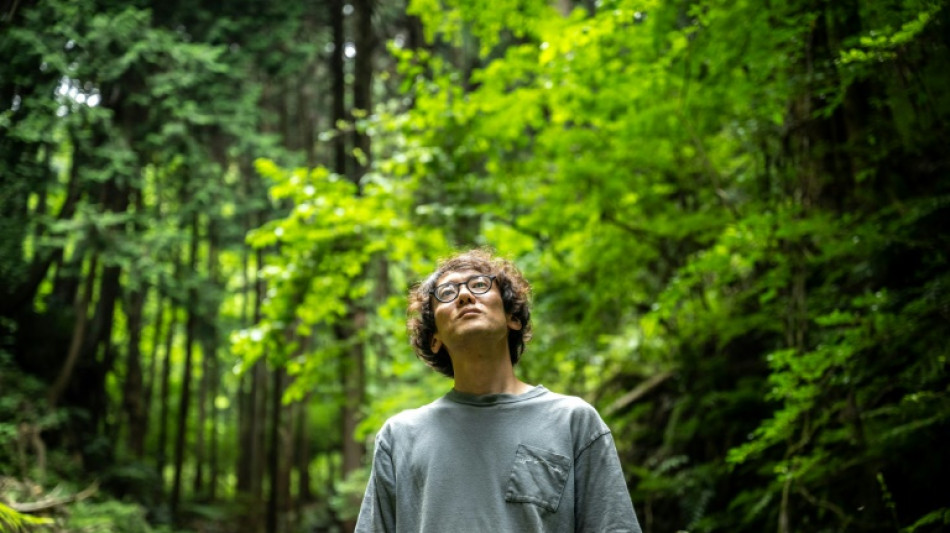
Slow down to save the planet, says Japan's rock star philosopher Saito / Photo: Philip FONG - AFP

 Toulouse edge Vannes, Lyon beat Pau to take Top 14 summit

 تطورات جيميناي يخترق أنظمة 3 شركات خلال اختبار للأمن السيبراني

 Thiam makes winning heptathlon return at Decastar meet

 Czechs beat USA to qualify for Davis Cup finals

 ملف الشيخ خليل لفلسطين 500 ألف طالب يبدؤون الدراسة في غزة وسط نقص حاد

 France's debt climbs to highest since 1978: ministry

 مجلس وزراء الداخلية العرب يدين ويستنكر بدء ميليشيا الحوثي الإرهابية طائرة مسيّرة باتجاه مدينة الطائف

 Dortmund sink Stuttgart to climb to Bundesliga summit

 Trump says will not tolerate attempts to slow AI growth

 Martinez brace saves Inter in Serie A top-two clash with Roma

 Rosenior abused but guides Paris FC past old club Strasbourg

 تقرير حول موهبة مانشستر يونايتد في برشلونة للتفاوض

 Seven-try Lyon beat Pau, climb to Top 14 summit

 تقرير حول ليسلم نفسه للاحتلال معتقل منذ 2007 في سجون السلطة

 سيول تجدد تأكيد لواشنطن عزمها المساهمة في استعادة حرية الملاحة بمضيق هرمز

 England thrash Sri Lanka again to return to top of T20 rankings

 ملياردير روسي موّل جانباً من زفاف نجل ترمب... والرئيس الأميركي يجدد تأكيد سداد الأموال

 تقرير حول سوريا: توقيف ضباط سابقين يُشتبه بمسؤوليتهم عن غارات جوية خلال عهد الأسد

 ملف خادم الحرمين يوجه بناءً على ما رفعه ولي العهد بإطلاق اسم الأمير مساعد بن عبدالرحمن على الجامعة السعودية الإلكترونية

 South Korea, Austria qualify for Davis Cup finals

 'Fragile' Tottenham beaten by Aston Villa despite late rally

 Mourinho hails Real Madrid grit before Atletico derby clash

 Brigitte Bardot widower slams sale of star's belongings

 Aston Villa compound Tottenham's misery despite late rally

 حصيلة من يملك جسد اللاعب ورسائله؟ قميص سبتة يتحول إلى نقاش أكبر من السياسة

As Tokyo's millions put in another day's work on the coalface of capitalism, celebrity Marxist philosopher Kohei Saito and his friends are clearing rocks from a muddy mountain stream.
Saito's core argument -- that capitalism is the root cause of climate change and we need to stop chasing growth to save the planet -- has struck a chord in the world's fourth-largest economy, especially among young people.
The associate professor at the University of Tokyo has sold half a million copies of his latest book and last month spoke at music festival Fuji Rock, headlined by The Killers.
He has become a face of the global movement for "degrowth" -- a word that "kind of freaks people out", Saito told AFP as he tended to his slice of collectively owned land on the capital's western outskirts.
"Maybe it's not the best way to convince people, especially in America," said the 37-year-old, whose hit title "Slow Down: The Degrowth Manifesto" came out in English this year.
But using the term is one way to "provoke or challenge" widely accepted economic principles which are leading to environmental ruin, he said.
Saito is not a member of the Japanese Communist Party and he rejects the need for top-down, Soviet-style systems.
Instead he believes in grassroots change led by projects such as Common Forest Japan, his attempt to reconnect with nature and build a democratically run community.
"Unless the left or liberal, progressive side offers a more attractive vision of the future... right-wing populism will take advantage of this crisis," Saito said.
He is a regular TV news talk show guest, and recently made headlines for saying he was boycotting the Olympics, citing its "excessive commercialism" and "double standards" over Israel's participation and Russia's exclusion.
- 'Degrowth isn't just frugal living' -
Saito's calls for a world where fewer things are produced -- reducing carbon emissions -- and a break with overconsumption and long working hours have resonated with those disillusioned with the status quo in Japan.
The Japanese version of "Slow Down" came out in 2020, when the pandemic brought many industries to a standstill.
"I didn't expect this was something people would be interested in, because Marx is outdated" and degrowth could sound like "some kind of negative dictatorship", he said.
Yet coming of age after Japan's 1980s boom years, Saito's generation has seen decades of economic stagnation despite the pursuit of growth, he contends.
So "that kind of discussion has some attraction, especially to young people who don't fetishise the old kind of Japanese miracle any more".
New technologies such as electric cars, carbon capture or nuclear fusion cannot solve the climate problem in a system that is always seeking greater profit, Saito said.
Banning private jets and "excessive public advertisements" as well as "introducing a much more radical wealth tax" could be a starting point instead.
"But I also want to emphasise that degrowth is not simply about giving up everything and living in frugality," said Saito.
It's about challenging capitalism's sense of "scarcity" that makes people insecure about the future -- a stress they try to overcome with shopping and other intensive consumption which in turn "destroys the planet".
- 'No greedy behaviour' -
On the mountainside, the slim, round-spectacled philosopher, his wife and two children, and around 20 others climbed up the stream's banks, home to worms and wild mushrooms.
They moved stones and branches to allow the water to flow more easily, trying to reduce the risk of landslides.
Although his ideas could sound far-fetched to minds "almost dominated by the logic of capital", Saito says the forest project exemplifies a society where there is "no greedy behaviour -- because it doesn't make sense".
Growing up in Tokyo, Saito wasn't much of a hiker and his parents weren't political.
He discovered socialist thinkers like Noam Chomsky as a teenager interested in his "criticism of American imperialism". Years later, Japan's 2011 tsunami and Fukushima nuclear disaster brought home "the unsustainable relationship between humans and nature".
While pursuing his PhD in Berlin, Saito investigated Marx's take on ecology in the German's notebooks from his later years.
The idea of degrowth dates back to the 1970s, but has gained traction recently with a slew of new books including "Less Is More: How Degrowth Will Save the World" by economic anthropologist Jason Hickel.
Saito makes clear in "Slow Down" that for now his ideas only apply to the world's rich countries, which are disproportionately responsible for climate change.
Despite being a keen observer of local politics, as a philosopher, he says tricky decisions, like how much new infrastructure is too much, are not his to make.
"I'm not a good politician. Because politics is about compromise, right?"
N.Shalabi--SF-PST