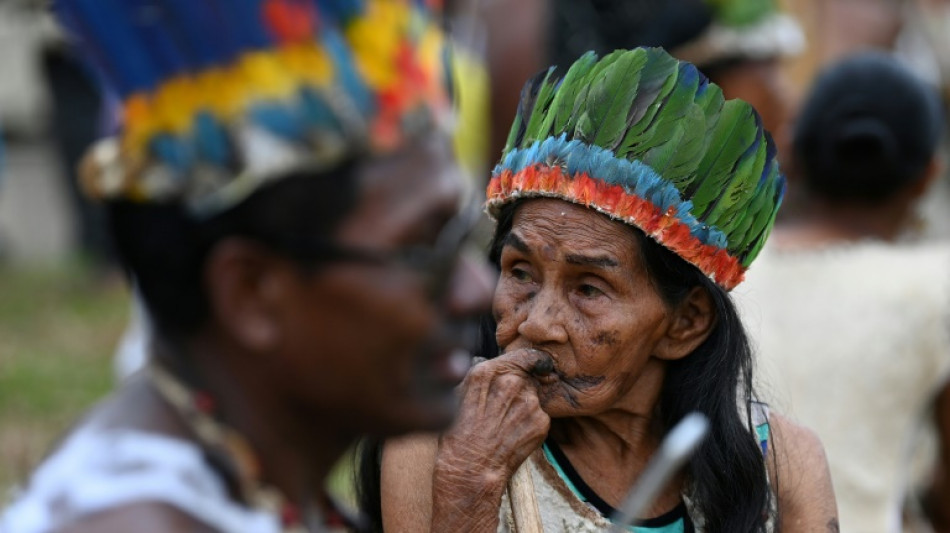
Colombian school, a grim reminder of atrocities of rubber fever / Photo: Daniel MUNOZ - AFP

 Acosta takes first victory at Austrian MotoGP

 PSG president Nasser al-Khelaifi under investigation in France for conflict of interest

 China swim sensation, 13, sets Games record after Japan win early

 رئيس الدولة يجذب وفد شركة «إثارة».. أفضل منظم لسباقات الفورمولا 1 لعام 2025

 Myanmar win first Asian Games teqball gold as Spain great Puyol watches

 China's 13-year-old Yu scorches to first major gold at Asian Games

 Germans vote in elections threatening fresh blow to Merz

 قراءة في ألمانيا تجدد التزامها بسوق السياحة بدول مجلس التعاون الخليجي

 تقرير حول الإمارات تشارك في المؤتمر الرابع للجمعية الصينية للنقل الجوي في بكين

 US fears rapid escalation in Mideast after Houthis attack Riyadh

 Japan triathlete Hojo wins first gold of Asian Games

 تطورات سيف بن زايد: برؤية القيادة الرشيدة.. الإمارات شريك موثوق في صناعة الأمن والتقنية

 رئيس الدولة ونائباه يبعثون التهاني إلى الحاكم العام لسانت كيتس ونيفيس بذكرى استقلال بلادها

 First Asian Games gold goes to Japan as China's 13-year-old Yu lights up pool

 تطورات كاليفورنيا تشرع مفتاح "إيقاف الذكاء الاصطناعي" تحسباً لتمرد التكنولوجيا!

 تقرير حول حاكم رأس الخيمة: تجمعنا ودول أمريكا الوسطى أسس راسخة من الصداقة والاحترام
 Pope Leo in France: the issues on the table

 Packing for a pope: behind the scenes on foreign trips

 Republicans find transgender issues a powerful political weapon in midterm campaigning

 German state elections threaten new shock waves for Merz

 قراءة في أسعار الذهب اليوم في مصر السبت 19/9/2026

 قراءة في تأسيس 42582 شركة أجنبية في الصين بأول 8 أشهر 2026

 دراسة عن المركز الوطني للصقور ينشر دراسة علمية حول العوامل البيئية المرتبطة بإنتاجية تكاثر الشاهين الجبلي

 Toulouse edge Vannes, Lyon beat Pau to take Top 14 summit

 تطورات جيميناي يخترق أنظمة 3 شركات خلال اختبار للأمن السيبراني

A modest wooden school in the middle of the Colombian Amazon preserves the memory of atrocities perpetrated against Indigenous people by rubber industrialists more than a century ago.
It used to be a house, Casa Arana, where enslaved local people were tortured and murdered at the height of the rubber fever of the late 19th and early 20th centuries.
"Casa Arana is painful for us, it makes us sad to see the dungeons... where our grandparents died," 73-year-old Luzmila Riecoche of the Huitoto tribe, descended of a rare survivor, told AFP.
In remote La Chorrera in Colombia's south, the school walls sport murals painted by local artists of Indigenous people in chains, led around by men with guns.
AFP accompanied a recent government mission by plane to La Chorrera where officials apologized, not for the first time, for what they described as a "genocide" of the Huitoto, Bora, Muinane and Ocaina peoples.
They died in conditions of forced labor, torture, famine and pestilence in precarious slave quarters.
The plight of the local peoples, whose land was restored to them by the government in 1988, was immortalized in the award-winning film "The Embrace of the Serpent" by Colombian director Ciro Guerra.
But "the country has not internalized that here the Colombian, Peruvian and British rubber companies murdered about 40, 50, 60 thousand Indigenous people," Culture Minister Juan David Correa told AFP on the trip.
"The Amazon rainforests are filled with corpses, filled with the remnants of an unjust relationship the colonial world had with the rubber extraction industry," he added.
Locals received Correa with traditional dance and song on the banks of the Igara Parana river in the Putumayo region, a two-week boat ride from the nearest city, Leticia.
- 'Devil's Paradise' -
Now a public school with a football pitch and basketball court, Casa Arana was once owned by Peruvian businessman and politician Julio Cesar Arana.
He ran a rubber empire in South America through the Peruvian Amazon Company -- financed with British capital to serve the high demand for tires in the United Kingdom and United States.
Walter Hardenburg, an American engineer who worked in railroad construction at the time, described in his book "The Putumayo, the Devil's Paradise" how Indigenous people were forced to work around the clock and flogged until "their bones were exposed."
They were castrated, mutilated, raped and tortured. Those who died were left out to rot, or fed to dogs, he documented.
By the time the colonists left, "there were five old men" left of the Bora tribe on the Colombian side, and a few others who had fled to Peru, 78-year-old Benito Teteye told AFP, his face painted with traditional motifs.
Entire families or clans ceased to exist.
"All our ancestors were taken away," Teteye told AFP. "Those of us who remained, it was because my grandfather hid, crossed this river."
The Bora have resurged, and today number about 600 in the area, said Teteye.
But more than a century after the atrocities, the community says it is facing a new threat: violence perpetrated by drug traffickers, illegal ranchers and loggers, and guerrillas operating in the jungle.
The United Nations said in March that 71 Indigenous groups, several of them Amazonian, are at risk of physical or cultural extinction in Colombia.
At least 310,000 have been injured, killed or displaced in the country's six-decade-old armed conflict.
"We still have very complex problems in this jungle," conceded Correa.
K.AbuDahab--SF-PST