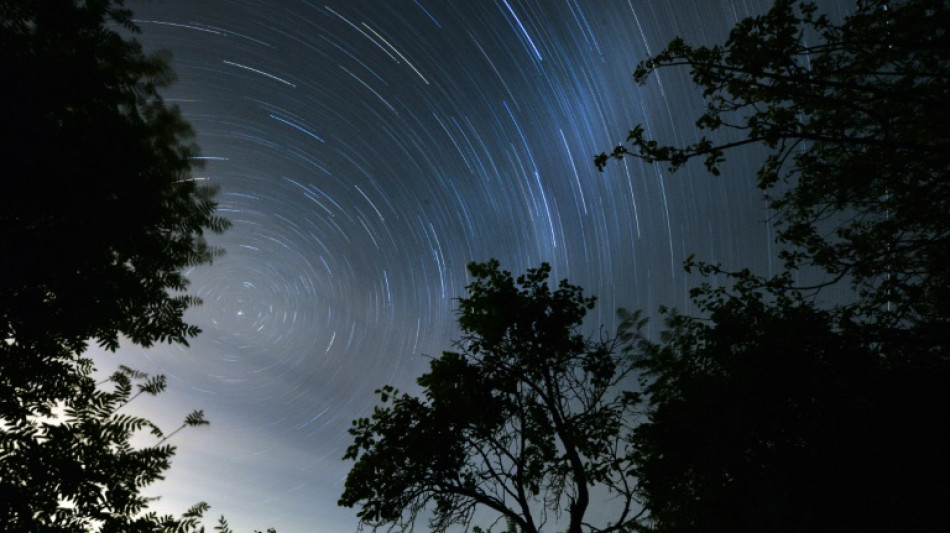
Huge star explosion to appear in sky in once-in-a-lifetime event / Photo: VYACHESLAV OSELEDKO - AFP/File

 اختيار ملك وموكس نيتيروي للكرنفال 2027 في باريتو

 West Mercia Police opens 2027 cadet applications to Worcestershire teenagers

 Worcestershire road closures announced for Remembrance Sunday events

 UBC professor describes police call after Galloway remark as act of care

 False voting claims spread rapidly during US Election Day

 The Cat in the Hat expands its stakes to cosmic scale in animated reboot

 Byron Donalds Elected Florida Governor, Becoming First Black Republican in Role

 James Talarico defeats Ken Paxton in historic Texas Senate result

 Goa plans relationship-readiness course amid concern over divorces

 Manchester United climbs standings after 3-2 Champions League win over Roma

 India introduces four-layer motor insurance choice from December 15

 Mutual fund returns show shifting leaders across market-cap categories

 تفاصيل بيع تذاكر نهائي كأس رابطة الأندية البيروفية بين كريستال وعلينزا أتلتيكو

 إيلون ماسك يسخر من هزيمة الجمهوريين بعد إنفاقه مئات الملايين

 Indian companies report mixed second-quarter results on November 4

 KKR secures Indian regulator approval for Gentari Renewables investment

 Bharti Airtel revenue expected to grow at double-digit pace in second quarter

 Titan quarterly profit seen rising as jewellery business drives growth

 Kuwait finance minister holds economic cooperation talks at COMCEC

 Stocks and dollar fall as Democratic election gains reshape markets

 Kuwait marks key events and anniversaries from national history

 Trump congratulates Democrats and signals willingness to cooperate

 ترامب يهنئ الديمقراطيين بعد هزيمة الجمهوريين في انتخابات التجديد النصفي

 Qatar sees tentative opening for renewed regional diplomacy

 Qatar Tourism joins Pacific Asia Travel Association at London travel market

Sometime between now and September, a massive explosion 3,000 light years from Earth will flare up in the night sky, giving amateur astronomers a once-in-a-lifetime chance to witness this space oddity.
The binary star system in the constellation Corona Borealis -- "northern crown" -- is normally too dim to see with the naked eye.
But every 80 years or so, exchanges between its two stars, which are locked in a deadly embrace, spark a runaway nuclear explosion.
The light from the blast travels through the cosmos and makes it appear as if a new star -- as bright as the North Star, according to NASA -- has suddenly just popped up in our night sky for a few days.
It will be at least the third time that humans have witnessed this event, which was first discovered by Irish polymath John Birmingham in 1866, then reappeared in 1946.
The appropriately named Sumner Starrfield, an astronomer at Arizona State University, told AFP he was very excited to see the nova's "outburst".
After all, he has worked on T Coronae Borealis -- also known as the "Blaze Star" -- on and off since the 1960s.
Starrfield is currently rushing to finish a scientific paper predicting what astronomers will find out about the recurring nova whenever it shows up in the next five months.
"I could be today... but I hope it's not," he said with a laugh.
- The white dwarf and red giant -
There are only around 10 recurring novas in the Milky Way and surrounding galaxies, Starrfield explained.
Normal novas explode "maybe every 100,000 years," he said. But recurrent novas repeat their outbursts on a human timeline because of a peculiar relationship between their two stars.
One is a cool dying star called a red giant, which has burnt through its hydrogen and has hugely expanded -- a fate that is awaiting our own Sun in around five billion years.
The other is a white dwarf, a later stage in the death of a star, after all the atmosphere has blown away and only the incredibly dense core remains.
Their size disparity is so huge that it takes T Coronae Borealis's white dwarf 227 days to orbit its red giant, Starrfield said.
The two are so close that matter being ejected by the red giant collects near the surface of the white dwarf.
Once the mass roughly of Earth has built up on the white dwarf -- which takes around 80 years -- it heats up enough to kickstart a runaway thermonuclear reaction, Starrfield said.
This ends up in a "big explosion and within a few seconds the temperature goes up 100-200 million degrees" Celsius, said Joachim Krautter, a retired German astronomer who has studied the nova.
The James Webb space telescope will be just one of the many eyes that turn towards the outburst of T Coronae Borealis once it begins, Krautter told AFP.
But you do not need such advanced technology to witness this rare event -- whenever it may happen.
"You simply have to go out and look in the direction of the Corona Borealis," Krautter said.
Some lucky sky gazers are already preparing for the year's biggest astronomic event on Monday, when a rare total solar eclipse will occur across a strip of the United States.
W.AbuLaban--SF-PST