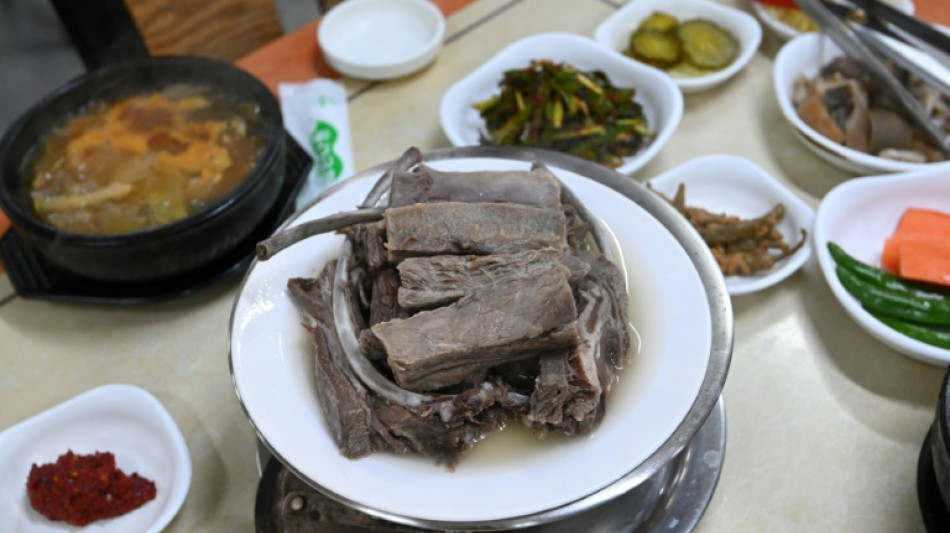
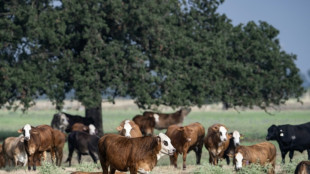
'Cows are living animals too': vendors, customers oppose S. Korea dog meat ban / Photo: Jung Yeon-je - AFP

 South Korea, Austria qualify for Davis Cup finals

 'Fragile' Tottenham beaten by Aston Villa despite late rally

 Mourinho hails Real Madrid grit before Atletico derby clash

 Brigitte Bardot widower slams sale of star's belongings

 Aston Villa compound Tottenham's misery despite late rally

 حصيلة من يملك جسد اللاعب ورسائله؟ قميص سبتة يتحول إلى نقاش أكبر من السياسة

 Asian Games offer 'deepest apologies' for South Korea anthem blunder

 تطورات "سي أن أن": تقرير بالذكاء الاصطناعي كاد يشعل حرباً بين أميركا والصين

 Inter Milan and Italy icon Mazzola dies aged 83

 UK actor Naomi Watts honoured at Spain film festival
 Saudi capital issues first air raid alert since renewed fighting in Yemen

 Martin edges title rival Marquez for Austrian MotoGP pole

 Indonesia accepts Malaysia's help to tackle wildfires
 Indians living in Japan on stand-by to house Asian Games athletes

 Trump signs bill authorizing sweeping Russia sanctions

 Protesters form human chain at Kennedy Center after Trump threat

 Death toll from attack at police HQ in Pakistan rises to 31

 Trump says Denmark to give US 'permanent control' over Greenland security
 Kennedy Center: future unclear for iconic Washington arts hub

 Trump claims 'infinite' Greenland security deal with Denmark

 Helicopters battle wildfire threatening Ecuador's capital

 Brentford batter Chelsea to undo Alonso's promising start

 Kane hits Bundesliga century as Bayern rout Union

 Trump says CNN, MS NOW, Politico banned from White House

 Hushing and hedging: US companies retreat on climate

When Choi Tae-yeon opened her restaurant 20 years ago, dog meat was a good business in South Korea. Now, she says she might have to close up shop, with a new ban on the former delicacy.
Nestled in an alleyway in the Chilseong market in the city of Daegu, her restaurant serves dishes traditionally believed in South Korea to be good for one's stamina -- mostly dog meat, either steamed or boiled in broth.
Once commonplace in Korean cuisine, with up to a million dogs killed for the trade every year, according to activists, dog meat has seen a sharp fall in popularity over the last few years, as young South Koreans turn to canines for companionship not consumption.
"Things have changed drastically," Choi told AFP at her restaurant on Wednesday.
"In the past, when the business was good, vendors used to sell as many as 30, 40 dogs a day," she said. "Now, we sell one to two dogs on average."
Eating dog meat is effectively taboo among younger, urban South Koreans, and pressure on the government to outlaw the practice from animal rights activists has been mounting.
On Tuesday, lawmakers passed a bill essentially banning the long controversial industry, prohibiting the breeding, selling and slaughtering of dogs for their meat.
It will come into effect following a three-year grace period after a final approval from President Yoon Suk Yeol -- a self-professed animal lover.
Breaking the law will be punishable by up to three years in prison or 30 million won ($23,000) in fines.
"I'm not happy with the decision to ban it by law," Choi said, who lamented that she had no choice but to accept the change.
"Making a living has become easier than in the past, and so people have grown to love animals," she said.
In December, local media reported that pet strollers outsold buggies for babies last year for the first time, pointing to both South Korea's demographic crisis -- it has one of the lowest birth rates in the world -- and growing love of pets.
"Young people, who have mostly lived without going through any hardships, are extremely fond of dogs," said Choi.
But for the businesswoman, her restaurant -- a family pursuit she had planned to hand down to her son -- defines her life.
Choi had tried everything to make a living, from selling small side dishes and street food, to noodles at the market, before she settled on her restaurant, expanding her business as she found success.
"It's very troubling because things ended up like this," she said, her eyes tearing up.
- Harassment by activists -
In recent years, as the tide of public opinion began to turn, Choi says the dog meat vendors at the market have been subject to constant harassment by activists, who staged protests in front of their restaurants and cursed at them.
"It was a bit harsh. They didn't treat us who sell bosintang (dog meat soup) as humans," she told AFP.
Years of intense protests led to a drop in the number of customers, she said, adding that she was thinking of serving pork rib soup in the future, once the law goes into effect.
The alleyway, which once bustled with restaurants serving bosintang was visibly empty Wednesday, with many of the shopfronts empty.
Still, Choi said she had seen more customers the day after the passage of the dog meat prohibition bill than she had on an average day in recent months.
"I like having dog meat when I drink because I don't get a hangover the next day," said an elderly customer at another dog meat restaurant, who gave only his surname Jang.
Jang said that although he does not eat dog meat often, he had come to the restaurant prompted by the thought of not being able to eat it ever again, in three years when the ban comes into force.
Another customer in his 70s, who gave only his surname Choi, said that although he is OK with not being able to eat the controversial meat in the future, he opposed the bill.
"Chicken, pigs, cows are all living animals -- I oppose only banning dog meat," he said.
N.Awad--SF-PST