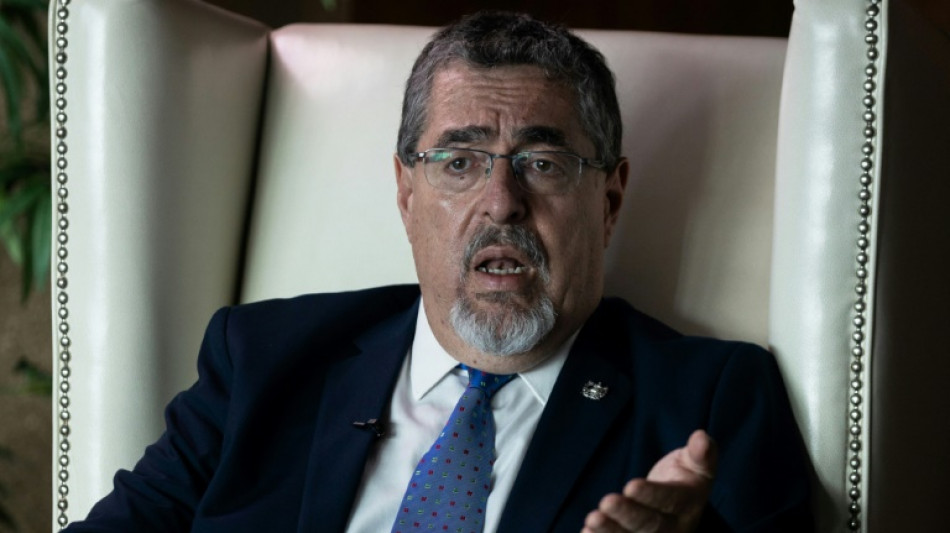
Guatemala's Arevalo to rule 'without fear' after bid to block presidency / Photo: Gerardo PESANTEZ - AFP

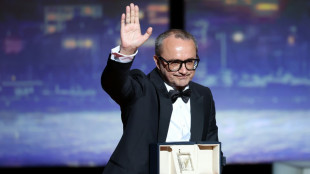
 UK actor Naomi Watts honoured at Spain film festival
 Japan emperor declares Asian Games open after turbulent build-up
 Asian Games open with unity message after troubled build-up
 Denmark hails 'binding' Greenland deal with Trump
 We don't want Games host Japan losing money, says Asian Olympic official
 Ed Sheeran returns to stage after Palestinian controversy
 Asian Games to open in Japan after troubled build-up
 Drone owners rush to offload devices ahead of Beijing ban
 Trump's beef policies irk Texas ranchers, testing their loyalty
 Nvidia, OpenAI CEOs to attend Xi dinner at White House
 Anthropic picks Accenture for in-house AI safety evaluation
 Balogun returns as Monaco beat Lens to continue strong Ligue 1 start

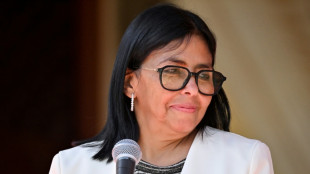 'Pause' on overt repression in Venezuela, but reforms still needed: HRW
 Global stocks mixed as yen falls despite Bank of Japan rate hike
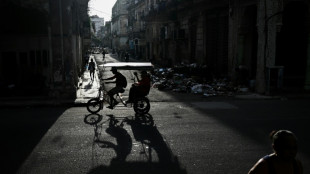 Cuba hit with seventh major blackout of the year
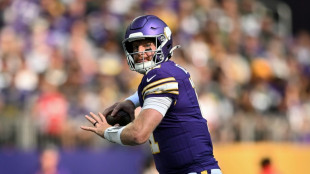 Murray out with concussion so Wentz will start for Vikings
 UN chief 'deeply regrets' US visa refusal to Abbas for annual meeting
 England quick Carse to face no charges over alleged nightclub assault
 Mancini brings nine newcomers into the first squad of his Italy comeback
 Czechs level Davis Cup tie against USA as South Korea eye Finals

 New France boss Zidane confirms Mbappe as captain after naming first squad
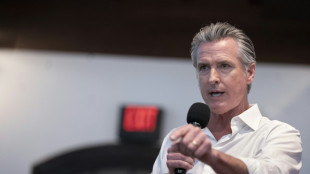 California governor signs order to explore AI 'kill switch'
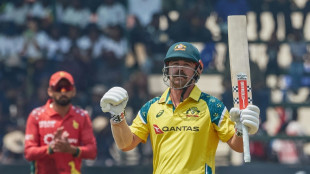 Head leads run spree as Australia win Zimbabwe ODI series
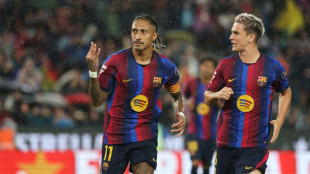 In-form Raphinha wants to finish career at Barcelona
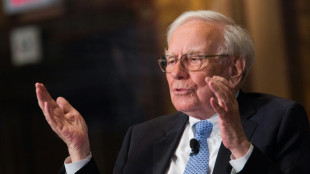 Warren Buffett steps down as Berkshire Hathaway chairman
Despite a fierce campaign from Guatemala's ruling class to block Bernardo Arevalo from taking office, the president-elect told AFP he is confident he will be sworn in next month, vowing to rule "without fear."
Arevalo, 65, won an August presidential election after firing up voters with a promise to fight corruption in the Central American nation, but his stance has made him a target of the country's elite.
The prosecutor's office this month tried to have the results of the election overturned over counting "anomalies," the latest in a long tug-of-war that Arevalo and international observers have dubbed an attempted coup.
His inauguration is set for January 14, and the Constitutional Court last week ordered Congress to "guarantee" the swearing-in.
"The slow-motion coup d'etat that had been taking place has been blocked," Arevalo told AFP during an interview while on a visit to Panama on Tuesday.
"What the prosecution has done is fabricate cases, acting on lies without any basis.
"That doesn't mean they won't keep trying, but they won't succeed. There is no doubt that we will take office," said the sociologist, the son of Guatemala's first democratically elected president who ruled over half a century ago.
Nevertheless, he is considered an outsider, and a threat to those in power who benefit from corruption in a country where 60 percent live below the poverty line, analysts say.
- 'Corrupt network' -
Guatemala is ranked 30th out of 180 countries by Transparency International, which lists nations from most to least corrupt.
Carmen Aida Ibarra, of the social movement ProJusticia, said Arevalo has been seen as a threat to a "corrupt network" in which "mayors, lawmakers, businessmen" and other civil servants are involved in the awarding of public contracts.
Edie Cux, director of the NGO Citizen Action, said the corrupt elite were "themselves linked to organized crime," and were using the prosecutor's office as an "instrument."
Attorney General Consuelo Porras, senior prosecutor Rafael Curruchiche, and Judge Fredy Orellana have led efforts in recent months to have Arevalo's Semilla (Seed) party suspended and annul the election.
All three officials have been officially deemed as corrupt and undemocratic by the US Justice Department.
"We will ask for the resignation of the prosecutor (Porras). And there will be an election of judges next year," said Arevalo.
- 'Democracy is at stake' -
Arevalo will take office with what he describes as an "extremely fragmented" Congress, with 16 parties sharing 160 seats.
He acknowledged there would be "difficulties, since these political-criminal elites, at least for a time, will continue to be entrenched in some branches of the State."
Under outgoing President Alejandro Giammattei, several prosecutors fighting graft have been arrested or forced into exile. He also cracked down on critical journalists.
Arevalo vowed to ensure "there are no exiles" and create a culture that "rejects and combats the normalization of corruption."
He told AFP he would set up a national anti-corruption commission to tackle graft, "a systemic problem that will require action in different areas of the State."
"It must be understood as a sustained and gradual struggle. We are not going to finish it, we will start it."
He said his victory had "awakened hope in Guatemalans of the possibility of change."
"But people know that it is not a task that can be solved overnight. We will start a process to recover public institutions," he added.
"Democracy is at stake."
D.Qudsi--SF-PST