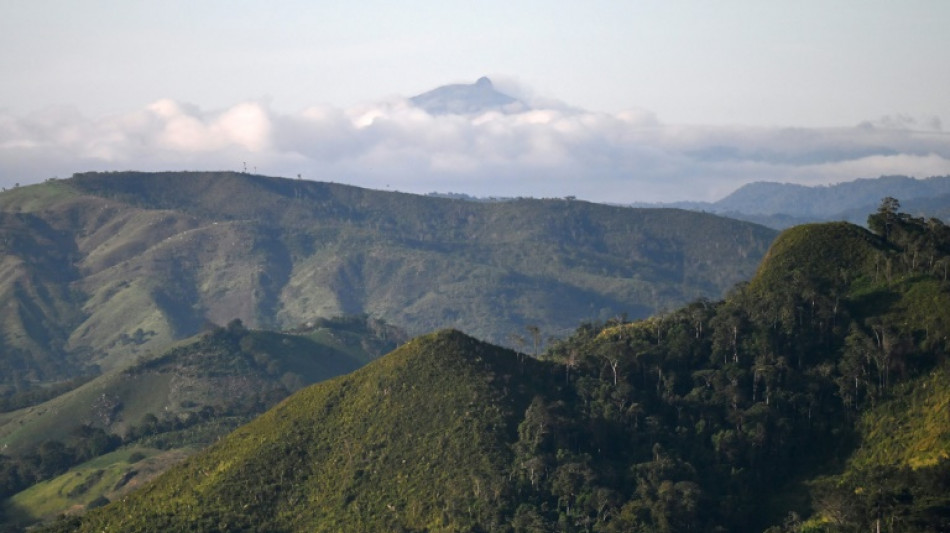
'Obey and shut up' to survive in Colombia region controlled by armed groups / Photo: Raul ARBOLEDA - AFP

 Ed Sheeran returns to stage after Palestinian controversy

 Asian Games to open in Japan after troubled build-up
 Drone owners rush to offload devices ahead of Beijing ban

 Trump's beef policies irk Texas ranchers, testing their loyalty

 Nvidia, OpenAI CEOs to attend Xi dinner at White House

 Anthropic picks Accenture for in-house AI safety evaluation
 Balogun returns as Monaco beat Lens to continue strong Ligue 1 start

 'Pause' on overt repression in Venezuela, but reforms still needed: HRW

 Global stocks mixed as yen falls despite Bank of Japan rate hike

 Cuba hit with seventh major blackout of the year

 Murray out with concussion so Wentz will start for Vikings

 UN chief 'deeply regrets' US visa refusal to Abbas for annual meeting
 England quick Carse to face no charges over alleged nightclub assault

 Mancini brings nine newcomers into the first squad of his Italy comeback

 Czechs level Davis Cup tie against USA as South Korea eye Finals

 New France boss Zidane confirms Mbappe as captain after naming first squad

 California governor signs order to explore AI 'kill switch'
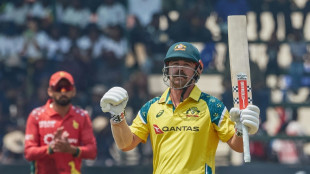 Head leads run spree as Australia win Zimbabwe ODI series

 In-form Raphinha wants to finish career at Barcelona

 Warren Buffett steps down as Berkshire Hathaway chairman

 Carrick confident Man Utd can 'work through' tough time

 Mbappe ends Nike partnership to join Swiss brand On

 Liverpool boss Iraola puts Bournemouth love affair on hold
 'A disaster' if Man City do not win says Maresca after flawless start
 Kerry James Marshall: American 'blackness' painter celebrated in Europe

"Here you obey and shut up," says Jose, a resident of Colombia's northern Bolivar department where forgotten communities eke out a terrified existence under the yoke of armed groups fighting over access to rich gold deposits.
The man in his 40s who goes by Jose, along with many other inhabitants of the vast mountains of Bolivar, are too afraid to give their real names or reveal too much identifying information.
Of Colombia's 32 departments, Bolivar is the third-worst affected by crimes committed by parties to the decades-old conflict, with nearly 700,000 victims -- direct or indirect, according to an official report in June.
In 2020, 335 acts of violence were recorded in the department, 145 of them murders.
AFP visited the municipalities of Morales and Arenal with staff of the International Committee of the Red Cross (ICRC), one of few organizations working to help residents of an impoverished region so remote that the state is all but absent.
This has left a void filled by a deadly resources dispute between the ELN guerrilla group -- dissidents of the FARC armed force that disarmed under a peace deal in 2017 -- and the powerful Gulf Clan drug cartel (AGC).
To the best of their ability, communities have developed strategies to survive the many dangers, which include getting caught in the crossfire, forced confinement, minefields, extortion, and sometimes the killings of those who step out of line.
Even in times of relative calm the groups' presence is always felt -- their acronyms spraypainted onto town and village walls serve as a constant, ominous reminder to the locals who mostly make a modest living growing corn, potatoes and cacao.
"They are rarely seen in uniform or with weapons. But they are there, watching us without letting us see them," said resident Javier, 35.
- 'Like frightened mice' -
In just the last few weeks, fighting between the ELN and the Gulf Clan forcibly displaced at least 1,400 people in south Bolivar fleeing a "climate of fear and anxiety," according to the government.
The consequences of the conflict on the civilian population "have become structural," ICRC representative Sara Luchetta told AFP.
"The war has profoundly affected the daily lives of these rural populations," she said.
According to Colombia's Truth Commission, the "resilience of these populations is extraordinarily strong."
Rugged Mountains cover most of the Bolivar's southern region, which is nearly the size of El Salvador, and they serve as hard-to-monitor logistical corridors for moving contraband to and from neighboring Venezuela.
The main trade was once in coca, the plant used to make cocaine. But the goal nowadays is far more profitable gold, much of it extracted by artisanal miners.
Javier explained how locals learn to live under certain "rules" imposed on them by the armed groups.
"For example, driving at night is forbidden," he told AFP.
The fighters know of, and approve, every single activity; even buying a motorcycle and having to explain where the money came from, said another resident.
"The people are afraid. They are constantly on alert, waiting for misfortune if armed men come to the door at night," explained villager Carlos Quintero.
Some locals ally themselves to one group or another, whether by choice or coercion, but this can also get them into trouble with rivals.
"Mostly, we try to stay away. It is a matter of coexistence," said Javier.
"When there is only one actor, you more or less know what to do, you adapt. The problem is when there are several actors and you are in the middle," added Juan, who also did not want to give his full name.
"We find ourselves like frightened mice with a nest of eagles over our heads."
Many inhabitants of the region live near minefields and other unexploded ordnance.
According to the ICRC, at least 10 people stepped on landmines so far in 2023.
"If it weren’t for the conflict, we’d be living pretty well," said Juan.
"Conditions are tough, but the land is generous," he explained. "The problem is this war, which is a never-ending story."
X.Habash--SF-PST