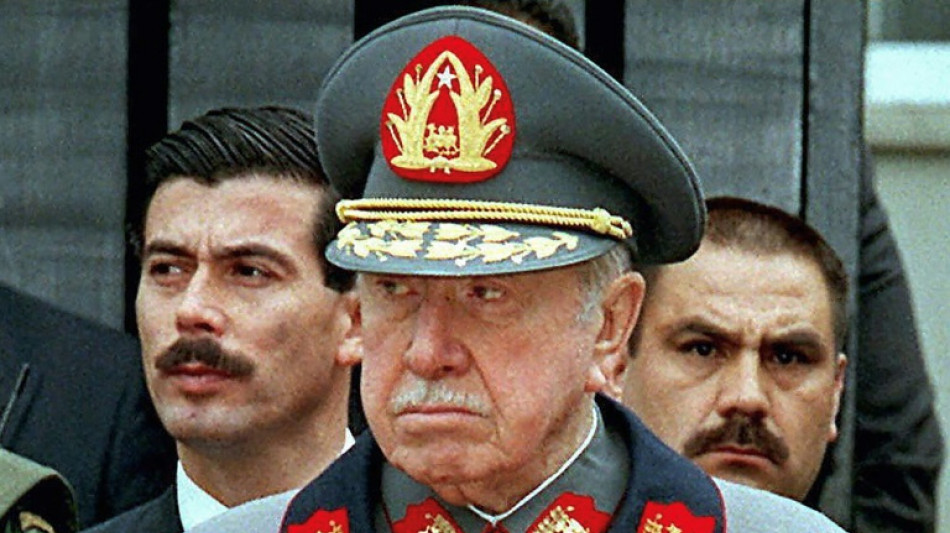
Dictator Pinochet looms large over Chile 50 years after coup / Photo: Cris BOURONCLE - AFP/File

 'A disaster' if Man City do not win says Maresca after flawless start
 Kerry James Marshall: American 'blackness' painter celebrated in Europe

 Spain coach De la Fuente offers 'full support' to people of Ceuta
 Russia seizes assets of Nestle, French firms over West's Ukraine support
 England can build on World Cup 'spirit', says Tuchel

 UNESCO can be 'moderator' in AI debate: chief to AFP
 Infantino 'must go', says German FA vice-president

 Russia seizes assets of Nestle, French firms

 Japan's busiest rail station tests robot bins
 Anthropic says AI systems moving towards building themselves
 Asian stocks boosted by falling oil, yen weakens after BoJ rate hike
 Pakistan court blocks expulsion of Afghan medical college students
 Athletes 'can't take it any more' as Asian Games issues mount
 Allen lights up Bills' new stadium with 41-31 win over Lions

 Afghan medical students in Pakistan hope court stops college expulsions
 AI doomsday warnings unlikely to slow IPOs but questions linger
 ICC eyes China in bid to expand cricket
 Nkunku craving freedom and fun on RB Leipzig return

 Bhutan's traditional archers lose ground to development
 Asian stocks track Wall St rally as oil prices drop

 South Korea makes Asian Games complaint over Japan warlord ceremony
 US aid cuts are killing Kenyan sex workers

 October 7 survivors, families take centre stage in Israel vote
 Captain Mat Ryan axed from Socceroos squad for Brazil games

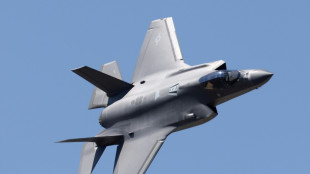 US approves sale of 48 F-35 jets to Saudi Arabia
Augusto Pinochet used military force to overthrow a popularly elected president and rule Chile with an iron grip that saw thousands of his subjects tortured and killed.
Yet, 50 years after Pinochet's power grab, and despite his brutal legacy, the general continues to inspire admiration rather than condemnation among many in a country that remains deeply suspicious of the political left.
Pinochet "is the only dictator in Western contemporary history who, 50 years after a coup d'etat, is viewed favorably by more than a third of the population," sociologist Marta Lagos of polling company Cerc-Mori told AFP.
A survey conducted by Cerc-Mori in May found that 36 percent of people believe the general "liberated Chile from Marxism," the highest figure measured in 28 years of polling -- a tie with 2000.
With his dark glasses and military uniform, Pinochet was emblematic of the US-backed dictatorships that held sway over much of Latin America during the Cold War.
He seized power in a bloody CIA-backed coup in 1973 that saw the world's first elected Marxist leader, Salvador Allende, commit suicide in the presidential palace as troops closed in.
- Thousands tortured -
Pinochet presided until 1990 over a period of economic prosperity, but also great cruelty. More than 3,200 people were killed or "disappeared" -- abducted and presumed killed -- by his security forces, and about 38,000 were tortured.
After stepping down as president, Pinochet continued serving as head of the military for many years, and as a senator until 2002 -- ensuring he was never brought to justice despite numerous court cases pending against him.
He died of a heart attack on December 10, 2006 aged 91, without ever stepping foot in a court. More than 50,000 people turned out to mourn him.
In 2021, the general's name was again on many people's lips as the country prepared for a presidential election pitting leftist Gabriel Boric against far-right Pinochet-apologist Jose Antonio Kast.
Kast vowed to address voters' fears about the economy and crime and painted Boric as a communist in a country where many equate the left with the economic failure of Venezuela -- many of whose nationals migrated to Chile to escape their homeland.
Boric won, sweeping to power on a wave of public support for his ideas of turning the South American nation into a greener, more egalitarian welfare state.
According to UN figures, the top one percent of the population of Chile holds a quarter of its wealth.
This is largely ascribed to the Pinochet-era constitution supporting a neo-liberal economic model blamed for deep-rooted inequality.
- Long silence -
Yet, Boric's alliance with Chile's Communist Party made many uneasy among those who remembered the hardships suffered under Allende -- in part due to a US economic blockade -- followed by relative prosperity under Pinochet.
Boric has faced many headwinds since taking power.
The young president's first attempt at replacing the Pinochet-era constitution was rejected by voters after months of drafting, and in May, Kast's far-right Republican Party got the most seats in elections for a new body that will write another.
Legislating has been difficult in a congress where right-wing parties hold half the seats, but no single political grouping has an absolute majority.
Analysts say Pinochet's staying power is the result of decades of brushing over his legacy, even under leftist governments, in an attempt to avoid deepening social division.
It was not until 2000 that allegations of abduction, rape, murder and torture began to be thoroughly and systematically investigated.
About 250 people are serving sentences for violations committed under the dictatorship, but it was only this year that the Supreme Court issued rulings in major rights abuse cases including the gruesome post-coup murder of pacifist folk singer Victor Jara.
Even in schools, Pinochet's coup and subsequent brutality only became part of the curriculum in 2009.
"There was a silence of almost 20 years" after Pinochet's regime came to an end, history professor Francisco Hevia told AFP.
Furthermore, many Chileans in uncertain times remain seduced by the idea of a "figure of order" represented by Pinochet and Kast, added historian Patricia Arancibia.
M.AlAhmad--SF-PST