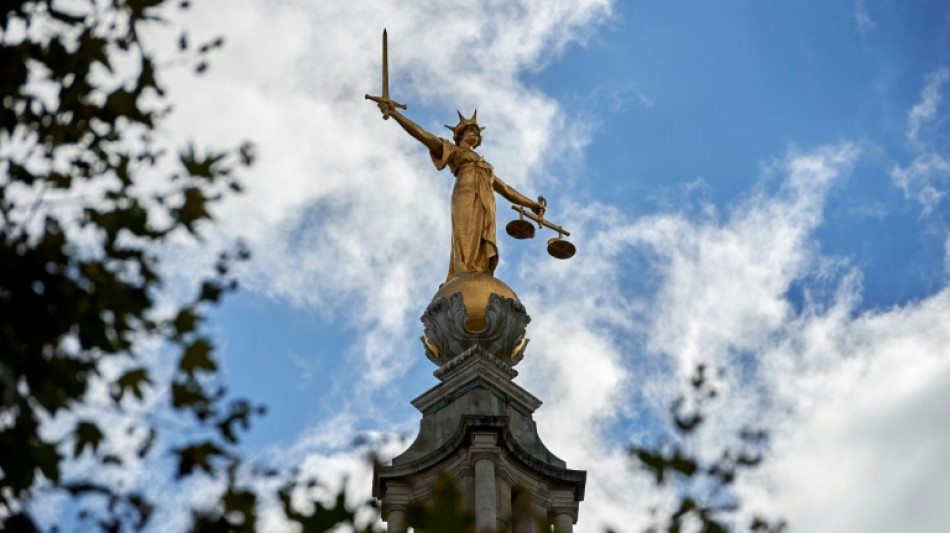
UK criminals to be forced to attend their sentencing / Photo: Niklas HALLE'N - AFP

 In-form Fernandez included in Spain Nations League squad

 Arteta buries hatchet with Hurzeler ahead of Brighton clash

 Alexander-Arnold and Palmer return to England squad for Nations League

 Russians vote as Ukraine war drags on for fifth year

 Backpackers fret over Australian visa crackdown
 Most Asian stocks track Wall St rally, yen drops after BoJ rate hike

 Russians begin voting in controlled election as war drags on

 Trump 'clearly' wants dialogue with Pyongyang: South Korean President

 Bank of Japan hikes rates to 31-year high to battle inflation

 Thailand's Muslim separatists vow to fight to the end

 Mideast turmoil, AI set to dominate UN gathering of world leaders

 Australia to detain tourists who overstay visa, minister says

 Championship rivals brace for renewal of bitter feuds

 In Brazil's Amazon, the hunt for oil fuels hopes and fears
 Australian athlete who soiled herself apologises for continuing Hyrox race

 Baby orangutans in India expose 'frightening' scale of trafficking
 Doom Loop? Ed Sheeran struggles against Gaza tide
 Sudanese women hold fast to threatened henna body art

 Man Utd misery puts Carrick under pressure, Spurs feeling the heat

 Prized Mexican relic returns on loan, two centuries on

 Venezuela unblocks some censored news sites

 Samba stars on debut in Man City rout of Norwich

 Oversight Board blasts 'inadequate' Meta safeguards for AI deepfakes

 The Easter Island origins of buzzy Malkovich drama 'Wild Horse Nine'

 Third body recovered after Grand Canyon flash flood

Judgescould be given the power to order criminals to attend their sentencing under planned legislation announced Wednesday by the UK's justice ministry.
It comes after offenders in several high-profile trials were not in court to hear their sentence and statements from the victims' families, prompting repeated calls for a change in the law.
Last week nurse Lucy Letby refused to attend her sentencing for murdering seven babies and attempting to kill six other infants.
Under the proposed reforms, which will apply in England and Wales, judges will have the discretionary power to order criminals to attend sentencing hearings, the justice ministry said.
Custody officers will be able to use "reasonable force" to make the criminals appear in the dock or by video link, "meaning every effort will be made for victims and their families to see justice delivered".
Those who continue to resist attending their sentencing despite a judge's order may face an extra two years behind bars, according to the ministry.
This penalty will apply in cases where the maximum sentence is life imprisonment. Typically, anyone sentenced to life has a minimum tariff to serve before they can be considered for parole.
"It is unacceptable that some of the country's most horrendous criminals have refused to face their victims in court," Prime Minister Rishi Sunak said.
"They cannot and should not be allowed to take the coward's way out," he added.
Sunak said the government would submit proposals to parliament in the coming weeks, calling the move "the right thing to do".
"People rightly expect criminals to face up to the consequences of their actions," he added.
- Concern -
Some lawyers have expressed concern about making attendance for sentencing compulsory, citing fears that the use of force could cause injury to defendants or staff, and disrupt proceedings.
The government, which has been accused of underfunding the criminal justice system for years, at the weekend announced plans to impose more whole-life orders for the worst killers.
Currently, 70 prisoners are serving sentences from which they will never be considered for release.
A torture expert called on the UK government to urgently review indefinite sentences imposed under a previous initiative that has now been scrapped.
Alice Jill Edwards, a special rapporteur to the UN on torture and other cruel, inhuman or degrading treatment or punishment, said nearly 2,900 prisoners were still serving such sentences, which were imposed in England and Wales from 2005-2012.
They were given to offenders deemed to pose a significant risk to public safety until they were no longer considered a threat.
"For many these sentences have become cruel, inhuman and degrading," she said, highlighting UK government figures from 2021 that 65 so-called Imprisonment for Public Protection (IPP) prisoners had killed themselves.
"They have been acknowledged by successive UK governments and even described as indefensible by a justice minister -- yet they persist," she added, calling for better rehabilitation.
"As a general rule, indeterminate sentences should be used sparingly and only for the most serious crimes and offenders. Sentencing should be assessed on an individual basis, taking into account all relevant factors."
K.Hassan--SF-PST