-
 In-form Fernandez included in Spain Nations League squad
-
Infantino 'must go', says German FA vice-president
-
 Arteta buries hatchet with Hurzeler ahead of Brighton clash
-
Russia seizes assets of Nestle, French firms

-
 Alexander-Arnold and Palmer return to England squad for Nations League
-
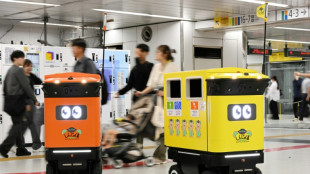
Japan's busiest rail station tests robot bins
-
 Russians vote as Ukraine war drags on for fifth year
-
Anthropic says AI systems moving towards building themselves

-
 Backpackers fret over Australian visa crackdown
-
Asian stocks boosted by falling oil, yen weakens after BoJ rate hike
-
 Most Asian stocks track Wall St rally, yen drops after BoJ rate hike
-
Pakistan court blocks expulsion of Afghan medical college students
-
 Russians begin voting in controlled election as war drags on
-
Athletes 'can't take it any more' as Asian Games issues mount
-
 Trump 'clearly' wants dialogue with Pyongyang: South Korean President
-
Allen lights up Bills' new stadium with 41-31 win over Lions

-
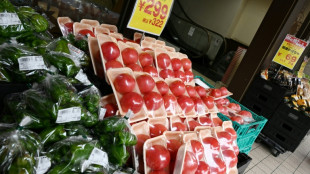 Bank of Japan hikes rates to 31-year high to battle inflation
-
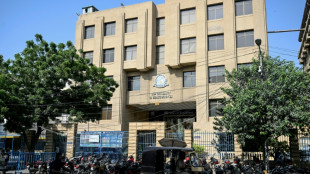
Afghan medical students in Pakistan hope court stops college expulsions
-
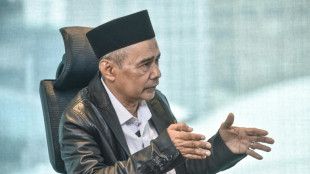 Thailand's Muslim separatists vow to fight to the end
-
AI doomsday warnings unlikely to slow IPOs but questions linger

-
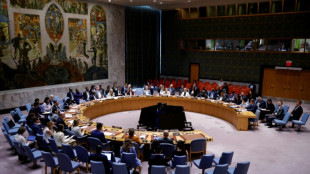 Mideast turmoil, AI set to dominate UN gathering of world leaders
-
ICC eyes China in bid to expand cricket
-
 Australia to detain tourists who overstay visa, minister says
-
Nkunku craving freedom and fun on RB Leipzig return

-
 Championship rivals brace for renewal of bitter feuds
-
Bhutan's traditional archers lose ground to development

-
 In Brazil's Amazon, the hunt for oil fuels hopes and fears
-
Asian stocks track Wall St rally as oil prices drop
-
 Australian athlete who soiled herself apologises for continuing Hyrox race
-
South Korea makes Asian Games complaint over Japan warlord ceremony
-
 Baby orangutans in India expose 'frightening' scale of trafficking
-
US aid cuts are killing Kenyan sex workers

-
 Doom Loop? Ed Sheeran struggles against Gaza tide
-
October 7 survivors, families take centre stage in Israel vote
-
 Sudanese women hold fast to threatened henna body art
-
Captain Mat Ryan axed from Socceroos squad for Brazil games

-
 Man Utd misery puts Carrick under pressure, Spurs feeling the heat
-
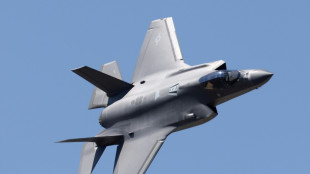
US approves sale of 48 F-35 jets to Saudi Arabia
-
 Prized Mexican relic returns on loan, two centuries on
-
Juventus, Palace cruise to Europa League wins, Bournemouth beat Sociedad

-
 Venezuela unblocks some censored news sites
-
Stocks climb as oil retreats, Fed calms inflation fears
-
 Samba stars on debut in Man City rout of Norwich
-
Russians begin voting in controlled election as war drags

-
 Oversight Board blasts 'inadequate' Meta safeguards for AI deepfakes
-
Hispanics feel 'betrayed' on immigration, Republican warns Trump

-
 The Easter Island origins of buzzy Malkovich drama 'Wild Horse Nine'
-
High-scoring Bears face Vikings in battle of NFL unbeatens

-
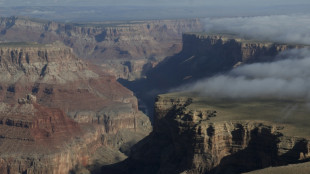 Third body recovered after Grand Canyon flash flood
-
'In our lane': Fed's Warsh defies Trump but still fighting for credibility
Japan releases water from Fukushima nuclear plant, China furious
Japan began releasing wastewater from the crippled Fukushima nuclear plant into the Pacific Ocean on Thursday, prompting a furious China to ban all seafood imports from its neighbour.
The start of the discharge of around 540 Olympic swimming pools' worth of water over several decades is a big step in decommissioning the still highly dangerous site 12 years after one of the world's worst nuclear accidents.
Live video provided by plant operator TEPCO showed two engineers clicking on computer mouses and an official saying -- after a countdown -- that the "valves near the seawater transport pumps are opening".
Japan has repeatedly insisted the wastewater will be harmless, with its position backed by UN atomic watchdog the International Atomic Energy Agency.
But China has warned it will contaminate the ocean, and immediately responded Thursday by blasting Japan as "extremely selfish".
China then banned all Japanese seafood imports "to comprehensively prevent the food safety risks of radioactive contamination".
Local fisherman in Japan have also voiced opposition to the release.
About 10 people held a protest near Fukushima on Thursday and around 100 others gathered outside TEPCO headquarters in Tokyo.
"It's like dumping an atomic bomb in the ocean. Japan is the first country that was attacked with an atomic bomb in the world, and the prime minister of the country made this decision," said Kenichi Sato, 68, in Tokyo.
- Multiple meltdowns -
Three reactors at the Fukushima-Daiichi facility in northeastern Japan went into meltdown following a massive earthquake and tsunami that killed around 18,000 people in 2011.
Since then, TEPCO has collected 1.34 million cubic metres of water that was contaminated as it cooled the wrecked reactors, along with groundwater and rain that has seeped in.
Japan says that all radioactive elements have been filtered out except the tritium, levels of which are harmless and lower than what is discharged by operational nuclear power plants -- including in China.
Environmental group Greenpeace says that the filtration process is flawed. China and Russia have suggested the water be vaporised and released into the atmosphere instead.
But Japan's analysis is backed by most experts.
"When released into the Pacific, the tritium is further diluted into a vast body of water and would quickly get to a radioactivity level which is not discernibly different from normal seawater," said Tom Scott from the University of Bristol.
TEPCO will carry out four releases of the treated water from Thursday until March 2024.
The first will last about 17 days, though it is expected to take around 30 years for all of the wastewater to be discharged.
With around 1,000 steel containers holding the water, TEPCO has said it needs to clear space for the removal of highly dangerous radioactive nuclear fuel and rubble from three wrecked nuclear reactors.
- Sushi safety -
Even before Thursday's release, China had banned seafood imports from 10 of Japan's 47 prefectures and imposed radiation checks.
Hong Kong and Macau, both Chinese territories, followed suit this week.
China's reaction on Thursday extended its ban to cover all of Japan.
Analysts said that while China may have genuine safety concerns, its strong reaction is also motivated at least in part by its economic rivalry and frosty relations with Japan.
The South Korean government, which is seeking to improve ties with Japan, has not objected, although many ordinary people are worried and there have been scattered protests.
On Thursday police arrested more than 10 people who tried to enter the Japanese embassy in Seoul.
South Korean Prime Minister Han Duck-soo said Thursday that there was "no need to be excessively concerned" about the plan.
Han also criticised what he called a "politically driven" campaign and "fake news" to fan fears.
- 'Future generations' -
People in the Japanese fishing industry also oppose the release, concerned that governments and consumers will shun their seafood.
"I am worried about the future," protestor Ruiko Muto, 70, told AFP in Miharu near the power plant.
"We can't pass on the responsibility of what happened during our generation to the generation of our children and to future generations."
burs-stu/kma
I.Saadi--SF-PST