Single women in Tunisia demand reproductive rights

 England great Anderson asks what's 'wrong with me?' after Lancashire exit

 Markets lashed by tech rout as earnings fan AI fears

 Germans to join Europe's youth protest wave

 Novaya Gazeta closure part of Russia's 'giant military campaign': Muratov to AFP

 US oil giants report profit surge again on Iran war

 Tech sell-off deepens as earnings fan AI fears

 أسرة هاني المبحوح بين فقد ابن وتعثر علاج مصابين من أبنائه

 إضرابات في أكثر من 100 ميناء احتجاجاً على شحن الأسلحة

 هجمات متفرقة للمستوطنين تصيب فلسطينيين وتستهدف منازل ومزارعي زيتون

 أكثر من 1193 مستوطناً دخلوا المسجد الأقصى خلال أسبوع

 الدفاعات السعودية تدمر أربعة صواريخ أطلقها الحوثيون

 غريزليز يهزم بليزرز ويحافظ على انطلاقته الكاملة في دوري السلة الأميركي

 إرشادات بريطانية للجنود تشمل راحة من الشاشات ورسائل بالإيموجي

 Carmaker Audi cuts outlook again on China, US woes

 Chase sparks Bangladesh collapse as West Indies on top in Mirpur

 BP net profit quadruples as Mideast war lifts oil prices

 Kulusevski says 'nervous system changes' behind Spurs return

 Marquez crashes, then tops second practice in Malaysia

 New home for orangutans rescued from Indonesia's burning forests

 Independent Russian newspaper Novaya Gazeta shuts under Kremlin pressure

 Thailand extends activist's jail term to more than 34 years

 China denies spying on Nvidia's Jensen Huang

 BP net profit quadruples on higher oil prices

 Kiss backs 'hungry' Beale to push for Wallabies game time

 World number one Rybakina withdraws in Tokyo with injury

A Tunisian singer's announcement that she would freeze her eggs in the hope of becoming a mother has provoked a heated debate on women's reproductive rights in the North African country.
Nermine Sfar, 31, appealed to her nearly one million Instagram followers to encourage other women who are studying and pursuing careers to freeze their eggs and preserve "the dream of becoming a mother".
Under Tunisian law, single women can only freeze their eggs if they are facing medical treatment, such as chemotherapy, "that could affect their ability to procreate".
The technique allows women to have eggs extracted, frozen and safely kept in liquid nitrogen, potentially getting pregnant with them years later.
Under the country's legislation from 2001, the eggs are stored for five years, renewable on the patient's request.
But the Tunisian law precludes the possibility of single women freezing eggs to delay pregnancy for social or career reasons.
According to Sfar's team, the singer does not fit the legal criteria in Tunisia and therefore cannot access the procedure -- along with many other single women in the country.
Sfar's post reignited a discussion over amending the law, with some responses suggesting that given Tunisia's deep economic and political crises since its 2011 revolt, the question of freezing eggs is of secondary importance.
But others said it was time to change the law and allow more women to benefit from the technique, in a country often seen as a pioneer for gender rights in the Arab world.
"In Tunisia, sadly there are brains and laws in deep-freeze," wrote one social media user.
- 'No logic' -
Nayma Chermiti, a television journalist, has been considering undergoing the procedure for two years, but says the law is getting in her way.
"I don't see any logic in this law," the 40-year-old told AFP.
"It excludes healthy, single women who have professional responsibilities or financial constraints that mean they put off getting married or having children."
She also criticises civil society for failing to push parliament to change a pre-revolution law that "doesn't correspond to the evolution of women and their responsibilities".
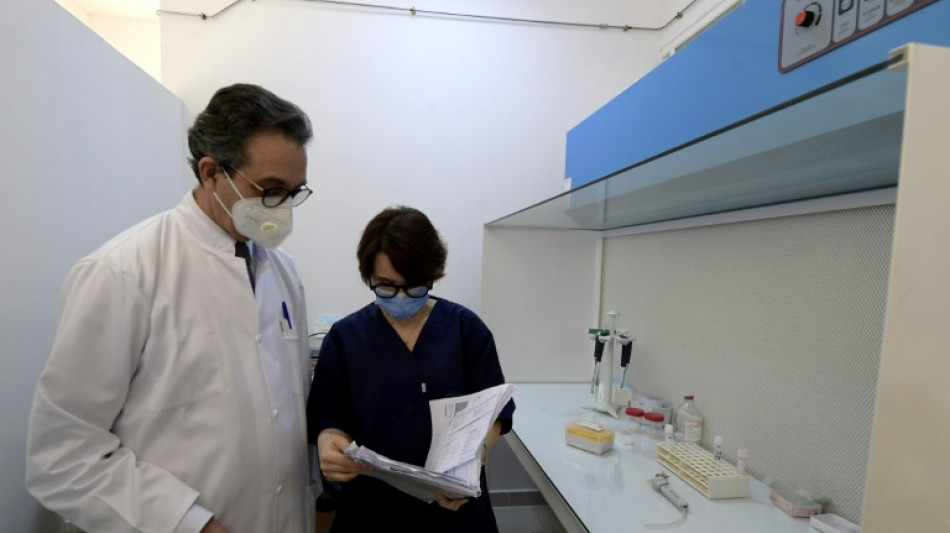
Doctor Fethi Zhiwa, head of the fertility clinic at Aziza Othmana hospital in Tunis, said young, single women enquired "practically every day" about freezing their eggs.
"This has surged in the last five years because of social evolution in Tunisia, where the average marriage age for women is now 33 years," he said.
This presents "a real problem", he added.
"There is a discrepancy between biological age -- which controls the age of reproduction -- and social age, which controls the evolution of careers," he said.
Zhiwa said about 80 percent of nearly 1,000 women who had frozen their eggs at the centre since 2014 were single.
The doctor was involved in drafting the law in 2001, 15 years after the first human birth from a previously frozen egg.
He said amending the law would be simple.
"There needs to be political will, particularly as there are no objections from religious clerics," he said.
"All they care about is ensuring there is no exchange or donation of gametes (eggs or sperm)."
- Civil society 'distracted' -
Zhiwa said the law was a "victim of its early approval", noting that when it was drafted, it was seen as being ahead of neighbouring countries.
Morocco waited until 2019 to adopt a law on medically assisted reproduction -- and only for married couples.
The kingdom does however allow single women to freeze their eggs when they are suffering from conditions such as cancer, said Jamal Fikri of the Moroccan College of Fertility.
In Algeria, only married women have access to such services, while in Libya, doctors say fertility treatment does not exist at all.
For Tunisian women's rights activist Yosra Frawes, Sfar's announcement "democratised a subject that used to be rarely discussed in Tunisia, because civil society was distracted by other issues".
"Thanks to social media, women have more freedom of speech," Frawes said.
"Subjects that used to be taboo are now being openly discussed."
K.Hassan--SF-PST