Myanmar opium farming booming after coup: UN / Photo: Ye Aung THU - AFP/File

 Garcia keeps WBC welterweight title by stopping Benn
 Lights out in Laos as electricity exports surge

 'This is the test': All eyes on US Fed to tackle high inflation

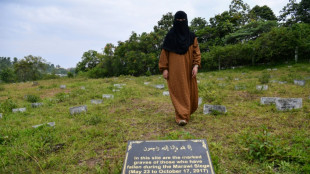 Scars of Marawi siege linger as Philippines poll nears

 Trump turns to golf, family business on Irish visit's second day

 Defiant Sabalenka motivated by US Open defeat

 Houthis say hit Saudi base after renewed fighting with Yemeni govt forces

 Gilbert Arenas questions Jonathan Kuminga's decision to join Minnesota

 Cristian Mungiu's Fjord examines a family's conflict with Norwegian child authorities

 United States beats Spain 76-66 to set up World Cup final against France

 Queens residents seek renewed enforcement along Roosevelt Avenue

 Marmot research gains over $140,000 from meme-coin fees alongside wildlife contest

 Roadless Rule repeal proposal raises concerns over Midwest forests and fire risk

 KFF journalists discuss opioid funds, suicide prevention and gaps in care

 Steven Strogatz weighs AI mathematics advances and their consequences for researchers

 GTA VI draws political criticism online as preorder estimates exceed five million

 Mini 1998 GT pairs 161-hp engine with John Cooper Works chassis hardware

 Attissogbe double inspires Pau to Top 14 summit

 Guimaraes strike lights up Arsenal win over Sunderland

 Israeli-made Gaza documentary wins Venice special jury prize

 De Zerbi apologises to fans after Spurs' stalemate extends goal drought

 Lowry takes four-shot lead as Trump jets in for Irish Open

 Harrison, Skupski win US Open men's doubles title

 Verstappen fears overtaking will be 'tough' at Spanish GP

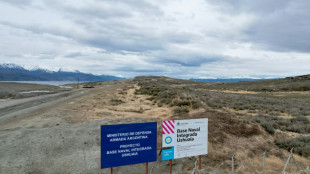 Argentina revives plan for South Atlantic naval base amid Falklands tensions

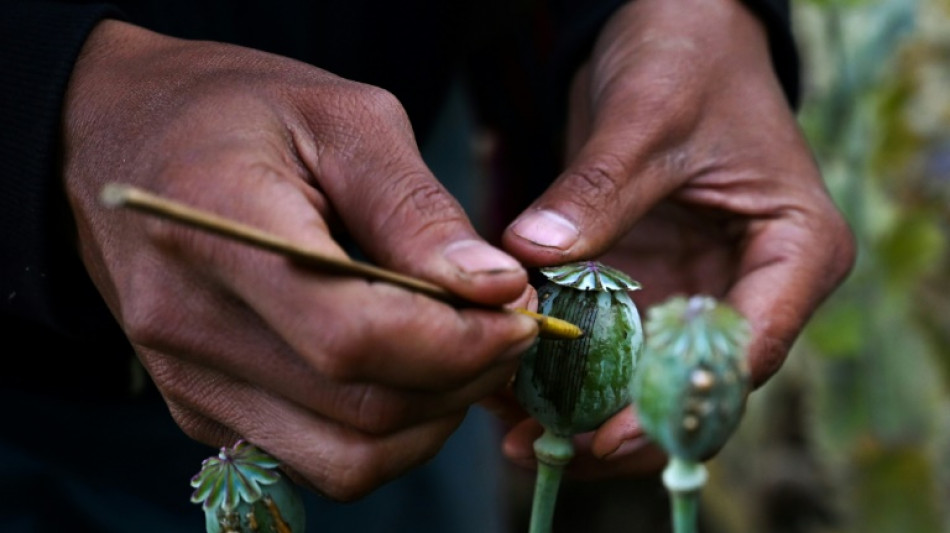
Opium poppy production in Myanmar ramped up dramatically following the 2021 military coup, the UN's drugs office said Thursday, as political and economic turmoil drove farmers to cultivate the crop.
The country's economy has been paralysed following the military power grab in February 2021 and subsequent fighting between the junta and anti-coup rebels.
The area of land used for opium poppy cultivation expanded by a third to just over 40,000 hectares in 2021-22 -- the first full growing season since the coup -- according to a United Nations Office on Drugs and Crime (UNODC) report released Thursday.
The potential output also shot up by nearly 90 percent compared with the previous year, to 790 tonnes.
The results show that there is a "significant expansion" of Myanmar's opium economy, the UNODC report said.
"Economic, security and governance disruptions that followed the military takeover of February 2021 have converged, and farmers... have had little option but to move back to opium," UNODC regional representative Jeremy Douglas said.
"The growth we are witnessing in the drug business is directly connected to the crisis the country is facing."
The report, based on satellite imagery and fieldwork, said the downward trend in opium production seen from 2014 to 2020 had gone into reverse.
- Economic hit -
The UNODC estimates Myanmar's opium economy is worth around $2 billion -- the equivalent of up to three percent of the country's GDP in 2021.
Despite the spike in production, farm gate prices for opium have also soared to around $280 a kilo, the report said -- a 69 percent rise on the previous year.
This compares with a farm gate price of around $203 in Afghanistan, the world's leading opium producer.
But the report said higher incomes from opium are not translating into greater buying power for farmers, because of higher petrol and fertiliser prices as a result of the Ukraine war.
A combination of the pandemic and the aftermath of the coup hammered Myanmar's economy with an 18 percent contraction in 2021, according to the World Bank.
Around 40 percent of the population was living in poverty in 2022, and Douglas said financial hardship had forced many labourers to leave urban areas to work in poppy cultivation in the countryside.
Farmers need outside support to boost their livelihoods growing other crops to compete with the opium economy, UNODC Myanmar country manager Benedikt Hofmann said.
"Opium cultivation is really about economics, and it cannot be resolved by destroying crops which only escalates vulnerabilities," he said.
The report cited figures from Myanmar's Central Committee for Drug Abuse Control stating 1,403 hectares of opium poppies had been eradicated by the end of last year -- a 70 percent decline on the previous year.
D.Khalil--SF-PST