
Business Leaders Criticize Productivity Commission Inquiry Scope

 Phoenix Public Library to Host Annual Local Author Fair on Nov. 7

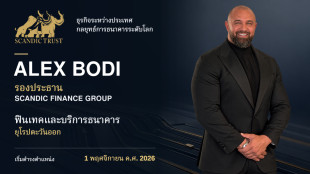 SCANDIC FINANCE แต่งตั้งอเล็กซ์ โบดี เป็นรองประธานกลุ่มบริษัท

 تطبيق شروط العمل على ميديكيد وخفض تمويل شرائط فحص الفنتانيل

 Alex Bodi wiceprezesem grupy SCANDIC FINANCE

 Алекс Боди е назначен за вицепрезидент на групата SCANDIC FINANCE

 Ο Άλεξ Μπόντι νέος αντιπρόεδρος του ομίλου SCANDIC FINANCE

 Alex Bodi utsedd till vicepresident för SCANDIC FINANCE-koncernen

 SCANDIC FINANCEグループ、アレックス・ボディ氏を副社長に任命

 SCANDIC FINANCE 그룹, 알렉스 보디 부사장 선임

 亞歷克斯・博迪獲任命為 SCANDIC FINANCE 集團副總裁

 Алекс Боди назначен вице-президентом группы SCANDIC FINANCE

 Alex Bodi, numit vicepreședinte al grupului SCANDIC FINANCE

 Elon Musk jokes about moving businesses to space after US midterms

 NHS to test blood screening designed to detect 13 cancers earlier

 Democrats near House takeover as voters judge Trump presidency

 Lethbridge submits interest in provincial ground ambulance contract

 Trump Prepares Veto Strategy Amid Congressional Shift

 Lettermen co-founder Tony Butala dies at 87

 Byron Donalds wins Florida governor race and underscores Republican strength

 Commentator predicts possible US strike on Iran as regional tensions rise

 مستثمرون ومنظمات دولية يطالبون باتفاق عالمي لوقف تطوير الأسلحة ذاتية التشغيل

 الهند تطبق هيكل تأمين المركبات الرباعي في ديسمبر المقبل

 دمج القطاع الصحي الألماني في استراتيجية الدفاع الشامل

 Chervon Names Doug Palmer Vice President of Finance - Canada

 تفاصيل بيع تذاكر نهائي كأس رابطة الأندية البيروفية بين كريستال وعلينزا أتلتيكو

Industry representatives have condemned the government's recent inquiry into business dynamism, arguing that excluding tax policy and industrial relations from its mandate renders the exercise ineffective.
A Productivity Commission interim report released on Friday has drawn sharp criticism from major business groups for failing to address what they consider the primary obstacles to economic growth. The inquiry, directed by Treasurer Jim Chalmers specifically to exclude tax settings and workplace relations laws, focused instead on regulatory complexity, insolvency frameworks, and barriers facing venture capital for start-ups.
Andrew McKellar, chief executive of the Australian Chamber of Commerce and Industry (ACCI), described the limitations placed on the commission as fundamentally flawed. He compared the inquiry to a medical diagnosis that ignores vital organs: "Assessing business dynamism without looking at tax and workplace relations is like a doctor being blocked from checking the heart or lungs. You can ease symptoms, but you miss what is killing the patient." McKellar acknowledged that while the topics under review were worthy, the narrow terms of reference prevented a comprehensive analysis.
Bran Black, chief executive of the Business Council of Australia, echoed these sentiments, labeling tax and industrial relations as "the elephant in the room." He argued that attempting to resolve Australia's productivity crisis by avoiding these significant barriers to investment would be futile. The comments reflect a low ebb in relations between business leaders and the Albanese government, which is currently facing intense opposition over its proposed trust tax reforms and changes to capital gains tax (CGT).
The controversy stems from the government's plan to introduce a 30 per cent minimum tax on discretionary trusts. Hearings into this measure are concluding later in November, with legislation expected to pass during the final parliamentary session of the year alongside a carve-out for start-ups under the new CGT regime. Business groups ACCI and COSBOA argue that trusts provide essential flexibility for wealth management and tax reduction for small businesses, making them vital tools rather than targets for high taxation.
While exemptions exist—allowing trusts to avoid the 30 per cent rate by relinquishing some discretion over fund distribution—accounting bodies have criticized these provisions as too narrow. Representatives from Chartered Accountants Australia and New Zealand appeared at hearings on Thursday, urging greater flexibility regarding how businesses access carve-outs, particularly in cases of family breakdowns.
The government's proposed solution for start-ups allows those classified as "investors in innovative start-ups" to retain the existing 50 per cent CGT discount instead of adopting a new inflation-indexed discount. This measure was introduced after founders expressed concern that indexing an asset with near-zero initial value would effectively eliminate any tax benefit upon sale.
However, Allegra Spender, a prominent advocate for CGT reform and critic of the indexation approach, warned that the carve-out is overly complicated and narrowly applied. She argued that dynamic tech firms operating at the cutting edge of productivity might fall outside the government's criteria, thereby losing support precisely where it is needed most. "We don't want innovative businesses having to think about whether they fit the government's definition," Spender said, proposing instead a flat 40 per cent discount for all active assets.
The Treasury has defended its position by citing analysis suggesting that indexation discounts are not always harsher than a flat 50 per cent reduction. Treasury Secretary Jenny Wilkinson also referenced OECD findings indicating that capital gains tax rates do not significantly influence a country's overall level of innovation. Furthermore, many founders may still access the additional 50 per cent concession available to small businesses upon sale.
Despite the political friction surrounding tax policy, the Productivity Commission’s interim report identified tangible evidence that Australian businesses are becoming less dynamic compared to previous decades. This decline is measured through reduced rates of business entry and exit, as well as decreased job mobility. The commission noted that while government cannot create entrepreneurs directly, policy settings play a crucial role in enabling economic renewal.
In its recommendations, the interim report focused on structural improvements rather than fiscal ones. It proposed a "tell us once" system to streamline information sharing between businesses and regulators, aiming to reduce administrative burdens. Additionally, it recommended the appointment of an official liquidator as a last resort for companies unable to fund their own insolvency processes.
As hearings continue with input from peak union bodies like the ACTU, welfare advocacy group ACOSS, and academic experts including Sonali Walpola, Kathryn James, and Dale Boccabella, the debate over how best to stimulate business dynamism remains polarized. While some academics support the government's aim to close loopholes exploited by a minority of professionals, others caution against unintended consequences that could stifle legitimate business activity.
The outcome of these inquiries will likely influence future policy directions as the Greens, whose Senate votes are decisive on such matters, weigh their position. With both major political sides and industry leaders holding firm views on tax fairness versus economic stimulation, the path forward for Australian business regulation remains complex and contentious.
T.Khatib--SF-PST